


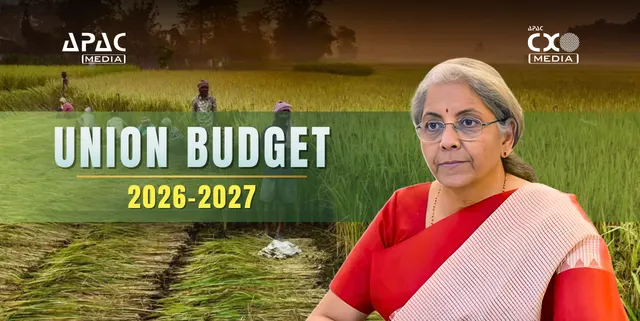
New Delhi: The Union Budget 2026–27, presented by the Union Finance Minister, Nirmala Sitharaman, was anchored around three ‘Kartavyas’: accelerating and sustaining economic growth with resilience, fulfilling people’s aspirations by building capacity, and advancing the spirit of ‘Sabka Saath, Sabka Vikas’ for inclusive growth by ensuring that every sector and individual has access to equal opportunities.
Presenting the budget, the finance minister laid strong emphasis on high-value agriculture, allied sectors, and technology-led farming. The proposed measures aim to boost farmer incomes, generate rural employment, and modernise agricultural practices. Aligned with the third Kartavya, the policies seek to diversify farm output while strengthening income resilience for farmers, especially small and marginal ones.
Crop Diversification and Regional Focus
To enhance farm incomes, the government will support the cultivation of high-value crops such as coconut, sandalwood, cocoa, and cashew in coastal regions, agarwood in the North East, and nuts, including walnuts, almonds, and pine nuts. Dedicated programmes will focus on rejuvenating old orchards, expanding high-density plantations, and promoting value addition by actively engaging rural youth.
A Coconut Promotion Scheme has been proposed to improve productivity by replacing non-productive trees with improved varieties in key states. Nearly 30 million people, including about 10 million farmers, depend on coconut-based livelihoods.
Separate initiatives for cashew and cocoa aim to make India self-reliant in raw material production and processing, with a target of building premium Indian brands by 2030.
Sandalwood cultivation will be supported through scientific farming and post-harvest processing in partnership with the states.
Boost for Fisheries and Animal Husbandry
In fisheries, integrated development of 500 reservoirs and water bodies is proposed to strengthen the value chain, improve market access, and support startups, women-led groups, and fish farmer producer organisations. For animal husbandry, a credit-linked subsidy scheme will promote entrepreneurship, modernise livestock enterprises, and expand integrated value chains across the dairy and poultry sectors.
Bharat Vistar- For a Technology-Led Future of Farming
To drive data-led decision-making, the budget proposes ‘Bharat Vistar’, a multilingual AI platform integrating AgriStack and Indian Council of Agricultural Research (ICAR) advisory systems. This initiative is expected to boost farm productivity, help farmers take better-informed decisions, and reduce risks through customised advisory support.
Experts’ Opinion
Talking about the proposed measures on agriculture, Vivek Gupta, Managing Director of Oswal Pumps, said, “The renewed focus on increasing farmer incomes through productivity enhancement, technology adoption, and water efficiency is particularly important for a sector that contributes nearly 18% of India’s GDP and employs over 45% of the workforce. Efficient irrigation remains one of the strongest levers to boost farm incomes, especially in water-stressed regions where groundwater depletion and erratic rainfall have increased production risks.
Initiatives such as Bharat Vistar, solarisation of farm equipment, micro-irrigation, and energy-efficient farm infrastructure have already shown tangible benefits by lowering input costs and improving the reliability of water access. Field experience demonstrates that efficient pumping combined with drip or sprinkler systems can reduce water consumption by 30–40% while stabilizing crop yields, directly improving farm economics.
The Budget also strengthens access to finance through priority-sector lending, credit guarantees, and MSME liquidity, enabling farmers and cooperatives to adopt modern irrigation systems and move away from diesel-dependent, inefficient practices. Combined with digital tools and skill development programs for over a lakh caregivers and allied professionals, these measures will modernize farming, improve productivity, and enhance resilience.
Overall, Budget 2026–27 positions agriculture as a strategic engine of growth by treating irrigation efficiency, technology adoption, and rural infrastructure as core investments rather than discretionary spending. By aligning fiscal prudence with farmer-centric initiatives, the government is creating the foundation for sustainable income growth, water security, and a resilient, future-ready agricultural sector in India.”
Jaisimha Rao, Founder & CEO, Niqo Robotics, highlighted, “With the launch of Bharat-VISTAAR, which integrates AgriStack with AI-enabled advisory systems, the Budget takes a clear step towards building a trusted digital data backbone for Indian agriculture. By focusing on productivity, risk reduction, and customised, data-driven support for farmers—especially small and marginal farmers—the budget creates a strong foundation for technology-led services that can improve on-farm decision-making without adding to farmers’ capital burden.”
Anand Chandra, Co-founder & Executive Director, Arya.ag, added, “Bharat Vistar brings the promise of making agri-advisory more intelligent, timely, and accessible at the farmgate. By integrating AI with AgriStack and ICAR advisories in multiple languages, it can support better decisions on crops, inputs, and markets, especially for smallholder and first-generation women farmers. The Rural Women-Led Enterprises initiative, building on the Lakhpati Didi programme, takes this further by enabling the shift from subsistence livelihoods to ownership.
In our experience, such enterprises succeed when they’re deeply embedded in local agri-value chains, with access to working capital, market linkages, and autonomy over key decisions. Women-owned agribusinesses often reinvest locally, strengthening household incomes and creating resilient micro-economies. As AgriStack integration deepens, these enterprises can also build digital footprints, unlocking access to formal finance, input systems, and structured trade.
Importantly, many women-led groups are already leading the adoption of sustainable and climate-resilient practices. Strengthening them through enterprise support will generate both economic and environmental dividends. The budget lays strong groundwork; execution will depend on how these initiatives reach real farms in real time.”
With crop diversification, value addition, and digital tools at its core, Budget 2026–27 signals a shift towards a resilient and future-ready agricultural economy.