
























New Delhi: The Election Commission of India (ECI) has announced the schedule for the Delhi Assembly Election 2025. The polling will take place on 5 February and the counting of votes is scheduled for 8 February. The election process will conclude by 10 February. Here are the key dates:
- Last date for filing nominations: January 17, 2025
- Last date for withdrawal of candidature: January 20, 2025
Delhi’s election will cover 70 constituencies, including 58 general and 12 reserved for Scheduled Castes (SC), across 11 districts. The total number of registered voters stands at 1.55 crore, comprising 83.49 lakh male voters, 71.74 lakh female voters, and 25.89 lakh young voters aged between 20 and 29 years. Notably, over 2 lakh first-time voters will participate in this election.
Leveraging Technology for a Transparent Election
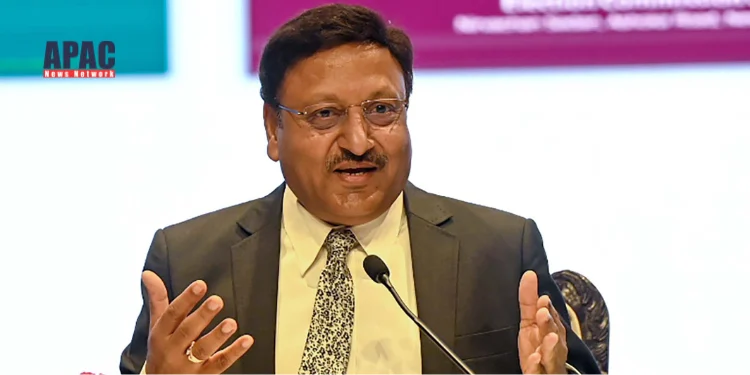
The Election Commission is implementing advanced technologies to ensure transparency and efficiency in the electoral process. Chief Election Commissioner (CEC) Rajiv Kumar highlighted the key technological platforms that will be utilized:
- Voter Helpline App (VHA): Provides a one-stop solution for voter information and services.
- cVIGIL: Single App for recording, reporting, and resolving violations.
- KYC Portal: Facilitates seamless candidate verification processes.
- Suvidha Portal: An online platform for candidates to file nominations and affidavits, and seek permissions for meetings and rallies. The portal operates on a first-come, first-served basis for allotting campaign grounds, ensuring a level playing field for all candidates.
“All candidate details will be available on respective portals. The Suvidha portal will be particularly useful for managing political campaigns, such as booking campaign grounds,” Rajiv Kumar stated.
Addressing Electoral Concerns
While announcing the Delhi polling schedule, CEC Rajiv Kumar addressed concerns raised in previous elections, including:
- Wrongful addition or deletion in voter records targeting specific groups.
- Alleged EVM manipulation.
- Spike in voter turnout rates (VTR) after 5 PM.
- Mismatch between votes polled and counted.
- Delays in counting and changes in rules are perceived to restrict transparency.
Rajiv Kumar reassured voters that these issues have been systematically addressed. He emphasized the ECI’s commitment to transparency, stating, “Disclosure is our main pillar. We have released a comprehensive dataset. Anyone can access this data for verification.”
#TechPowered Elections!#cVigil – Report mcc violations#Suvidha Portal – Facilitating political parties and candidates for campaign related permission#VoterHelplineApp – Easing search for electoral information#DelhiElections2025 pic.twitter.com/Ni4UDQ6cME
— Election Commission of India (@ECISVEEP) January 7, 2025
Recent Electoral Trends
While explaining the polling process and the transparency, he also shared data for polling in different states where different political parties came into power. Since 2020, 20 state elections have been conducted in India, with a variety of political parties forming governments:
- 2020: RJD (Bihar)
- 2021: AITC (West Bengal), DMK (Tamil Nadu), AINRC (Puducherry), CPI(M) (Kerala), BJP (Assam)
- 2022: INC (Himachal Pradesh), AAP (Punjab), BJP (Uttar Pradesh, Uttarakhand, Manipur, Gujarat, Goa)
- 2023: NDPP (Nagaland), BJP (Tripura), NPP (Meghalaya), INC (Karnataka), BJP (Madhya Pradesh, Chhattisgarh, Rajasthan), ZPM (Mizoram), INC (Telangana)
- 2024: TDP (Andhra Pradesh), BJP (Arunachal Pradesh, Odisha), SKM (Sikkim), JKNC (Jammu & Kashmir), BJP (Haryana, Maharashtra), JMM (Jharkhand)
A Growing Electoral Landscape
Highlighting India’s expanding electoral base, Rajiv Kumar noted, “There are 10.5 lakh booths in the country, and we are on the verge of becoming a nation with 1 billion voters.”
The Delhi Assembly Election 2025 is set to be a landmark event, leveraging technology and transparency to strengthen the democratic process. With significant voter engagement expected, the Election Commission aims to conduct a free, fair, and inclusive election.
Also Read –
One Nation, One Election Bill Reaches Parliament: Legal Experts Share Diverging Views


















Discussion about this post