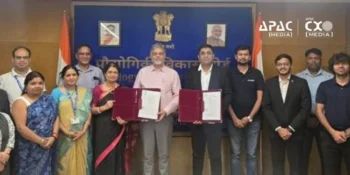
















Gauhati: Union Minister for Communications and Development of the North Eastern Region, Jyotiraditya Scindia, inaugurated a 5G Lab developed by the Centre for Development of Telematics (C-DOT) at the Department of Electronics and Communication Engineering (ECE) in Gauhati University.
The initiative aims to enhance research capabilities and foster innovation in next-generation telecommunications.
Here it should be noted that the establishment of 100 labs for the development of 5G applications was announced by Finance Minister Nirmala Sitharaman in the 2023 Budget.
The new Gauhati 5G lab aligns with the government’s Atmanirbhar Bharat vision, which has led to the development of an indigenous 4G-5G stack now being deployed in Bharat Sanchar Nigam Limited (BSNL) networks.
As India advances in telecom technology, such initiatives are expected to accelerate the development of 6G and other emerging innovations.
With thousands of engineering colleges across the country aspiring to stay at the forefront of technological advancements, the need for cost-effective 5G testbed solutions has become imperative.
Also read –
Telecom’s 2024 Milestones: 4.62 Lakh 5G BTS Installed, Internet Subscribers Jump to 96.96 Cr
C-DOT has developed an affordable 5G lab setup tailored for deployment in universities and engineering institutions. This initiative aims to equip students and researchers with hands-on experience in 5G networks, fostering deeper technical expertise and supporting intellectual property (IPR) generation for 6G technologies.
The newly inaugurated 5G lab will offer multiple benefits, including practical insights into end-to-end 5G systems, a deeper understanding of 3GPP specifications for 5G RAN (Radio Access Network) and Core networks, exploration of advanced 5G applications and use cases, as well as a foundation for future research and innovation in 6G.

C-DOT’s 5G University solution includes gNodeB (radio), a core network, and an IMS (IP Multimedia Subsystem). The system comprises a Centralized Unit (CU), Distributed Unit (DU), and Radio Unit (RU), managed through an Element Management System (EMS).
A technical manual has also been provided to allow students to configure and experiment with different 5G network setups.
Speaking at the event, Union Minister Scindia emphasized the transformative potential of 5G technology, stating, “The 5G use case lab will enable education, telemedicine, and healthcare to reach the most remote villages in India. I have immense faith in the younger generation, who will drive innovation and bring about meaningful change in the country.”
Gauhati University Vice Chancellor, Prof. Nani Gopal Mahanta, expressed gratitude to the Communications Ministry and C-DOT, highlighting the university’s commitment to technological excellence and innovation.
Professor Dr Kandarpa Kumar Sarma, Head of the ECE Department at Gauhati University, acknowledged the lab’s significance for students and faculty. “This 5G testbed solution, along with the training provided by C-DOT engineers, will enable students to familiarize themselves with 5G technology and contribute to the development of 6G,” he said.
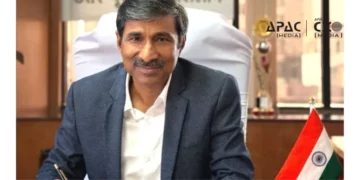
Dr Rajkumar Upadhyay, CEO of C-DOT, extended his appreciation to Minister Scindia for his support, stating that C-DOT would continue collaborating with engineering institutions to establish similar test labs and promote indigenous telecom advancements.
Also read –
India Moves Closer to Satellite Internet as Eutelsat Tests 5G Connectivity from Space