













New Delhi: With increasing issues of water scarcity and environmental sustainability, the importance of efficient water usage has never been more urgent. As India strives to balance its developmental goals with responsible resource management, the role of government policies and initiatives becomes paramount.
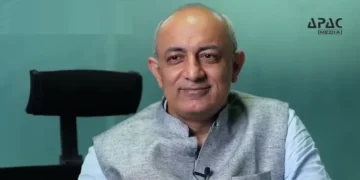
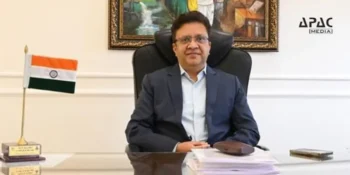
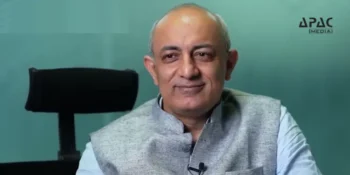
IAS Archana Varma, Additional Secretary and Mission Director, National Water Mission (NWM), Ministry of Jal Shakti, Government of India, who was the keynote speaker at the ‘Uncharted Waters Conclave’ organised by APAC News Network in New Delhi, on March 3, 2023, spoke about government policies and projects that are focused on efficient water usage.
“Technology should be for people, people should not be for technology,” believes Varma, as she talks about the importance of monitoring and evaluation to ensure the success of government policies. She also talked about the Bureau of Water Use Efficiency by NWM.
Bureau of Water Use Efficiency
The Bureau of Water Use Efficiency (BWUE) was set up under the scheme of National Water Mission, Department of Water Resources, River Development and Ganga Rejuvenation, Ministry of Jal Shakti, on October 20, 2022. Following are the objectives of BWUE:
- Launching a nationwide program to encourage efficient water-usage practices in irrigation, domestic supply, municipal, and industrial sectors all over the nation.
- Implementing regulatory measures to boost water use efficiency.
- Establishing water conservation guidelines, standardisation, and facilitating their approval by concerned authorities.
- Setting standards for water-saving fixtures, appliances, sanitary wares and other equipment in urban and rural areas.
- Introducing efficiency labelling, water footprint, and protocols.
- Conducting water footprint and audits in agriculture to reduce virtual water export.
- Developing incentive mechanisms to encourage water use efficiency.
- Establishing a resource centre and data bank for water use efficiency.
- Promoting research and development in water conservation, capacity building, and public awareness through Information, Education and Communication (IEC) with government institutions for region-specific water efficiency projects.
Varma said, “The total amount of utilisable water that we have is only 1,126 billion cubic metres, which includes groundwater and surface water. Due to rapid industrialisation, urbanisation, population and food supply, this number will reach 1,150 billion cubic metres by 2050. Citizens of India are yet to understand that water is a limited resource, which is why the National Water Mission aims to explain it to the people to respect this gift of nature.”
Blue labelling
Giving the example of electronic goods with labelling that indicates how energy efficient they are, Varma says that the government will soon be nudging people to take the initiative to indicate “blue labelling” in products.
“Blue labelling” of products typically refers to a certification system that signifies a product’s adherence to environmental or sustainability standards, particularly related to water conservation or aquatic environmental concerns.
The label indicates that the product meets specific criteria for responsible water use and reduced environmental impact, making it a choice aligned with eco-friendly practices. The specific standards and criteria for blue labelling may vary by region and industry, emphasising the importance of understanding the label’s requirements in a given context.
Instead of imposing a law, Varma says that encouraging manufacturers to adhere to the standards of “blue labelling” would reap better results in the longer run to attain policy goals.












Discussion about this post