

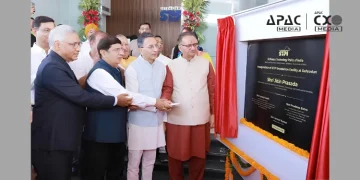









Digital empowerment is crucial in realising the dream of a 5 trillion-dollar economy and India is leaving no stone unturned towards this goal. The three-day India Digital Empowerment Meet & Awards that started here on Thursday witnessed a galaxy of leaders in the Governance track which was the dedicated theme for the opening day. The following two days would cover health and education.
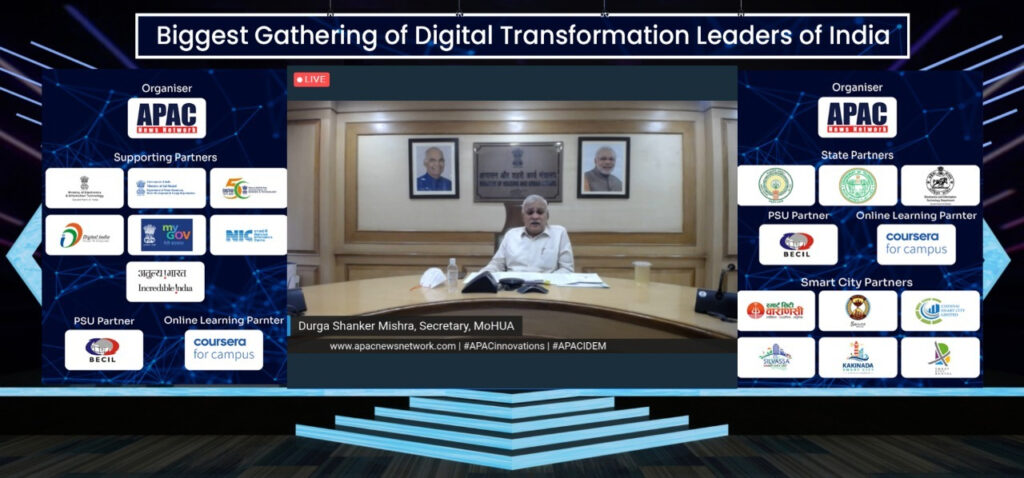 Speaking in the inaugural session- ‘Empowering Citizens & Nation through Digital Governance: The India Story of Present & Future’ Durga Shanker Mishra, Secretary, Ministry of Housing & Urban Affairs, Government of India said that the Ministry of Housing & Urban Affairs is one of the biggest users of technology and explained how technology enabled the roll-out of several government programmes including the Swachh Bharat Mission. He went to add, “An urban survey could gather feedback from 15 crore people due to the use of digital technology in four weeks and as part of the PM Street Vendors’ Atmanirbhar Nidhi (PMSVANidhi) 22 lakh street vendors could be reached and working capital disbursed and this possible only due to the use of digital technology.
Stressing on the importance of the best use of technology, Mr Mishra said that 70 out of the 100 smart cities have Integrated Command Control Centre (ICCC) which is the brain of the city which helps in better city management during natural disasters, streamlining traffic and providing better public services to the people.
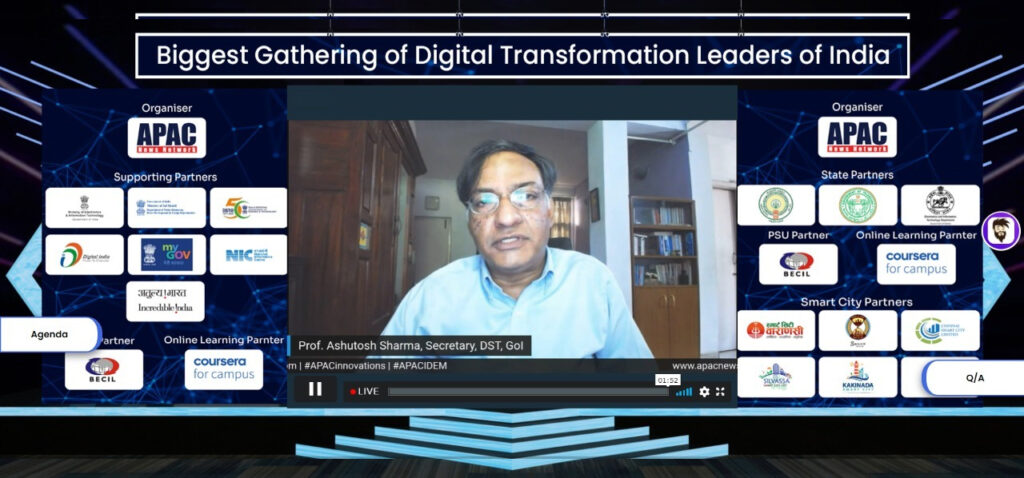 Geospatial technology has been used in almost all sectors and the new Geospatial data policy now allows free access to the use of data. Speaking about its importance Prof Ashutosh Sharma, Secretary, Department of Science & Technology, Government of India said, “The new policy in one sweep has facilitated for surveying and mapping without going through approvals. Liberalising and democratising data is about sharing data.” He also said, “Integration and convergence of different technologies is the future.”
 The adoption of new technologies cannot be the same in a country as large as India but an exception is the tiny state of Kerala. Satyajeet Rajan, Additional CEO, Kerala Infrastructure Finance Board shared the Kerala experience, he said, “Kerala was the first state in the country to have started an e-university and also has the distinction of having a cloud policy in 2015 itself.” On connecting digitally, he said that soon all the departments would be connected and fibre optic cabling is being taken up.”
 Dr Neeta Verma, Director General, NIC said that the availability of a cloud infrastructure is crucial and the cloud bill will also ensure employability. AI, data analytics will be drivers of the digital transformation but as one goes forward the issue of cyber security needs to be addressed and there is a need for a global security system.
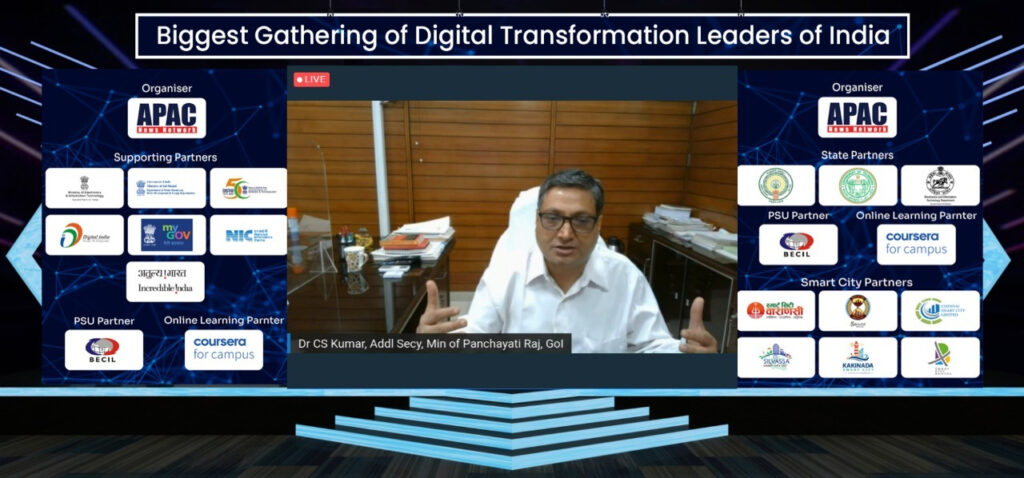 Urban India is galloping at a fast pace and cities are marching ahead with the aid of technology but rural India too is catching up. Dr C S Kumar, Additional Secretary, Ministry of Panchayati Raj, Government of India shared the efforts of the department he said, “In the next one-and-a-half years all the panchayats would be connected digitally. It is a herculean task to train 2.6 lakh panchayat workers but with the aid of technology it is easy.
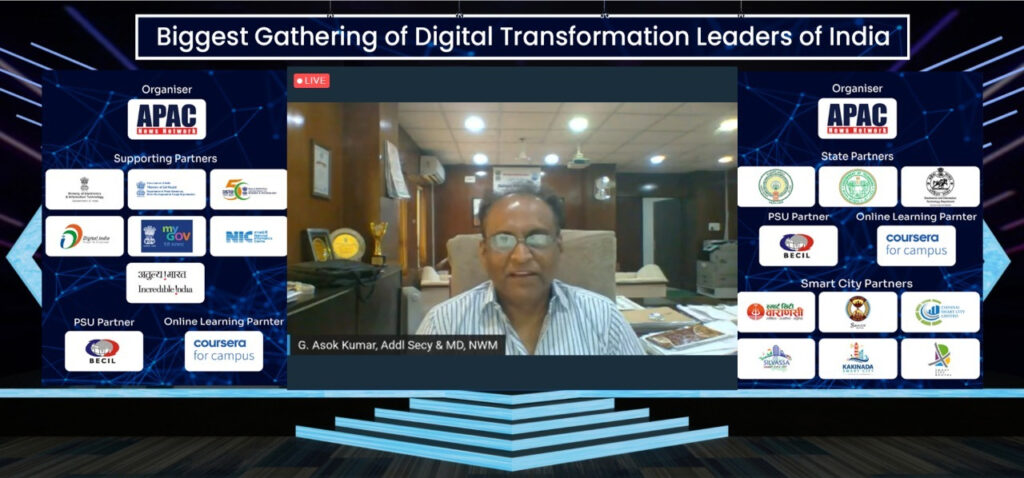 Water management is another area that has been neglected a lot but the National Water Mission, Ministry of Jal Shakti, Government of India has been working towards it. G Asok Kumar, Additional Secretary & Mission Director, National Water Mission, Ministry of Jal Shakti, Government of India said, “making an inventory of all the water bodies and scientifically measuring their quality and having a water budget is the way ahead and ‘Catch the Rain’ campaign is also a way of spreading awareness.” He further added, “Reuse, recycle and reduce the water consumption can happen by harnessing technology,”
 Ashish Kumar Singh, Additional Chief Secretary, Transport Department, Government of Maharashtra opined that there is a need for a new vision for a new design for a regulatory framework and to redesign public spaces and transform roads. The Govt of Maharashtra too is coming up with a new electric vehicle policy.”
 There is a widespread awareness about technology and its use in disaster management, housing, urban development and many other sectors but its use in the defence sector is as much and more. Dr Ajay Kumar, Secretary, Ministry of Defence, Government of India said that technology is important in the modern era which is based on smart weapons, robots, non-conflict warfare. In the last two years, the ministry initiated 30 projects and hundreds of startups are providing innovative ideas and solutions.”
“The saving of time and cost is immense due to startups. We have over 1,000 startups working in Defence. We used to get a 100 mega pixel camera from Israel and in 18 months a startup in IIT Delhi developed a camera at the total cost of development is the cost to buy one camera,” said Dr Ajay.
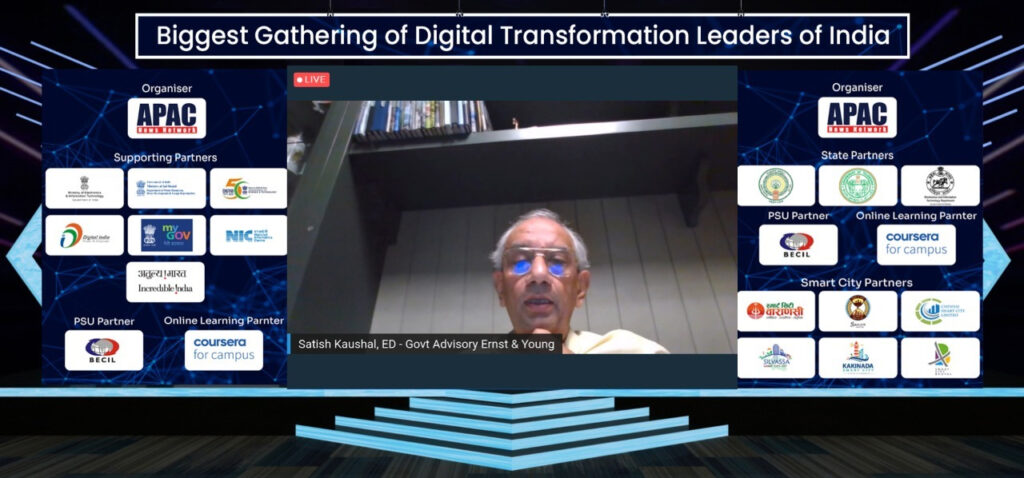 Further on the effective use of technology, he said that the Defence Ministry has ownership of vast tracts of land to the extent of 18 lakh acres and with the use of drones speedy resurvey of land has been taken up and the whole pension disbursement for defence staff is now digitally done. Satish Kaushal, Executive Director – Government Advisory Ernst & Young said that India has made a mark digitally and the recent announcement by the Govt of India of sharing the CoWIN App to other countries is a testimony to the strength of its application. He added, 90 per cent of the countries do not have a system in place for a record of tracking people before and after vaccination.
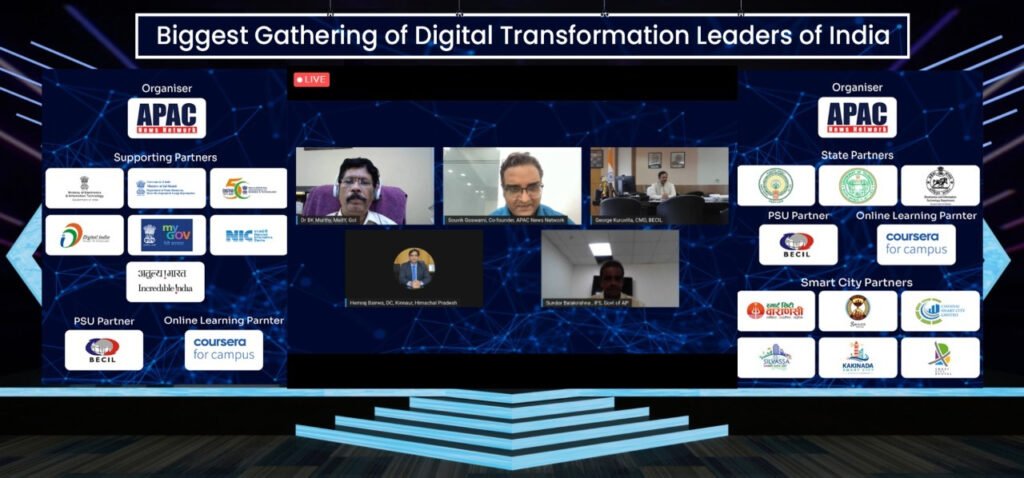 In the panel discussion – Digital Social Innovation: The New Way of Governance in New World Order the speakers were of the opinion that digital social innovation has a big role. B Sundar, Special Secretary, Department of Electronics & Information Technology, Government of Andhra Pradesh said 43 per cent people in Andhra Pradesh do not have internet facility and internet bandwidth must be in place first before any technology use. B K Murty, Senior Director and Group Head (R&D), Ministry of Electronics and Information Technology (MeitY), Government of India was of the opinion that in next 10 years 30 lakh nodes would be done. Palka Sahni, Resident Commissioner, Bihar Bhawan, New Delhi said that urban infrastructure needs to grow by 400 % and it has to be IT enabled.
 During the panel discussion- Digital Governance Success Stories from States bureaucrats from Telangana, Karnataka, MP, Odisha, Rajasthan, Jharkhand and Maharashtra shared their success stories ranging from transport to parks and how digital interventions helped in bettering civic services.
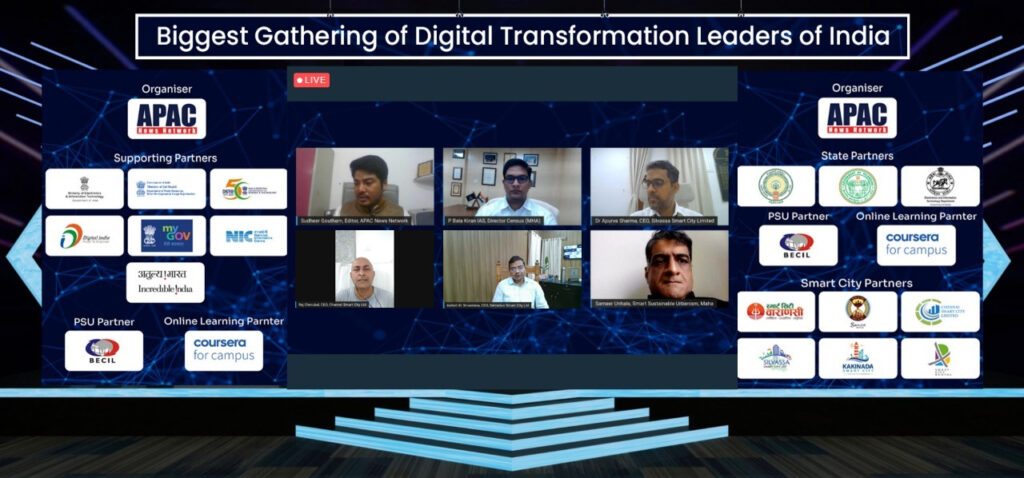 The panel on smart cities titled – Panel Discussion: Leveraging Technology & Innovation, Building Smart Cities was engrossing as Sameer Unhale, Joint Commissioner, Directorate of Municipal Administration, Government of Maharashtra, Dr. Ashish Srivastava, Chief Executive Officer, Dehradun Smart City Limited & District Magistrate, Dehradun, Dr Apurva Sharma, CEO, Silavasa Smart City Ltd and Raj Cherubal, CEO, Channel Smart City Ltd discussed how each one is working towards turning cities smarter with technology and putting in place new ideas that are sustainable and cost effective. P Bala Kiran, Director, Census Operations, Andhra Pradesh, Ministry of Home Affairs, Govt of India who was earlier CEO of Smart City Thiruvananthapuram Limited said that the project undertaken under Smart City Mission are not like a typical government project but are an outcome of a competition and that makes a difference as all lookout for innovation.