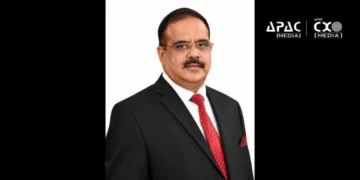












Enterprises want reliable power, better visibility into energy consumption, lower operating costs, and solutions that help them meet their ESG commitments. Hanish Gupta, Founder & Managing Director, Sunkind India Limited informs exclusively to Rajneesh De, Group Editor, APAC Media & CXO Media that integrated energy solutions will become increasingly important and solar alone will not always be enough. Businesses will increasingly combine solar with Battery Energy Storage Systems (BESS), intelligent energy management, and digital monitoring to optimize performance throughout the day.
India has set ambitious renewable energy targets while simultaneously strengthening domestic manufacturing through initiatives such as the PLI scheme and DCR norms. How do you see the country’s solar ecosystem evolving over the next five years, and what role will integrated renewable energy companies play in this transformation?
I believe India’s renewable energy story is entering a completely new phase. For the last decade, the conversation was largely about adding capacity as quickly as possible. Going forward, the focus will shift towards building a stronger and more self-reliant ecosystem.
The government’s push through initiatives like the PLI scheme, DCR norms, ALMM, and the broader vision of achieving 500 GW of non-fossil fuel capacity by 2030 has given the industry a clear direction. The next five years will be less about importing solutions and more about building them in India, whether that is manufacturing, technology, engineering, or energy management.
Customers are also changing the way they evaluate renewable energy partners. They are no longer looking for someone who can simply install a solar plant. They want a long-term partner who understands the entire energy ecosystem and can take responsibility from manufacturing and engineering to operations, maintenance, and performance.
That is where integrated renewable energy companies will make the biggest difference. When manufacturing, EPC, power generation, storage, and digital monitoring work together, projects become more reliable, supply chains become stronger, and customers get greater confidence in the long-term performance of their investments.
At Sunkind, this has been the thinking behind our journey. Our vision has always been to build an energy company, not just a solar company. As we often say, our purpose is simple, Enabling Human Progress, by making clean energy more dependable, more accessible, and more future-ready.
Sunkind has expanded from an EPC-focused company into an integrated renewable energy platform with manufacturing and power generation capabilities. What strategic advantages does this vertically integrated model offer in today’s rapidly evolving clean energy landscape?
When we started, the market was very different. Success was largely measured by how many projects you could execute. Today, customers ask much deeper questions. They want to know where the modules are coming from, how reliable the supply chain is, what technology is being used, and who will support the asset ten or twenty years from now.
That shift is exactly why we chose to build an integrated business.
A vertically integrated model gives us greater control over quality, delivery timelines, technology adoption, and customer experience. Instead of depending on multiple stakeholders, we can align manufacturing, engineering, procurement, execution, and operations under one vision.
For customers, that translates into fewer uncertainties and better accountability. They know they are working with a partner who is invested in the entire lifecycle of the project, not just the installation.
It also allows us to respond faster to changes in the market, whether those are policy shifts, new technologies, or evolving customer requirements. In an industry that is moving as quickly as renewable energy, that agility becomes a significant advantage.
As India scales up solar deployment, what are the biggest opportunities and challenges you foresee for the commercial & industrial (C&I) solar segment? How are customer expectations evolving in terms of energy reliability, cost optimization, and sustainability?
The C&I segment is probably one of the most exciting spaces in renewable energy today.
Businesses across sectors are under pressure to reduce energy costs, improve sustainability, and become more competitive. Solar helps address all three, which is why adoption is accelerating.
At the same time, customer expectations have changed significantly. Earlier, the discussion was almost entirely around payback periods. Today, conversations are much broader. Customers want reliable power, better visibility into energy consumption, lower operating costs, and solutions that help them meet their ESG commitments.
This is where integrated energy solutions will become increasingly important. Solar alone will not always be enough. Businesses will increasingly combine solar with Battery Energy Storage Systems (BESS), intelligent energy management, and digital monitoring to optimise performance throughout the day.
The opportunity is enormous, but the industry also needs to continue improving financing access, grid integration, policy consistency, and skilled workforce development. Addressing these areas will be critical if we want to accelerate adoption across the commercial and industrial sector.
With Sunkind establishing a 1 GW solar module manufacturing facility and planning a 2.5 GW solar cell plant, how important is backward integration in building a resilient and globally competitive renewable energy business? What impact do you expect domestic manufacturing to have on India’s energy security?
The last few years have taught every industry an important lesson, supply chains matter.
For renewable energy, backward integration is no longer simply about improving margins. It is about building resilience.
When you manufacture locally, you have greater control over quality, delivery schedules, technology upgrades, and long-term planning. It reduces dependence on international supply chains and makes businesses more responsive to customer needs.
More importantly, it aligns with India’s larger ambition of becoming a manufacturing hub for clean energy technologies.
Domestic manufacturing strengthens energy security because it reduces import dependence while creating jobs, encouraging innovation, and building technical capabilities within the country. As manufacturing scales, we will also become more competitive globally.
Our investments in module and cell manufacturing are not just business decisions. They reflect our belief that India’s clean energy future should increasingly be designed, engineered, and manufactured in India.
Battery Energy Storage Systems (BESS), digital monitoring, and AI-driven asset management are increasingly becoming integral to renewable energy projects. Which emerging technologies do you believe will have the greatest impact on India’s clean energy transition over the next decade?
Renewable energy is no longer just about generating electricity. It is becoming a technology-driven industry.
Battery Energy Storage Systems will play a defining role because storage is what allows renewable energy to become reliable around the clock. As storage becomes more affordable, its adoption will accelerate across utility-scale as well as commercial and industrial projects.
Artificial intelligence is another area that will transform the sector. AI can help predict equipment failures before they happen, improve energy forecasting, optimise asset performance, and reduce maintenance costs. These improvements may not always be visible, but they have a significant impact on project efficiency.
I also see technologies such as IoT-enabled monitoring, digital twins, smart grids, and green hydrogen creating new opportunities over the coming decade. Individually they are important, but together they will fundamentally change the way energy is generated, managed, stored, and consumed.
The future belongs to companies that can combine engineering excellence with digital intelligence.
Having built Sunkind without external capital and grown it into an integrated renewable energy platform, what leadership principles have guided your entrepreneurial journey? What advice would you offer to the next generation of entrepreneurs looking to build businesses in India’s clean energy sector?
Building a company without external capital teaches you a different way of thinking. Every decision matters because every resource matters.
One lesson I have learned is that growth should never come at the cost of credibility. Markets change, technologies evolve, but trust remains your biggest asset.
Another principle that has guided us is staying close to execution. Strategy is important, but businesses are ultimately built by consistently delivering what you promise. Customers remember reliability far longer than they remember presentations.
To young entrepreneurs, my advice would be simple. Don’t chase industries because they are fashionable. Solve real problems. Build patiently, keep learning, and surround yourself with people who are better than you in their respective fields.
India’s clean energy sector is still in the early stages of a long journey. There will be challenges, but there will also be opportunities that come only once in a generation. Those who focus on creating long-term value, rather than quick wins, will build businesses that truly make a lasting impact.