












The Tamsa River is an ancient tributary of the River Ganga, flowing through the heart of eastern Uttar Pradesh.
The river, once faced with challenges like siltation, waste accumulation, and encroachments, now stands revitalised, all because of the efforts of the district administration and strong participation from the community.
The transformation of the Tamsa River in Azamgarh district stands as a compelling example of how administrative leadership, community participation, and cultural sensitivity can converge to deliver impactful environmental governance.
Leadership Driving Change
At the heart of this initiative is IAS Ravindra Kumar, District Magistrate and Collector of Azamgarh, whose proactive leadership brought together multiple stakeholders into action to achieve one goal: Rejuvenating the Tamsa River.
Recognising both the ecological urgency and cultural significance of the river—especially near the revered Chandrama Rishi Ashram—he spearheaded a month-long intensive rejuvenation campaign in 2025.
Strategic planning, inter-departmental coordination, and continuous monitoring ensured that efforts were not fragmented but aligned toward a common vision of sustainable restoration.
Community Participation as the Cornerstone
A significant feature of this initiative was its strong grassroots engagement. Gram Pradhans, women’s groups, school children, and local volunteers actively participated through shramdaan (voluntary labor). Awareness campaigns fostered a sense of ownership, transforming public perception of the river—from a dumping ground to a shared heritage.

Sanitation teams cleared accumulated waste and invasive vegetation, while the irrigation department undertook desilting operations to restore natural flow. The involvement of local communities ensured that the initiative was not just a one-time intervention but a sustained movement.
Integrated and Sustainable Interventions
The rejuvenation effort followed a structured and multi-pronged approach:
Desilting and flow restoration to revive the river’s hydrology
AdvertisementSolid waste removal and pollution control through systematic cleaning drives
Encroachment removal and land demarcation to protect riverbanks
Afforestation with fruit-bearing trees, combining ecological restoration with local economic benefits
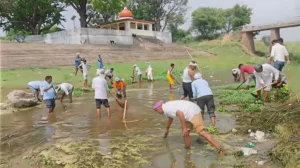
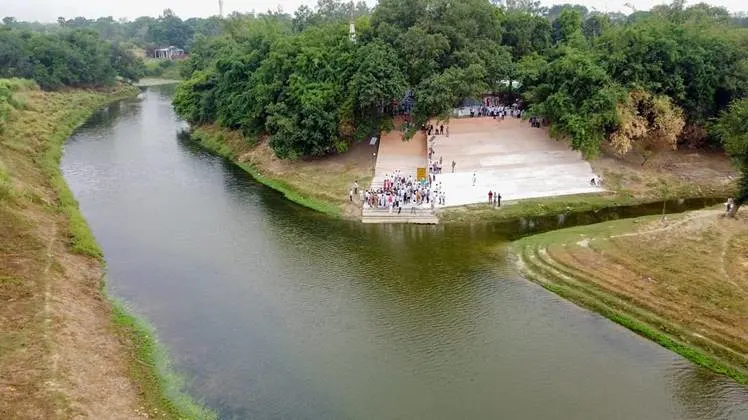
Infrastructure development at key sites, including improved ghats, sanitation facilities, and pathways, enhanced accessibility and usability for both residents and visitors.
Ecological and Cultural Revival
The results have been transformative. The river now flows more freely, with visibly improved water quality and the return of aquatic biodiversity. Reduced pollution has also led to better public health outcomes, including a decline in mosquito breeding.
Equally significant is the cultural resurgence. Rituals, fairs, and religious activities have resumed at the ghats, reconnecting people with their traditions. The site has also emerged as a local tourism hub, boosting livelihoods and community pride.
A Replicable Governance Model
The revival of the Tamsa River illustrates the power of convergence—where governance, community action, and cultural values align. By integrating ecological restoration with socio-economic benefits, the initiative offers a scalable model for rejuvenating local water bodies across India.
Azamgarh’s experience reinforces a critical lesson: sustainable environmental governance is most effective when it is participatory, locally rooted, and administratively driven.