
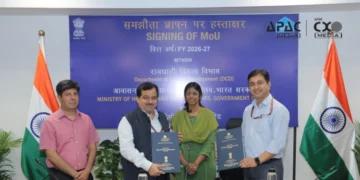






















For survivors of violence, seeking justice is often as daunting as enduring the trauma itself. Until recently, women navigating the support system in Punjab had to move from police stations to hospitals, courts, and welfare offices—repeating their stories at every step, often abandoning the process midway.
Recognising the issues, IAS Preeti Yadav, currently the Special Secretary, Department of Employment Generation, Skill Development and Training, and formerly Deputy Commissioner, Rupnagar, Punjab, introduced Sakhi, a digitally integrated platform built around the One Stop Centre (OSC) framework.
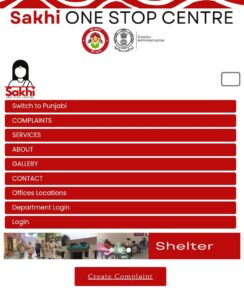
Reimagining the One Stop Centre Model
One Stop Centres were envisioned as safe spaces providing integrated support to women facing violence in both private and public spheres.
However, while the physical infrastructure existed, the absence of digital convergence meant that coordination between departments remained limited. Sakhi bridges this gap by turning the OSC into a digitally empowered ecosystem, ensuring seamless service delivery and real-time accountability.
A Digital Backbone for Responsive Governance
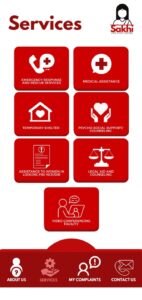
The platform offers a range of services, including psycho-social support, legal aid and counselling, temporary shelter, and medical assistance along with emergency response and rescue services. Built on PHP Laravel and MySQL and hosted at the Punjab State Data Centre, it enables swift complaint registration, tracking, and resolution.
What sets Sakhi apart is its efficiency: complaint registration time has reduced from nearly two hours to under five minutes. Emergency cases are addresed within six hours, while standard cases are resolved within 24–48 hours. Each complaint generates a unique ID, triggering coordinated action across departments. Every step is time-stamped, and closure is only possible after documented compliance, monitored in real time by the Deputy Commissioner.
Putting Survivors at the Centre
Sakhi’s design prioritises accessibility and dignity. Women can register complaints through typed text, audio recordings, or video messages—ensuring inclusivity for those who may not be able to write or travel. GPS-enabled SOS alerts connect survivors directly to the nearest police station, with jurisdiction automatically determined by the system.
Real-time SMS updates keep survivors informed, eliminating the need to chase their cases. By removing procedural and logistical barriers, Sakhi allows women to focus on recovery rather than bureaucracy.
Beyond Protection: Enabling Economic Independence
Recognising that safety without financial independence is often temporary, Sakhi integrates access to livelihood and welfare schemes. Survivors are connected to skill development missions, employment offices, and financial assistance programs such as PMEGP and rural livelihood initiatives.
Additionally, the platform facilitates access to social security benefits, pensions, and temporary shelter with ration support. This holistic approach ensures that women are not forced to return to abusive environments due to economic constraints, addressing the root causes of vulnerability.
A Model for Scalable Good Governance
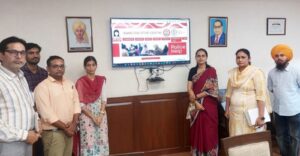
With over 500 survivors already supported, Sakhi stands as a powerful example of citizen-centric governance. It demonstrates how digital integration, when combined with administrative accountability, can transform service delivery.
By unifying multiple departments into a single responsive system, Sakhi not only simplifies access to justice but also restores agency to survivors. In doing so, it offers a scalable model for other regions aiming to strengthen institutional responses to gender-based violence—proving that governance, when designed with empathy and efficiency, can truly change lives.
Also Read –
- From Stigma to Systemic Care: How IAS Karn Satyarthi is Transforming Epilepsy Care in East Singhbhum