




















In Rajasthan’s Tonk district, a serious gap in mathematics learning had long held students back. Despite nearly 90% of Class 10 students aspiring to pursue science careers, fewer than 12% made it to science streams.
Weak foundational skills, a shortage of teachers, and limited subject expertise made mathematics a major barrier. The problem was more severe in Hindi-medium government schools, where access to quality learning support remained limited.
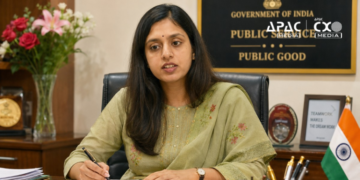
When IAS Dr. Soumya Jha, the then District Magistrate of Tonk, took charge, she identified that traditional interventions were not enough. The district needed a solution that could scale quickly, adapt to individual learning levels, and support both students and teachers.
The Birth of PadhaiWithAI
Under the LAKSHYA 2025 initiative, the district administration, under the leadership of IAS officer Jha, launched PadhaiWithAI, an AI-powered personalised learning platform developed in collaboration with the National Informatics Centre, Tonk.

The platform acted like a real-time tutor. It explained solutions in Hindi and English, generated unlimited practice questions, and adapted to each student’s learning pace. Teachers could track progress through dashboards at the school, block, and district levels, allowing targeted interventions.
The programme covered all 353 government senior secondary schools in the district and onboarded nearly 12,000 Class 10 students. It was implemented as a focused six-week campaign with structured daily practice, regular tests, and close monitoring of attendance and performance.
A Smart, Inclusive Learning Model
PadhaiWithAI changed how classrooms functioned. Instead of relying only on textbooks, students engaged with interactive problem-solving. Those with weak basics were given targeted remedial support, while stronger students received advanced practice.

Teachers shifted from routine tasks like worksheet creation to mentoring and guiding students. The system also ensured accountability, with alerts for absenteeism and performance gaps. This created a continuous learning cycle where no student was left behind.
Measurable and Rapid Impact
The results were striking. Within six weeks, the Class 10 mathematics pass rate rose sharply to 96.4%. The share of first-division students increased by five percentage points to over 28%, while the number of students scoring above 80% also improved.
These gains stood out when compared to the state average, which saw only a marginal improvement. Tonk not only improved pass rates but also boosted high-performing students, showing that the intervention worked across all levels.
National Recognition and Future Potential
The initiative gained attention at national platforms, including seminars and policy showcases. In August 2025, NITI Aayog and NITI Frontier Tech Hub featured the story of PadhaiWithAI in the Frontier Tech Repository.
Looking ahead, the model has the potential to expand into subjects like science and English. Plans also include year-round implementation and deeper personalisation through student-level tracking.
A Blueprint for Scalable Change
PadhaiWithAI is more than a local success story. It offers a practical and scalable model for improving learning outcomes in rural India. By combining AI, bilingual support, teacher empowerment, and data-driven monitoring, Tonk has shown that even short, focused interventions can create lasting impact.
The initiative aligns with national goals of digital inclusion and educational equity, proving that with the right approach, technology can bridge learning gaps and unlock opportunities for every student.
Also Read
Reviving the Tamsa: How IAS Ravindra Kumar Restored the Ancient River through Local Participation