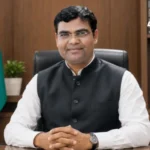

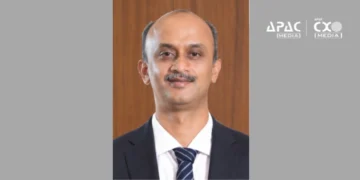













Indian Institute of Technology Indore envisions building a globally competitive, technology driven, research-intensive, and innovation-oriented academic ecosystem. In an exclusive interaction, Prof. Suhas S. Joshi, Director, IIT Indore, explains to Vidushi Gupta, Reporter at APAC Media how the institute prepares students to become future leaders, researchers, entrepreneurs, and socially responsible citizens.
How is the Indian Institute of Technology Indore aligning its academic structure with emerging industry expectations and evolving job roles?
IIT Indore has been proactively redesigning and expanding its academic ecosystem to align with emerging technologies, industry requirements, and future workforce demands. The Institute has significantly diversified its programmes in recent years with a strong emphasis on interdisciplinary education, sustainability, healthcare technologies, data science, space engineering, defence technology, electric mobility, and AI-driven applications.
At the undergraduate level, alongside core engineering disciplines, IIT Indore introduced new B.Tech. programmes in Chemical Engineering, Mathematics & Computing, Engineering Physics, and Space Science & Engineering.
More recently, the Institute has announced two highly contemporary programmes —B.Tech. in Biomedical Engineering and Data Science, and B.Tech. in Environmental Economics and Sustainable Engineering. These programmes have been specifically designed to address future industry needs in healthcare innovation, AI-enabled medical systems, sustainability, climate technologies, energy systems, and policy-linked engineering solutions.
The Institute has also expanded beyond conventional engineering education through the
launch of a Bachelor of Design (B.Des.) programme under the School of Innovation. The programme focuses on domains such as urban system innovation, educational technologies, healthcare systems, and sustainable energy systems, thereby promoting design thinking, innovation, and interdisciplinary problem-solving.
At the postgraduate level, IIT Indore has introduced several specialised M.Tech. programmes in cutting-edge areas including electric vehicle technology, space engineering, water, climate and sustainability, defence technology, applied optics and laser technology, biomedical devices, power systems and power electronics, and chemical processes design & Intelligence.
The Institute has additionally established advanced interdisciplinary centres such as the Centre for Electric Vehicle and Intelligent Transport Systems (CEVITS), Centre of Futuristic Defence and Space Technology (CFDST), Centre of Advanced Electronics, and Centre for Rural Development and Technology (CRDT), reflecting its strategic focus on emerging industrial sectors and national priorities.
With more than 65 academic programmes and growing research integration across disciplines, IIT Indore is building a future-oriented academic ecosystem that combines strong fundamentals, research excellence, innovation, entrepreneurship, and industry relevance.
In what ways are digital technologies and AI-driven tools being integrated into teaching and learning practices across disciplines at the campus?
The Indian Institute of Technology Indore is actively integrating digital technologies, Artificial Intelligence (AI), data-driven systems, and cyber-physical technologies into its teaching, learning, research, and innovation ecosystem across disciplines.
The Institute has developed a strong interdisciplinary academic and research environment supported by smart classrooms, advanced computing infrastructure, simulation platforms, virtual laboratories, digital learning resources, and blended learning methodologies. Faculty members increasingly use computational tools, AI-assisted analytics, coding environments, simulation software, and digital collaboration platforms to enhance classroom engagement and experiential learning.
A major pillar of IIT Indore’s translational research ecosystem is the IITI Drishti CPS Foundation, a Technology Innovation Hub established under the National Mission on Interdisciplinary Cyber-Physical Systems (NM-ICPS). The hub focuses on system simulation, modelling, visualisation, digital twins, AI-enabled systems, and cyber- physical technologies, creating opportunities for students and researchers to work on real-world applications inhealthcare, manufacturing, infrastructure, and transportation.
The Institute has also established specialised interdisciplinary centres such as the Charak Centre for Digital Healthcare, which works on AI-driven healthcare technologies, predictive analytics, digital twins, machine learning applications, and data-driven medical systems. The Centre provides students and researchers exposure to high-end computing facilities, simulation labs, and translational healthcare innovation.
Similarly, the Centre for Advanced Electronics supports advanced research and training in electronics, communication systems, embedded technologies, semiconductor systems, and applied computing, thereby strengthening technology-enabled learning and interdisciplinary skill development.
IIT Indore has also been expanding AI-focused applications and research in areas such as agriculture, healthcare, semiconductor technologies, and smart infrastructure. The Institute’s AgriHub Centre of Excellence leverages AI, Machine Learning, and deep learning to develop precision agriculture and data-driven solutions for farmers and stakeholders.
In healthcare technologies, IIT Indore has collaborated with AIIMS Raipur to advance AI- enabled diagnostics, predictive analytics, and digital healthcare systems through interdisciplinary research and deployment initiatives.
The Institute’s research-driven academic model further enables undergraduate & postgraduate students to participate in cutting-edge projects involving AI, machine learning, embedded systems, smart electronics, digital healthcare, cybersecurity, data science, and simulation technologies. IIT Indore currently hosts 1640 projects, over 11,000 research publications, and numerous interdisciplinary innovation initiatives, reflecting the strong integration of technology and research into the academic ecosystem.
Through these initiatives, IIT Indore is creating a future-ready learning environment that combines digital transformation, AI-driven innovation, interdisciplinary collaboration, and
application-oriented education across all major academic domains.
How does IIT Indore collaborate with industry to provide students with practical exposure through internships, projects, or live engagements?
Indian Institute of Technology Indore has developed a strong industry-academia collaboration ecosystem to provide students with practical exposure, experiential learning, innovation opportunities, and real-world problem-solving experiences.
The Institute’s Corporate Relations Office serves as a key interface between academia and industry, facilitating sponsored research projects, consultancy assignments, internships, industrial training programmes, collaborative research, and technology development initiatives. Through these partnerships, students gain exposure to industry practices, emerging technologies, and real-life engineering and scientific challenges.
IIT Indore actively encourages students to undertake internships in industries, startups, research laboratories, and academic institutions. Multiple departments and research groups host summer, winter, and semester-long internships, enabling students to work on cutting- edge research and application-oriented projects under faculty mentorship. The Department of Computer Science and Engineering, for instance, regularly hosts interns working on advanced research problems, many of which result in publications in reputed journals and conferences.
The Institute’s internship ecosystem is further strengthened through structured experiential learning initiatives under programmes such as TEQIP, which emphasise industry exposure, leadership development, and problem-solving capabilities through hands-on learning.
IIT Indore also promotes innovation and entrepreneurship through its incubation and startup ecosystem. The Institute recently established a major Incubation and Innovation Centre in collaboration with the IITI DRISHTI CPS Foundation and MPSEDC to support deep-tech startups, intelligent manufacturing, prototyping, and product validation. The centre provides mentorship, funding support, industry interaction, and technology commercialisation opportunities for students and innovators.
The Institute’s startup and incubation ecosystem has already supported more than 85 startups, with several ventures graduating successfully and generating employment opportunities. Students benefit from mentorship programmes, investor connect, prototyping support, faculty collaboration, and access to advanced laboratories and research facilities.
Industry collaborations are also being strengthened through dedicated Centres of Excellence established jointly with industrial partners. These centres focus on sector-specific innovation, product development, analytical testing, advanced manufacturing, and applied research.
Recent collaborations include partnerships with Case New Holland Construction Equipment and Rajratan Global Wire Limited to provide students and researchers exposure to industry-grade technologies and practical problem-solving environments.
In addition, IIT Indore’s Career Advancement and Mentoring Centre (CAMC) works closely
with corporates, research organisations, and industries to facilitate internships, training
opportunities, campus placements, and career development initiatives. The Institute’s strong recruiter base and growing corporate engagement ecosystem further helps students gain industry readiness and professional exposure.
Through these initiatives, IIT Indore has created a vibrant ecosystem where academic
learning is closely integrated with industrial engagement, research innovation, entrepreneurship, and experiential skill development.
What initiatives are being taken to continuously upskill faculty so they can deliver
technology-enabled and application-oriented education?
IIT Indore places strong emphasis on faculty development and continuous academic
upskilling. Faculty members are encouraged to participate in national and international
conferences, Faculty Development Programmes (FDPs), interdisciplinary research
collaborations, industry interaction programmes, and advanced training initiatives in
emerging technologies.
The Institute actively promotes collaboration with industries, research organisations, and
academic institutions to strengthen application-oriented teaching and technology-enabled pedagogy. National policy initiatives under NEP 2020 also emphasise faculty mobility, industry interaction, and deployment of digital tools within IITs.
IIT Indore has additionally entered into collaborations and exchange programmes with
institutions and organisations for workshops, FDPs, academic interactions, and research
enhancement initiatives.
The Institute’s strong research ecosystem, including interdisciplinary projects in AI, healthcare, sustainability, advanced materials, and smart systems, further enables faculty to remain engaged with cutting-edge technologies and real-world applications.
How does IIT Indore focus on developing employability skills such as problem-solving,
adaptability, and innovation alongside academic knowledge?
Indian Institute of Technology Indore places strong emphasis on holistic student development by integrating academic excellence with innovation, critical thinking, experiential learning, and entrepreneurial exposure. The Institute’s academic and co- curricular ecosystem is designed to nurture problem-solving abilities, adaptability, creativity, leadership, teamwork, and research orientation alongside strong technical foundations.
A key feature of IIT Indore’s pedagogy is its strong focus on project-based and research- driven learning. Students are encouraged to participate in interdisciplinary research projects, open-ended design challenges, laboratory-based innovation, and real-world problem-solving assignments from an early stage of their academic journey. This exposure helps students develop analytical thinking, practical application skills, and adaptability to emerging technologies and industry requirements.
To further strengthen hands-on learning and innovation culture, IIT Indore has established dedicated Maker’s Space and Tinkering Laboratory facilities that provide students with opportunities for rapid prototyping, product design, experimentation, electronics fabrication, robotics development, and interdisciplinary innovation.
These facilities encourage students to convert ideas into working prototypes through experiential and collaborative learning. Access to modern tools, fabrication equipment,
embedded systems, IoT platforms, 3D printing, and design resources helps students develop practical engineering skills, creativity, and entrepreneurial thinking beyond the classroom environment.
The Institute also promotes innovation and entrepreneurship through its incubation and
startup ecosystem supported by the IITI DRISHTI CPS Foundation and the Incubation and Innovation Centre. Students receive mentorship, access to advanced laboratories, prototyping support, startup incubation facilities, and opportunities to work on deep-tech and socially relevant innovations. The ecosystem has already supported more than 85 startups across sectors including healthcare, intelligent systems, sustainability, electronics, and digital technologies.
IIT Indore further encourages students to participate in hackathons, coding competitions, innovation challenges, technical festivals, research internships, and interdisciplinary team projects, which cultivate teamwork, leadership, communication skills, and solution-oriented thinking. The Institute’s growing focus on emerging domains such as Artificial Intelligence, sustainability, electric mobility, digital healthcare, defence technologies, and smart infrastructure also ensures that students are exposed to future-ready skills and evolving technological ecosystems.
The Institute’s Career Advancement and Mentoring Centre (CAMC) work closely with students to support career preparedness through internships, industry interaction, placement guidance, soft skill development, and professional mentoring initiatives.
The Institute consistently attracts leading recruiters from diverse sectors including technology, consulting, finance, analytics, core engineering, research, and public sector organisations.
In addition, the launch of multidisciplinary programmes such as the Bachelor of Design (B.Des.) under the School of Innovation reflects IIT Indore’s commitment to nurturing creativity, design thinking, systems thinking, and user-centric innovation.
The programme specifically focuses on innovation in healthcare systems, urban systems, educational technologies, and sustainable energy systems, thereby promoting adaptability and interdisciplinary problem-solving capabilities among students.
Through its research-intensive environment, innovation ecosystem, interdisciplinary academic structure, hands-on Maker’s Space and Tinkering Lab facilities, and strong industry engagement initiatives, IIT Indore is developing graduates who are not only academically strong but also adaptable, innovative, entrepreneurial, and equipped to thrive in rapidly evolving global professional environments.
What is the Institute’s long-term vision for building a future-ready learning ecosystem that combines technology, skills, and industry relevance?
Indian Institute of Technology Indore envisions building a globally competitive, technology-driven, research-intensive, and innovation-oriented academic ecosystem that prepares students to become future leaders, researchers, entrepreneurs, and socially responsible professionals.
The Institute’s long-term vision is centred on creating an interdisciplinary and future- ready learning environment where education, research, technology, innovation, and societal impact converge seamlessly. In alignment with the objectives of NEP 2020 and emerging global trends, IIT Indore is continuously expanding its academic programmes, research capabilities, digital infrastructure, and industry collaborations to address evolving technological and socio-economic challenges.
A significant aspect of this vision is the introduction of new-age academic programmes in
areas such as Biomedical Engineering and Data Science, Environmental Economics and Sustainable Engineering, Space Science & Engineering, Electric Vehicle Technology, Defence Technology, and Design Innovation. These programmes are aimed at preparing students for future industries and emerging sectors driven by AI, sustainability, healthcare technologies, intelligent systems, climate technologies, and advanced manufacturing.
The Institute is also strengthening its ecosystem through advanced interdisciplinary centres such as the IITI Drishti CPS Foundation, Charak Center for Digital Healthcare, Centre for Electric Vehicle and Intelligent Transport Systems (CEVITS), Centre of Futuristic Defence and Space Technology (CFDST), and the School of Innovation. These centres promote cutting- edge research, digital transformation, industry-linked innovation, and translational technologies across multiple domains.
To build a culture of innovation and experiential learning, IIT Indore has developed Maker’s Space facilities, Tinkering Labs, incubation centres, startup ecosystems, and advanced research laboratories that encourage students to engage in prototyping, product development, entrepreneurship, and interdisciplinary problem- solving. The Institute’s startup and incubation ecosystem has already supported numerous deep-tech ventures and innovation-driven enterprises.
The Institute also aims to strengthen global collaborations, industry partnerships, digital
learning systems, AI-enabled research ecosystems, and sustainable technology initiatives to create a flexible and adaptive academic model. Through strong industry-academia interaction, sponsored research, internships, and technology development programmes, IIT Indore seeks to ensure that students remain aligned with evolving professional and
industrial ecosystems.
The Institute’s long-term vision is therefore not only to impart academic knowledge, but to
create a transformative ecosystem that nurtures creativity, adaptability, technological leadership, ethical values, entrepreneurship, and lifelong learning — enabling students to
contribute meaningfully to national development and global challenges in the rapidly
evolving knowledge economy.