


















New Delhi, June 4 (APAC Media): The Union Government is set to roll out around 5,200 ethanol dispensing stations across key regions, including Delhi-NCR, Pune, Mumbai, and Nagpur.
The move is a part of the government’s strategy to accelerate the adoption of flex-fuel vehicles and strengthen the country’s biofuel ecosystem.
Initial Rollout
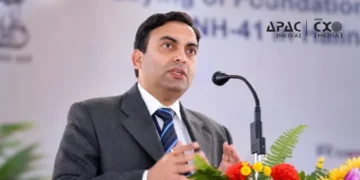
Speaking at the launch of the flex-fuel version of Maruti Suzuki’s WagonR, Union Petroleum and Natural Gas Minister Hardeep Singh Puri said earlier efforts to establish E-100 ethanol dispensing stations had failed to gain traction due to the lack of compatible vehicle models in the market. With flex-fuel vehicles now entering the mainstream, the government is moving ahead with a phased expansion of ethanol infrastructure.
The initial rollout will cover approximately 5,200 dispensing stations in major urban centres. The network is expected to expand further by the end of 2026 and scale up significantly by December 2027, depending on market response and vehicle adoption rates.
Flex- Fuel as an Alternative to Conventional Fossil Fuels
Puri highlighted that wider acceptance of flex-fuel vehicles could substantially boost ethanol consumption in India. “If nearly half of newly sold vehicles become flex-fuel compliant, ethanol utilisation could increase by around 400 crore litres annually, creating greater demand for biofuels and reducing dependence on conventional fossil fuels,” Puri reiterated.
The minister said the initiative is also aimed at encouraging farmers to shift from water-intensive crops to maize, which requires less water and can serve as a key feedstock for ethanol production. He described the development as part of a broader ecosystem supporting energy transition and sustainable agriculture.
Emphasising the significance of flex-fuel technology in the passenger vehicle segment, Puri noted that India has over 30 crore two-wheelers and around 37 lakh passenger vehicles on its roads, making the sector critical for scaling alternative fuels.
He also underscored India’s energy security efforts, stating that the country has maintained uninterrupted fuel supplies despite global uncertainties and has significantly increased domestic LPG production over the years.
Also Read
Hero MotoCorp Launches Flex-Fuel Vehicles as India Pushes for Ethanol Mobility