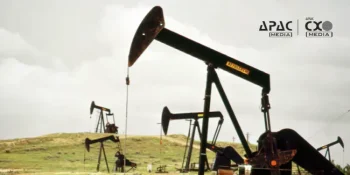













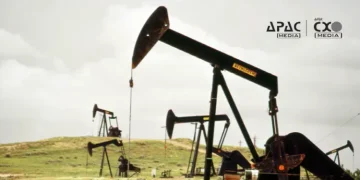










Noida, July 22 (APAC Media): Crude Oil prices surged to a six-week high on Wednesday as markets grappled with intensifying military confrontations between the United States and Iran, while concerns mounted over potential disruptions to global energy supplies following a naval blockade targeting Saudi Arabia.
Brent crude futures for September delivery surged 3.81% to $94.47 per barrel, while West Texas Intermediate (WTI) crude futures climbed 3.84% to $87.60 a barrel by 1:20 PM IST, as oil markets reacted to mounting geopolitical risks and concerns over potential supply disruptions.
U.S. forces launched strikes on Iranian military targets for an 11th consecutive night on Tuesday, hitting missile and drone launch facilities, command-and-control centres, air defence systems and other strategic infrastructure as Washington intensified its military campaign against Tehran.
Nestle India Q1 Results: Net Profit Jumps 48% YoY to Rs 975 Crore; Sales Grow 25%
Investors are closely tracking developments involving Yemen’s Iran-backed Houthi movement after the group threatened a naval blockade targeting Saudi-linked shipping in the Red Sea.
The warning has prompted some oil tankers to divert their routes, fuelling concerns over potential disruptions to exports from one of the world’s largest crude producers.
Crude Oil Price ($/barrel)
$95 ┤ ● Brent: $94+
$94 ┤ ●
$93 ┤ ●
$92 ┤ ●
$91 ┤ ●
$90 ┤ ●
$89 ┤ ●
└────────────────────────────────
Day 1 Day 2 Day 3 Day 4 Now
Tehran continued launching retaliatory strikes against U.S. military positions across the region, with reported attacks targeting facilities in Bahrain, Kuwait and Jordan.
U.S. President Donald Trump said Iranian officials were seeking urgent talks, but Washington would not engage unless Tehran was prepared for meaningful negotiations. He added that the U.S. would soon target areas near Pickaxe Mountain, a heavily fortified underground site located close to one of Iran’s key nuclear enrichment facilities.
Iranian military leaders warned that any attack on nuclear sites or other sensitive facilities would represent a major escalation, according to a statement carried by Iranian state media.
Sensex, Nifty Fall, Rupee Slips as Middle East Tensions Push Crude Oil Higher
A deep-rooted mistrust continues to define relations between Iran and the United States, with tensions escalating after Iran was hit by surprise attacks in June 2025 and again in February while nuclear talks with Washington were underway.
The fragile interim agreement later collapsed after Iran resumed attacks on vessels in the Strait of Hormuz, a key waterway that was expected to reopen as part of the arrangement.
Analysts warned that any renewed blockade of the strategic passage could force oil tankers to reroute through the Red Sea and the Suez Canal, adding considerable time and costs to shipments bound for Asia.
The threat comes as maritime activity has already been disrupted by ongoing tensions around the Strait of Hormuz, one of the world’s most important routes for crude oil transportation.
Concerns over global energy supplies have also intensified following disruptions to Kazakhstan’s crude exports through the Black Sea. The Caspian Pipeline Consortium (CPC) halted oil loadings after repeated attacks targeted vessels at its Russian export terminal.
“Taking into account renewed disruptions in the Persian Gulf, potential risks to Saudi crude exports through the Red Sea, and developments in the Black Sea, Brent crude prices above $91 a barrel could be considered undervalued, particularly if these disruptions continue into August,” analysts said.
Meanwhile, the American Petroleum Institute reported on Tuesday that U.S. crude inventories increased by 2.603 million barrels last week, contrary to market expectations for a decline of 1.5 million barrels.
The rise marked the first weekly inventory build in two weeks.
Market participants are now awaiting official inventory figures from the U.S. Energy Information Administration, due later on Wednesday, for further signals on supply conditions.
–ENDS–
Disclaimer: This article is for informational purposes only. APAC Media is not liable for any investment decisions or losses. Please conduct your own research or consult a financial advisor before investing.
Also Read: