





















Noida, July 22 (APAC Media): Indian benchmark equity indices BSE Sensex and nifty ended sharply lower on Wednesday as investors remained cautious amid rising global uncertainty, elevated crude oil prices, continued foreign fund outflows, and weakness in the rupee.
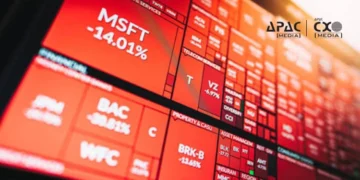
The BSE Sensex declined by more than 800 points during the session, while the NSE Nifty50 slipped below the 24,000 level. Selling pressure was witnessed across most sectors, with banking, pharmaceuticals, metals, and auto stocks contributing to the market decline.
The Indian rupee closed 0.3% lower at 96.5650 per U.S. dollar, compared with the previous close of 96.2350.
Brent Crude Hits Six-Week High Above $94 as Middle East Tensions Rattle Oil Markets
Market participants attributed the sharp fall to a combination of domestic and global factors. Escalating geopolitical tensions in the Middle East pushed crude oil prices higher, raising concerns over inflation and India’s import costs.
The surge in oil prices also weighed on investor sentiment, particularly in sectors sensitive to input costs.
Foreign institutional investors (FIIs) continued to pare their exposure to Indian equities, adding to the selling pressure in frontline stocks. A weaker Indian rupee against the US dollar further dampened market sentiment, as investors assessed the potential impact on corporate earnings and inflation.
Nestle India Q1 Results: Net Profit Jumps 48% YoY to Rs 975 Crore; Sales Grow 25%
Pharmaceutical stocks remained under pressure amid concerns over possible changes in US trade and tariff policies affecting the sector. Banking and financial shares also witnessed broad-based selling, dragging the benchmark indices lower.
Analysts said investors remained cautious ahead of key global economic developments and ongoing corporate earnings announcements. They noted that market volatility could persist in the near term as investors monitor geopolitical developments, crude oil prices, foreign fund flows, and central bank policy signals.
Despite the sharp decline, market experts said long-term investors are likely to remain focused on corporate fundamentals while short-term trading is expected to remain driven by global cues and earnings-related developments.
–ENDS–
Disclaimer: This article is for informational purposes only. APAC Media is not liable for any investment decisions or losses. Please conduct your own research or consult a financial advisor before investing.
Also Read: