























By T P Venu
The dreaded coronavirus has had an effect on almost everyone and every sector in some way or the other but the most affected is the school going population. Comprising a major chunk of the population, the school children might not have lost lives as opposed to elderly population but the lost year has left several scars that would take years to heal.
Sleep pattern goes for a toss
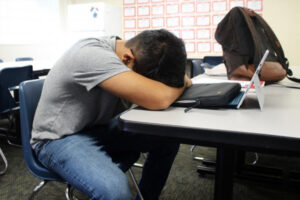 If one were to pinpoint the biggest effect of the pandemic, it would be the sleeping habit. Since the closure of schools in March 2020 sleep patterns have gone for a toss. Matthew Walker, a sleep scientist and professor of neuroscience at the University of California at Berkeley, writes: “Sleep deprivation causes deficits in the prefrontal cortex, which normally keeps our amygdala, the emotional and impulse region of the brain, in check.”
Several sleep scientists point out that digital learning has a direct impact on sleep. Dr Laura Sterni, Director of the Hopkins Pediatric Sleep Center is a firm believer. Among the several videos that have gone viral on social media, the one of a tiny-tot pleading with her mother to teach her in the middle of the night has struck a chord. The mother is seen laughing and joking and asks the child who it seems is below the age of five why she wanted to study so late in the night. Experts believe the child’s response is one of the consequences of not being able to mingle with others and going to a pre-school.
Kills organizational skills
 Prolonged digital use has an adverse effect on mental health. A school provides an eco-system for interaction with peer group and teachers fosters healthy competition and is conducive for rewards and penalty.
The school which is a time-tested system creates an environment for the development of organizational skills. With the loss of such a system in the past 400 days, school going children have been losing on the much needed organizational skills.
See red in blue light
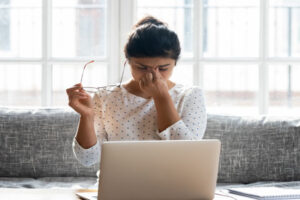 With the closure of formal teaching, screen time has increased manifold. Experts are of the opinion that there is a link to depression and anxiety. Dr Hemalatha Desai, a specialist in sleep apnoea says, “The changes in sleep pattern affect the body’s circadian rhythm, or internal biological clock. Blue light from our computer screens may suppress nocturnal melatonin secretion and alter circadian rhythms.
Loss of rewards and penalty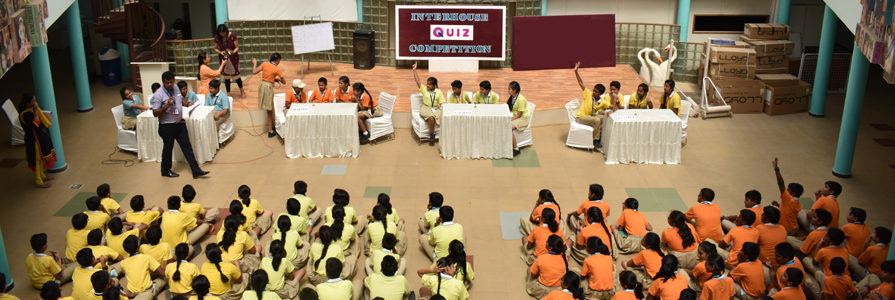
Traditional classroom facilitates for face-to-face interactions with peers and the teacher. Experts say this is vital for the all-round growth children in the developmental years. Dr Meghna Rao, a student counsellor of Army Public School avers, “Empathy and cooperation are so vital which an online classroom can never provide. Nothing can beat a personal touch and a pat on the back. A one-one-one interaction does wonders.”
Closing schools has exacerbated the existing problems of child abuse and trafficking. According to a report by The Kailash Satyarthi Foundation the Childline 1098 helpline saw a 50% increase in the number of calls received since the lockdown started.
Online learning has had very limited impact in India. The ASER survey shows that 38.2% children did not have access to smart phones. A positive feature of the pandemic, though, is that 11.1% children got the phone post the lockdown to help their study. In spite of this, online learning is available to only 11%. Of these, the share of those who were in government schools was 8.1%.