












Good governance is often measured through schemes, budgets, and targets. But at the grassroots, it can also mean recognising potential, removing barriers, and engaging directly with citizens.
In Chhotaudepur district of Gujarat, that engagement is taking place on playgrounds and inside classrooms—one student, one conversation, and one opportunity at a time.
Turning Tribal Talent Into a Sporting Opportunity
When IAS Gargi Jain, a 2015-batch Gujarat cadre officer, took charge in Chhotaudepur, she saw an opportunity to turn the district’s tribal youth into a sporting force.
Recognising their natural agility, stamina, and athletic ability, she initiated efforts to develop Chhotaudepur as the ‘sports capital’ of Gujarat.
Jain’s long-term vision for the youth of Chhotaudepur is linked to the opportunities surrounding India’s aspirations for the 2036 Olympics.
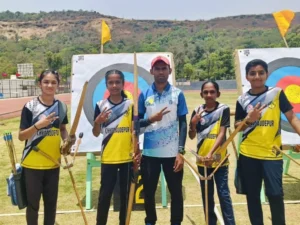
The first phase of the initiative focused on developing sports facilities across six tribal residential schools, including EMRS and GLRS institutions, benefiting more than 15,000 students. A mini-stadium was constructed to host district- and state-level sporting events, while the district also organised its first marathon that drew thousands of participants. Currently, training opportunities are being expanded across disciplines such as archery, athletics, football, table tennis, lawn tennis, volleyball, basketball, and swimming.
The larger objective is not merely to produce medal winners, but to change perceptions and establish sports as a serious pathway for discipline, leadership, and opportunity.
A Collector Who Walks Into Classrooms
Gargi Jain’s governance model extends beyond infrastructure and sports. Through an initiative called “Collector in Classroom”, she regularly visits classrooms in tribal villages and interacts directly with schoolgirls.
There are no formal speeches or inspections. Instead, the initiative is centred on conversation and trust.
What began as a simple outreach effort now reaches more than 750 girls across five Kanya Vidyalayas. Many of these students are the first in their families to attend school and face challenges ranging from financial constraints and social pressures to concerns over safety and early marriage.
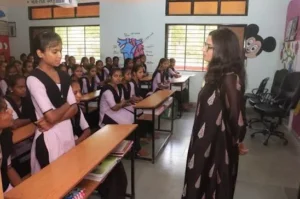
Over time, the relationship between the district administration and the students has become more personal. The girls, who once addressed her as “Madam Collector”, now call her “Collector Didi”.
The classroom interactions go beyond career guidance. Jain speaks with the students about opportunities in medicine, engineering, policing, government services, and the civil services, while also discussing leadership, legal rights, and confidence.
More importantly, she listens.
The students share concerns about safety, fear, social pressures, and aspirations that they may hesitate to discuss elsewhere. This direct engagement has helped create a more responsive and accessible form of administration.
The initiative has also been associated with encouraging children to return to education and reducing school dropouts among girls. Jain’s larger aspiration is to see tribal girls from the district eventually enter the civil services and emerge as leaders themselves.
Governance Beyond the Office
Together, the sports and education initiatives highlight a people-centric approach to governance. One creates physical infrastructure and new opportunities; the other builds confidence and aspirations.
Also Read
Reimagining Urban Spaces: How IAS Ashima Mittal Transformed Jalna’s Motibagh Lakefront