



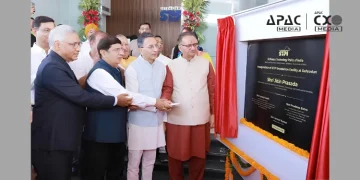









India’s cities are expanding at an unprecedented pace, bringing new opportunities as well as complex challenges. To address these evolving needs, the Central Government recently restructured the Ministry of Housing and Urban Affairs (MoHUA) into two specialised departments.
But what does this change mean, and why is it important?
What has changed?
The Ministry of Housing and Urban Affairs will now function through two dedicated departments:
- Department of Capital Development (DCD) or Rajdhani Vikas Vibhag
- Department of Urban Development (DUD) or Shahari Vikas Vibhag
This restructuring aims to provide greater focus, improve administrative efficiency, and strengthen urban governance.
Why was the ministry restructured?
Rapid urbanisation has made city management more complex than ever. Housing, infrastructure, mobility, water security, governance, and public services all require specialised attention. By creating two dedicated departments, the government intends to improve planning, policy implementation, and coordination while ensuring faster and more effective decision-making.
How will this benefit India’s cities?
The new structure is expected to deliver more citizen-centric governance by enabling focused attention on different aspects of urban development.
It also seeks to improve service delivery, strengthen institutional capacity, and support integrated planning for infrastructure, governance, and public services. The broader goal is to build cities that are liveable, resilient, technologically enabled, and environmentally sustainable.
What challenges is the government trying to address?
Speaking at the Parliamentary Consultative Committee meeting on Urban Planning, Union Minister of Housing and Urban Affairs, Manohar Lal Khattar, highlighted the growing pressures of rapid urbanisation. He emphasised the need for better urban planning, strong governance, water security, and continuous capacity building to meet the aspirations of India’s expanding urban population.
The restructuring aligns with the government’s long-term vision of Viksit Bharat 2047, which aims to create sustainable, future-ready cities that drive economic growth and improve the quality of life for citizens.
Also Read
Reimagining Urban Spaces: How IAS Ashima Mittal Transformed Jalna’s Motibagh Lakefront