





















From 5G-enabled Telehealth Kiosks using AI-powered diagnostics in Intelligent Villages, to Robo Dogs equipped with cameras and sensors for sensitive installations, Ericsson unveiled its innovative solutions at IMC 2024. Bhaswati Guha Majumdar of CXO News and APAC News Network explores the R&D expansion plans of the Swedish telecom giant behind these innovations.
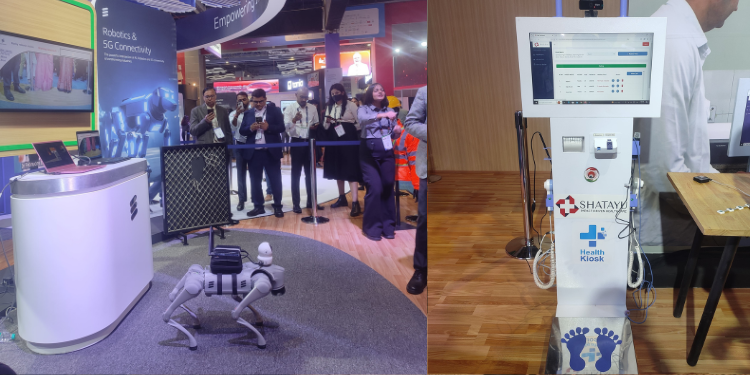
At the India Mobile Congress 2024, Ericsson’s booth drew significant attention with its display of innovative solutions, including a 5G-enabled Telehealth Kiosk aimed at transforming healthcare delivery in remote and underserved areas of India. This state-of-the-art health kiosk offers medical tests such as height, weight, BMI, body temperature, NIBP, SPO2 levels, pulse, glucose, and haemoglobin (HB) within a few minutes.
What sets this Telehealth Kiosk apart is its use of AI-powered diagnostics and real-time data integration, which enables seamless communication between patients and healthcare providers. With support for local languages and paperless operations, the kiosk is designed to make healthcare both accessible and affordable. The system leverages 5G’s high-speed connectivity to improve data analysis, diagnosis, and emergency care, reducing the need for in-person consultations.
Nitin Bansal, Head of Ericsson India and Head of Network Solutions, Southeast Asia, Oceania & India, showcased this kiosk to Neeraj Mittal, Secretary of the Department of Telecommunications (DoT), highlighting its potential for the DoT’s 5G Intelligent Village project, which currently includes 10 to 12 selected villages across India. Bansal even expressed his enthusiasm to expand the solution beyond these villages to showcase the broader benefits of 5G-powered healthcare.
In addition to the Telehealth Kiosk, another crowd-pleaser at Ericsson’s booth was a robotic dog, equipped with cameras and sensors to navigate uneven terrains and perform critical safety tasks. This robotic dog, connected through high-bandwidth 5G networks, can identify and respond to industrial hazards, such as fire detection in factories and damage to fences in sensitive areas like ports and airports. With AI-driven edge computing, the robot can trigger alerts and work with precision to enhance industrial safety. Similar technology has already been deployed by Hitachi Rail and Denmark’s TDCNet, demonstrating real-world applications.
At IMC itself, Ericsson made an important announcement regarding its plans to intensify its focus on Network Application Programming Interfaces (APIs) at its India R&D centres. These APIs enable telecom service providers to offer advanced 5G capabilities, such as network slicing and quality on demand, to developers and industries. Ericsson’s new venture with Bharti Airtel, Reliance Jio, and other global service providers aims to provide a unified platform for developers to access and utilize these network capabilities, driving innovation across sectors.
Andres Vicente, Head of Market Area South East Asia, Oceania & India at Ericsson, emphasized the importance of AI and generative AI in transforming telecom networks. He highlighted how Ericsson’s R&D centres in Chennai, Bengaluru, and Gurugram are spearheading work on programmable network capabilities and advanced AI technologies. The company’s India-based teams are also contributing to global advancements in AI-driven telecom solutions, including fraud detection, device management, and intelligent network operations.
Furthermore, Ericsson’s continued investment in R&D and its partnerships with Indian telecom service providers reflect its commitment to shaping the future of 5G and beyond, including the journey towards 6G.