




























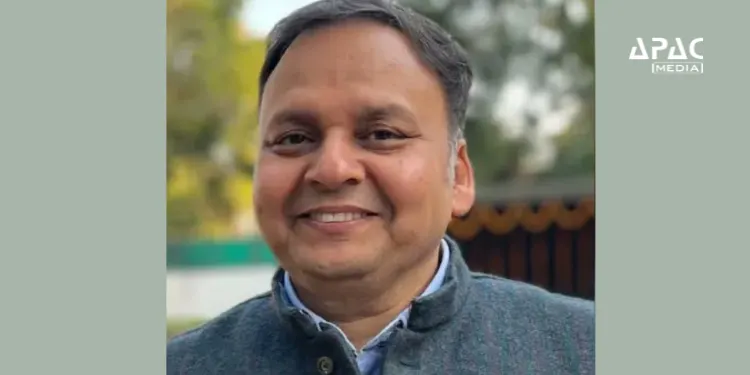
New Delhi: IPS Parag Jain, a seasoned intelligence officer credited with masterminding Operation Sindoor, which targeted key terrorist hubs in Pakistan and Pakistan-occupied Kashmir (PoK), has been appointed as the new chief of India’s external intelligence agency, the Research and Analysis Wing (RAW).
The appointment comes at a time when India is stepping up its counter-terror and foreign intelligence efforts amid heightened regional challenges.
Jain, a 1989-batch Indian Police Service (IPS) officer from the Punjab cadre, officially assumes office on 1 July, succeeding outgoing chief Ravi Sinha, who retired on 30 June.
Until now, Jain served as the head of the Aviation Research Centre (ARC), the technical arm of R&AW, where he also handled the Pakistan desk and oversaw personnel administration. His appointment continues the government’s tradition of choosing experienced, senior insiders for the agency’s top post.
Architect of Operation Sindoor
Jain played a pivotal role in the planning and execution of Operation Sindoor, the 7 May precision strike that targeted nine terrorist launchpads across the Line of Control, including facilities of Jaish-e-Mohammed and Lashkar-e-Taiba near Pahalgam.
The operation was based on actionable intelligence generated by a multi-agency team led by Jain, which identified the exact locations of active terror training camps and weapon stockpiles in PoK. Defence officials said the missile strikes were made possible due to the “pinpoint accuracy” of the inputs coordinated by Jain’s team.
These targeted attacks came at a time when Indian security agencies had credible information about attempts by Pakistan-based terror outfits to reactivate infiltration routes ahead of the Amarnath Yatra. The intelligence-led operation not only neutralised key infrastructure but also sent a strong deterrence signal to cross-border militant networks.
Extensive Counter-Terror Experience
Jain’s new role builds on his decades-long experience in intelligence operations across some of India’s most sensitive internal and external theatres. He served extensively in Jammu & Kashmir during crucial phases, including a brief but critical posting in the months following the abrogation of Article 370 in August 2019. His ground-level understanding of Kashmir’s complex socio-political terrain is seen as a major asset as India braces for potential escalations in the region.
He also brings deep experience from the Punjab Police, where he served as SSP, Chandigar and DIG, Ludhiana, during a period marked by the resurgence of Khalistani elements. Jain was promoted to the rank of Director General of Police (DGP) in Punjab on 1 January 2021, though he remained on central deputation. His work in Punjab earned praise from peers, with senior officers describing him as “hands-on, hardworking and a thorough professional.”
International Postings and Khalistan Monitoring
Jain’s intelligence credentials were further strengthened during his postings in Indian missions abroad. He served as India’s station chief in Sri Lanka during a politically volatile period following the country’s economic collapse in 2022 and subsequent presidential elections in 2024. Sources familiar with developments say Jain’s leadership ensured that Indian intelligence assessments remained aligned with fast-evolving regional shifts, particularly during the rise of Anura Kumara Dissanayake, who ended decades of Rajapaksa dominance in Sri Lankan politics.
Before Sri Lanka, Jain was posted in Canada, where he tracked Khalistani terrorist modules operating from Canadian soil, an assignment that has gained renewed relevance amid strained India-Canada ties over pro-Khalistan extremism.
Known within the intelligence community for his quiet, methodical approach, Jain has largely stayed out of the public spotlight throughout his career, in keeping with R&AW tradition. His elevation is being seen not just as a mark of continuity, but also as a signal that New Delhi intends to maintain focus on intelligence-led counterterror operations, especially in PoK, Afghanistan-Pakistan dynamics and maritime domains.
It is understood that Jain’s two-year term will focus on sharpening R&AW’s technical intelligence capabilities, strengthening foreign stations and countering hybrid threats, including those stemming from cyber operations and disinformation campaigns launched by hostile actors.
His appointment is also being viewed as a reaffirmation of commitment to pre-emptive defence strategies, as demonstrated by Operation Sindoor, which is now being studied as a model for integrated intelligence and military response.













Discussion about this post