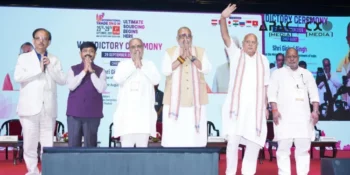



















New Delhi, September 28 (APAC Media): The Ministry of Tourism (MoT), Government of India, and the Open Network for Digital Commerce (ONDC) have launched the National Digital Tourism Stack (NDTS).
NDTS is an open digital infrastructure initiative aimed at making India’s tourism ecosystem more discoverable, trusted, and digitally accessible.
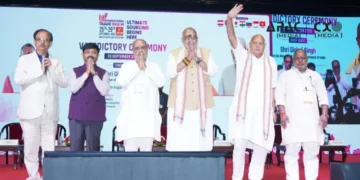
Launched on World Tourism Day 2026 in the presence of Union Minister of Tourism and Culture Gajendra Singh Shekhawat, the initiative seeks to connect destinations, homestays, guides, attractions, experiences, transport services, and other tourism providers with travellers across multiple digital platforms.
‘List Once, Reach Multiple Platforms’ Model
Unlike a standalone tourism portal or marketplace, NDTS is being developed as shared, open digital infrastructure. One key feature will be a “list once, reach multiple platforms” model.
Under this approach, homestays, guides, attractions, and tourism operators will be able to publish their offerings once and potentially become discoverable across participating applications. The model is intended to help smaller tourism businesses access wider digital demand without having to build their own digital presence or establish separate integrations with individual platforms.
For travellers, the infrastructure aims to connect different elements of a journey, including destinations, experiences, accommodation, routes, and last-mile mobility.
AI-First Infrastructure for Travel
NDTS is being designed as AI-first digital infrastructure, with support for emerging forms of travel discovery and planning, including AI-powered interfaces and personal digital agents.
Shekhawat said the next phase of India’s tourism growth should extend beyond popular destinations and create opportunities for local communities, entrepreneurs, women, and youth. Describing the initiative as “AI native digital infrastructure for the tourism industry,” he highlighted the potential of technology to create impact at a national scale.
Tourism Secretary Bhuvnesh Kumar said artificial intelligence would be at the front end of the stack, with a vision of “One ticket, One pass” to bring different components of a traveller’s journey together.
Currently, travellers may have to use separate websites and platforms to book flights, hotels, cabs, boat rides, and local or religious experiences. NDTS seeks to reduce this fragmentation through common digital infrastructure.
Over 23,000 Experiences and Homestays in Ecosystem
The Stack is designed around an ecosystem of more than 23,000 tourism experiences and homestays. More than 1,000 tourism experiences, including 170 Archaeological Survey of India monuments and 29 museums, are already transacting on the ONDC Network, providing a foundation for the wider initiative.
Karthick Prabhu, Vice President, Travel, ONDC, said tourism brings together destinations, stays, mobility, local businesses, digital platforms, and government systems, making shared infrastructure important for connecting participants rather than operating them in silos.
Trust to Be a Core Pillar
Trust will form another key component of NDTS. The infrastructure is envisaged to support provider credentials, reliable tourism information, service standards, ratings and reviews, and grievance mechanisms.
The Ministry of Tourism will act as the catalyst for the programme and work with states and union territories to curate and validate tourism experiences, as the government seeks to build a more connected digital ecosystem for travellers and tourism businesses across India.
Also Read
Ministry of Tourism, IndiGo Join Hands to Promote India as Global Tourism Destination