



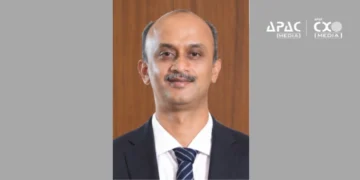
















Wepsol claims to have built its service model in tiers precisely so enterprises do not have to choose between innovation and stability. In an exclusive interaction, Dr. Gaurav Nigam, Chief Operating Officer, Wepsol informs Rajneesh De, Group Editor, APAC Media & CXO Media that Wepsol’s five service pillars — digital workplace, cybersecurity, hybrid cloud, network and connectivity, and automation and AI, are designed to be adopted incrementally, backed by 24×7 monitoring through its NOC and SOC. Security and scalability are built into that same structure.
What solutions, services and products are in the Wepsol portfolio today?
Wepsol’s portfolio today sits under what we call the fluidWorks suite, our umbrella of managed services.
This includes fluidPro, our managed IT services business covering digital workplace support, cybersecurity, hybrid cloud, network and connectivity, and automation and AI; fluidPrint, our managed print services business that today serves over 500 enterprise customers and manages more than 100,000 print devices across 2,000-plus locations in India; fluidMap, which handles IT asset tracking and lifecycle management; and fluidTrail, our workflow automation and document management layer.
Beyond these core services, we also offer a set of enterprise software solutions, ERM for employee onboarding and records management, P2P for procure-to-pay automation, DMS for enterprise document digitisation, and floTax for managed GST and e-invoicing compliance.
On the hardware side, we supply our own HOOKs range of point-of-sale systems and billing printers for retail, alongside Dynabook business laptops and Fujifilm and Ricoh office printers. Put together, this spans software-led automation, managed services, and hardware, so we are no longer just a print company, we are a full workplace technology partner.
What is Wepsol’s current operating and financial relationship with the Wipro group?
Wepsol’s roots go back to Wipro. The idea for a peripherals unit was incubated within Wipro’s domestic IT business in 1988. In 2000, following an employee-led buyout, the business was spun off as an independent company, Wipro e-Peripherals, with Wipro retaining a stake alongside the employees who led the buyout. It was renamed WeP Peripherals in 2002, and in March 2008, the IT services business was demerged into a new, separate legal entity, WeP Solutions, the company known today as Wepsol.
On the current relationship, Wipro has continued to hold roughly a 15 percent stake in Wepsol since that demerger, making it a long-standing but minority, purely financial shareholder. There is no operational relationship today, Wepsol is an independently run, BSE and NSE listed company with its own board, leadership team and strategy.
The Wipro connection is part of our origin story and gives us a strong technology pedigree, but it does not extend to day-to-day operations or decision-making.
How would you explain the function and enterprise impact of FluidPrint, FluidPro, and FluidMap?
FluidPrint is our managed print services business, built on a pay-per-print, brand-agnostic model. Instead of enterprises buying and maintaining their own print fleets, we own, install and manage the devices, billing them only for what they actually print. It includes secure, authenticated printing and 24/7 remote monitoring, and today spans over 100,000 devices across 2,000-plus locations, typically cutting print-related costs by up to 30 percent.
FluidPro is our managed IT services business, covering digital workplace support, cybersecurity through a managed SOC, hybrid cloud across AWS, Azure and GCP, network and connectivity, and an automation and AI layer for predictive, self-healing IT operations, all delivered through a 24×7 NOC and SOC.
FluidMap sits alongside both, giving enterprises real-time visibility and control over their IT assets, hardware, software licenses and devices, across their lifecycle from procurement to retirement.
Together, the enterprise impact is straightforward: FluidPrint and FluidPro reduce operational firefighting and capital spend, while FluidMap ensures nothing falls through the cracks in terms of security, compliance or cost. It means a CIO gets one accountable partner instead of juggling multiple vendors across print, IT infrastructure and asset tracking.
What are the key pillars of Wepsol’s GTM strategy and what initiatives support this strategy?
Our go-to-market approach rests on three pillars. First, a brand-agnostic, consultative model, we recommend what is right for the client rather than pushing our own hardware, which is a position no OEM can genuinely take.
Second, sector-specific targeting rather than one broad pitch, our priority sectors this year are healthcare, manufacturing, retail, logistics, and NBFCs, each with its own pain points and buying triggers.
Third, cross-sell between our print and IT businesses, since managed IT demand very often overlaps with our existing managed print accounts.
Supporting initiatives include our technology partnerships with AWS and Microsoft Azure for cloud, and security partners for our managed SOC capability, sector-specific case studies that are currently in development across healthcare and retail, and participation in relevant industry events, including the India MedTech Expo in Bengaluru this September, where we are showcasing FluidPrint and FluidPro together.
Since we are a consultative, experience-led business rather than a proprietary product company, we lean more on thought leadership and opinion content to build credibility than on broad advertising.
How does Wepsol help enterprises balance innovation with operational continuity, security and scalability as they evolve towards secure, resilient and future-ready IT ecosystems?
We built our service model in tiers precisely so enterprises do not have to choose between innovation and stability. On the print side, organisations can start with core managed print, add device management software, and layer on secure, authenticated printing as their compliance needs grow, without ripping out what already works.
On the IT side, our five service pillars, digital workplace, cybersecurity, hybrid cloud, network and connectivity, and automation and AI, are designed to be adopted incrementally, backed by 24×7 monitoring through our NOC and SOC so that new initiatives do not come at the cost of uptime.
Security and scalability are built into that same structure. Our cloud partnerships with AWS and Azure give enterprises elastic capacity without vendor lock-in, and our brand-agnostic sourcing model means clients scale their hardware and software choices as their needs change, rather than being tied to one vendor’s roadmap.
The newest layer, our Automation and AI Centre of Excellence, brings in AIOps and self-healing capabilities as an added innovation layer on top of this stable foundation, so enterprises get forward-looking technology without disrupting what is already running reliably.
How is Wepsol realigning its corporate strategy around workplace digitization through a subscription-based, brand-agnostic model designed for hybrid office setups?
FluidPrint was built from the outset as an elastic, subscription-based managed print service, enterprises pay per print rather than owning hardware outright, and we remain brand-agnostic, proposing devices from vendors like Kyocera, Fujifilm, Ricoh or HP based on what a client actually needs. This naturally suits hybrid offices, since it gives centralised visibility and control over a print fleet spread across head offices, branches and remote locations, rather than each site managing its own hardware and vendor relationships independently.
We are extending that same logic across the broader fluidWorks suite. FluidPro is increasingly packaged and priced the same way, as a managed, subscription-style service rather than a one-time infrastructure sale, and fluidMap and fluidTrail follow the same principle of centralised, usage-based management. The broader shift in our corporate strategy is from selling boxes to selling outcomes, aligning what an enterprise pays to what it actually consumes, which fits how hybrid, distributed workplaces actually operate today.
How would you uniquely differentiate Wepsol from other digital transformation competitors?
The clearest differentiator is that we are not an OEM and we are not a generic system integrator. OEMs sell devices, we manage outcomes, which means our incentive is aligned with the client’s efficiency, not with selling more hardware. That brand-agnostic, consultative posture is not something a Konica Minolta, HP or Canon can credibly claim, since their business model depends on selling their own devices.
At the same time, we are not a broad, horizontal IT integrator either, our 25-plus years of on-ground, pan-India service delivery in print gives us a depth of last-mile reach that most IT-only players do not have.
The second differentiator is our backing. We operate with the discipline and governance of a BSE and NSE listed company with over two decades of market presence, while working with the agility of a much leaner, consultative organisation.
And because our print, managed IT, asset tracking and retail hardware businesses sit under one roof, an enterprise gets one vendor and one point of accountability across what would otherwise be three or four separate contracts. Our aim is not to outscale the industry, we are trying to out-operate it.
How has been the reception to the subscription-based, brand-agnostic model designed for hybrid office setups propagated by Wepsol?
On the print side, where this model has been in the market the longest, the reception has been strong. We serve over 500 enterprise customers today, including large, recognisable names like PepsiCo India, HDFC Bank and Hyundai, and Wepsol has been recognised as India’s number one managed print services company multiple times by IBC USA. That kind of repeat enterprise adoption, at this scale, is the clearest signal that the subscription, brand-agnostic model has genuinely worked for hybrid, multi-location organisations.
On the managed IT side, the model is newer and the reception is still being built, deliberately sector by sector, starting with healthcare, manufacturing, retail and logistics, rather than a broad, one-size-fits-all rollout.
Early traction is encouraging, but we are building it the same way we built FluidPrint two decades ago, on references and delivery track record rather than on marketing spend, so the strongest proof points are still ahead of us as more sector-specific case studies come through this year.