












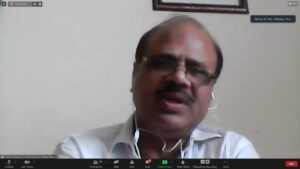
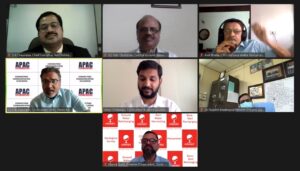
New Delhi: Water is important for the growth of the economy and ecology. There is a need to conserve and preserve water. During the time of Indian Independence, the groundwater levels was reasonable but by 2011, India entered into a water stress situation. The government is planning for awareness programs said G C Pati, Chairman, Central Ground Water Board while delivering the keynote address at the third edition of the webinar series- ‘New Groundwater guidelines- Government and Industry Perspective-Challenges & Way Forward’ that was held on Friday.
The new groundwater guidelines that was announced last year has been welcomed by all stake holders but implementing them is now becoming a challenge, especially due to the Covid-29 pandemic. The economy has taken a hit and so is every sector.
Over exploitation of water resources
India stands on top of world in utilisation of water be it for agriculture or industrial purpose. G C Pati says, “21% of the groundwater resources are over exploited and there is a great need to regulate and augment water resources.
Many industries were given instructions to reduce their dependence on water to the extent of 20-30 per cent within three years and the National Green Tribunal (NGT) too has stopped several industries from setting up shop in over-exploited areas.
The water footprint of industries in India is the highest in the world. Indian industries use much more water than their counterparts in other countries to produce products.
There are six lakh industries and a majority have not taken NOCs and proper permissions from authorities. The Central Ground Water Board and it’s agencies are planning for awareness programmes through media and other platforms said Mr Pati.
Vinay Chataraju, Co-founder & Head, Business Development, Kritsnam Technologies said that unlike the power and solar sector, the technology penetration in water sector has been less. Dhaara Smart Ultrasonic flow meter has been well-received by the industry.”
He further added, “It has helped industries numbering more than 100 to keep track of the amount of water used on a daily basis just with a simple mobile phone.”
Challenges
Drawing the attention of the plight of industries, SK Chaurasia, Chief Executive, Aditi Infotech, Nagpur said, “The penalties imposed by the authority on industries that do not install flow meters within a stipulated time frame is high. There needs to be a relook at the fines that go up to Rs 2 lakh. The pandemic has taken a toll on the industry.”

On the issue of penalty on tamper proof meters, Manoj Joshi, Proprietor, Greenex Corporation, Surat, Gujarat said that the definition is not clear and in these difficult times of the pandemic, the hefty penalties should be waived off by the authorities.
Dr Pandith Madhnure, Director, Ground Water Department, Government of Telangana explained the initiatives that the government undertook since it formed the government in 2014. He said that the groundwater levels in certain districts such as Sangareddy and Siddipet rose by 3.5 meters. Also, under the Mission Kakatiya, 27,000 tanks out of 47,000 tanks were rejuvenated and filled with water from the Kaleshwaram project.
Anil Bhatia, Chief Technical Officer, Haryana Water Resources Authority (Rtd. Director CGWB) shared the Haryana Government perspective and added that Haryana imposed water tariff to reduce stress and was promoting industries in the Northeastern parts and southern regions where there was saline water for industries. By this, he said, the dependence on water in other areas would reduce and that in any case saline water is not used so industries could well make use of it.
The webinar was moderated by Souvik Goswami, Co-founder & Group Chief Editor, APAC News Network.