





















Solapur: MIT Vishwaprayag University, Solapur, hosted an expert session titled ‘Water Conservation and Management in Dry and Arid Regions.’. The event held on 17th May, 2025, was led by renowned environmentalist and Stockholm Water Prize laureate Dr. Rajendra Singh, popularly known as the Waterman of India. The event gathered a diverse audience of students, faculty, civic leaders, environmental professionals, and concerned citizens for an inspiring day of dialogue, reflection, and actionable insight.
A Life Dedicated to Water: Reflections with Students
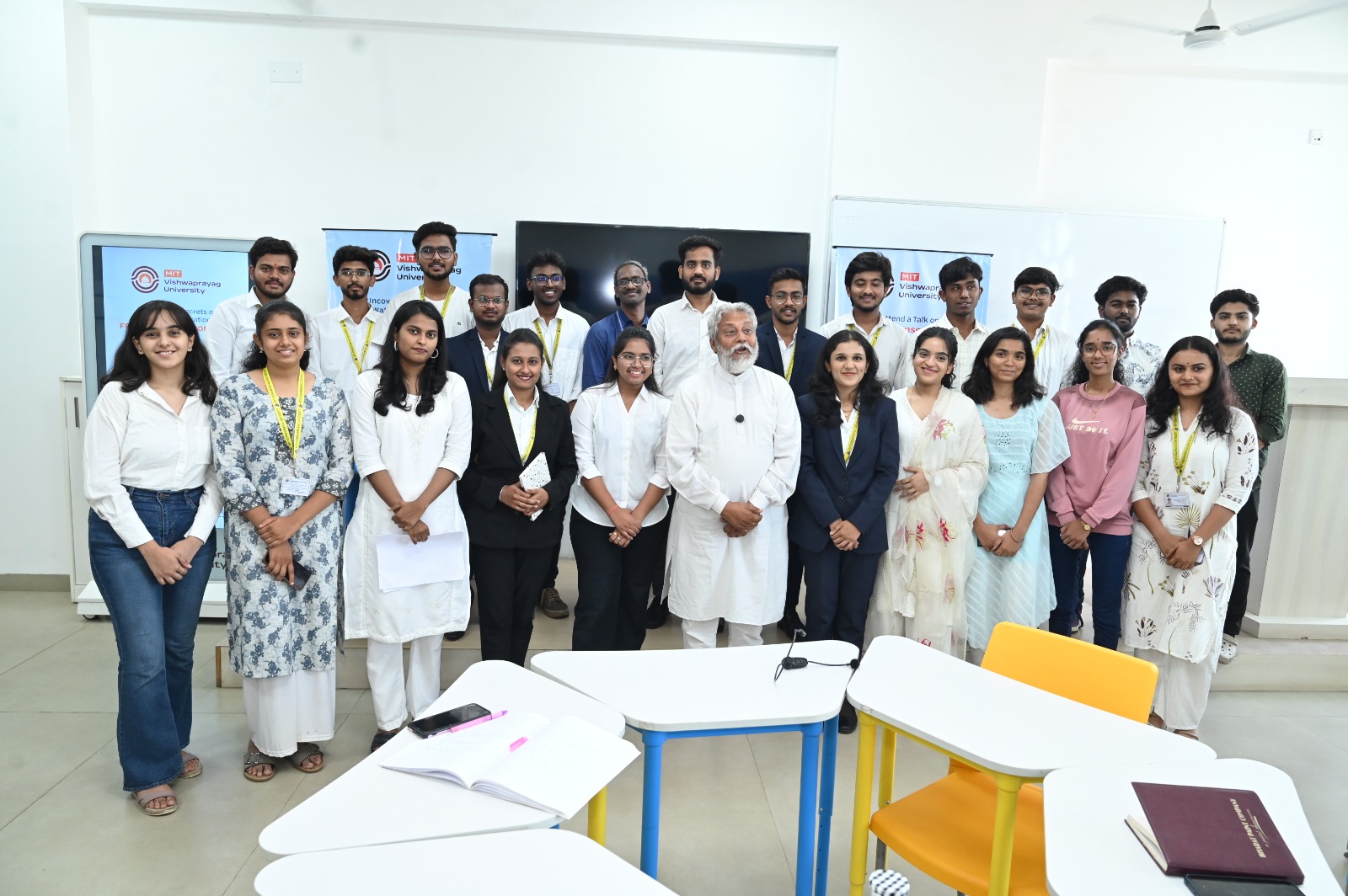
The first segment of the event featured a focused session with the student panel. Dr. Singh took the audience through his 52-year journey in water conservation, which began at the age of 26. He shared how his love for nature deepened through understanding the land, water, and people’s needs. “Nature is the greatest teacher,” he said, encouraging students to treat water not just as a physical resource but as an emotional and cultural companion. He stressed the importance of combining heart, hand, and head in ecological work.
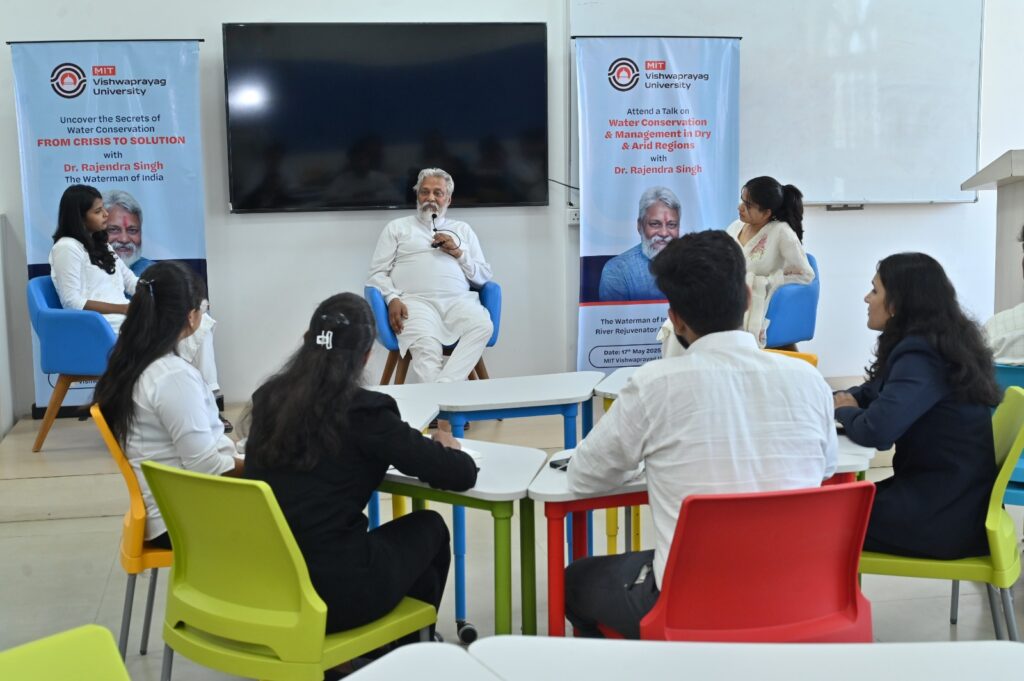
His reflections on serving the community through practical, grounded hydrological solutions inspired students to think beyond theory and commit to real-world action.
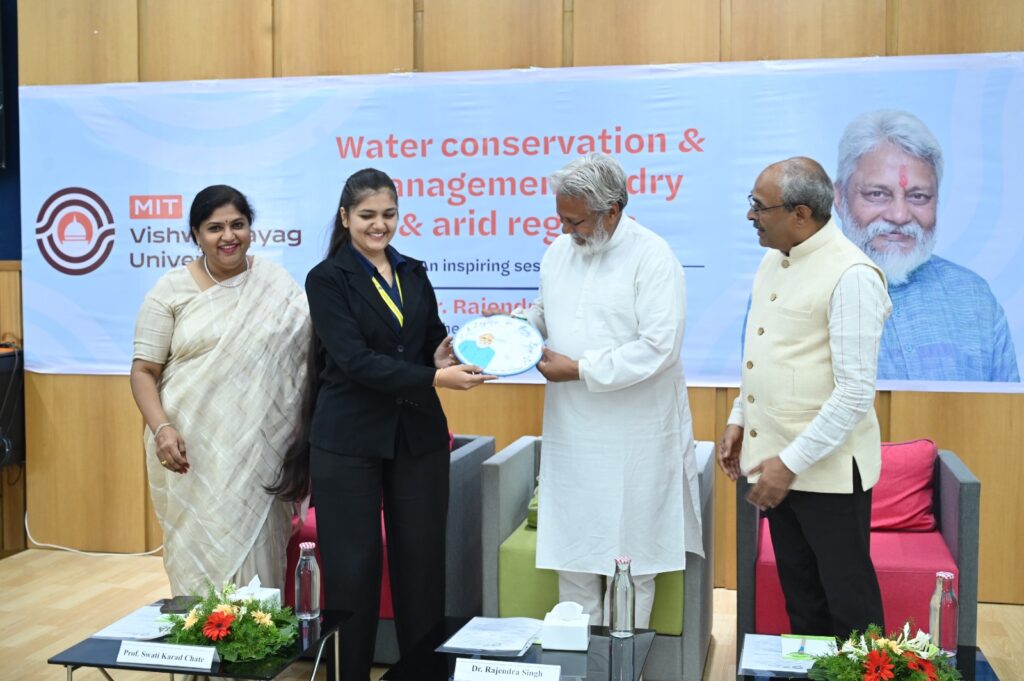
During the session, Dr. Singh was presented with a handcrafted hoop art portrait of himself, created by university student Pooja Bhumka.
Local Issues & Solutions: A Dialogue with the Community
The second part of the event brought together a wide spectrum of participants—from farmers and water champions to urban planners and industry professionals. The discussion centered around the current water crisis in Solapur, with Dr. Singh addressing specific issues such as the depletion of Ujani Dam and the pollution in Siddheshwar Lake. He explained how his team in Rajasthan revived 12 dried-up streams into the flowing Neera River by designing check dams suited to the natural topography—convex structures in high-velocity areas, straight dams on gentle slopes, and deep concave reservoirs in clayey depressions. He emphasized the importance of selecting dam sites where water could be retained safely, adding, “1 cm of water can evaporate in just 24 hours if the sun is allowed to steal it.”
From Drains to Rivers: A Powerful Vision
During the community session, a poignant question was raised by the audience: “How to convert drains into rivers?” To this, Dr. Singh responded, “If we start turning our drains back into rivers, we can become the leaders of the world. The simplest task in the world is to transform drains into rivers.”
He stressed that water revival is not just a technological challenge but a social and ecological responsibility. Even polluted or seasonal drains, he said, can be transformed through community participation and vision.
Call to Action
His reflections on urbanization and traditional water systems strongly resonated with the local context of Solapur. The session prompted meaningful dialogue among attendees, many of whom reflected on the potential of Solapur to become a model for water-led transformation.
During his visit, Dr. Singh also held insightful interactions with several dignitaries, focusing on the state of drinking water, urban usage, and the health of local lakes in the city. He expressed grave concern over the increasing chemical flow into Solapur’s water systems—especially the water transferred from Pune—stressing that if such trends continue, “Solapur may only be able to build ‘hospitals’ in the coming years, not healthy communities.”
He warned that without immediate intervention, the region could lose its greenery, witness a decline in agricultural productivity, and face severe health challenges.
He urged every university and educational institution to adopt at least one drain in the Solapur district. By purifying it, spreading awareness among students, and taking up this responsibility as a generational mission, institutions can play a key role in restoring ecological balance and making their surroundings “Sujlam Suflam.”
This message echoed his larger vision of decentralization, community-led action, and the revival of India’s traditional water wisdom, starting from each local ecosystem, one stream at a time.
MIT Vishwaprayag University’s Commitment to Water Conservation
The event concluded with a strong institutional commitment to collaborate with local administrative bodies and residents in rejuvenating Siddheshwar Lake and other traditional water bodies. The university announced plans to initiate interdisciplinary projects in water conservation, watershed mapping, and student-led fieldwork.
Prof. Swati Karad Chate, Executive President, expressed her firm support for taking this vision forward and emphasized that the university would actively lead the process of ecological restoration. She reaffirmed that the university’s role is not just to observe but spearhead initiatives that translate awareness into ground-level impact by fostering collaboration between the campus, community, and the city. Together, the leadership committed to working with all stakeholders to make Siddheshwar Lake a symbol of revival and responsibility.
Closing Reflection
As Dr. Singh concluded, “If you respect water, water will respect you back.” The event left the audience not just informed but inspired—to reconnect with nature, restore their ecosystems, and rebuild their rivers, one stream at a time.
Contributors: Manasvi Aaglave, Mayur Kolhapure, Pooja Bhumkar, Prerna Yebaji
(Students at MIT Vishwaprayag University)