














Chandigarh: Chandigarh has achieved a major environmental milestone by surpassing its wastewater treatment needs. The city now treats over 100 per cent of its generated wastewater, handling approximately 232 million litres per day (MLD) against a total treatment capacity of 255 MLD.
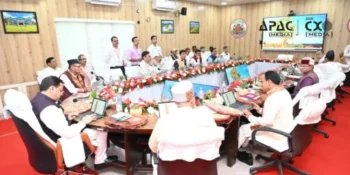
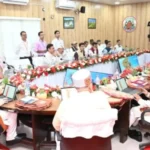
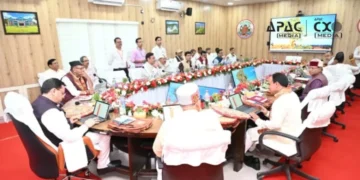
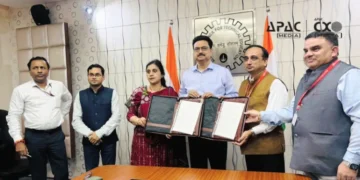
This progress was reviewed in a high-level meeting chaired by Rajeev Verma, Chief Secretary, UT Chandigarh, focused on compliance with the National Green Tribunal’s (NGT) 2018 directions on Municipal Solid Waste Rules and other environmental mandates.
The review meeting saw participation from key officials, including Mandip Singh Brar, Secretary (Environment and Local Government); Finance Secretary Diprava Lakra, Director (Environment) Saurabh Kumar and Municipal Commissioner Amit Kumar. Also present were Chief Engineers C B Ojha (Engineering Department) and Sanjay Arora (Municipal Corporation).
Municipal Commissioner Kumar, who also serves as the member secretary of the Chandigarh Pollution Control Committee (CPCC), provided an overview of the city’s robust waste management initiatives. He emphasised that all sewage treatment plants (STPs) are under strict monitoring, with weekly reviews to ensure that no untreated wastewater is discharged into natural drains.
Treated Water for Green Uses
The administration is steadily expanding its tertiary-treated water distribution network. This treated water is being channelled for non-potable uses such as irrigation in parks, traffic roundabouts, road berms and institutional as well as industrial units.
Solid Waste Management on Track
Chandigarh generates around 500 tonnes per day (TPD) of solid waste, all of which is collected via door-to-door services using specially designed compartmentalised vehicles. The city processes the entire volume, with legacy waste bioremediation ongoing and expected to conclude by July 2025. Additionally, leachate from landfill sites is being effectively managed through two operational Leachate Treatment Plants (LTPs).