











Noida, June 10 (APAC Media): Rising geopolitical tensions, energy security concerns and shifting global power dynamics are reshaping international relations, posing complex challenges for India. New Delhi must balance strategic interests with economic priorities, from securing energy supplies and safeguarding key trade routes to managing relations with major powers in an evolving global order.
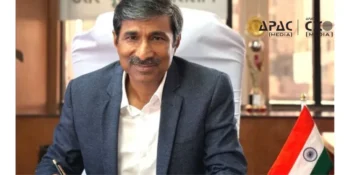
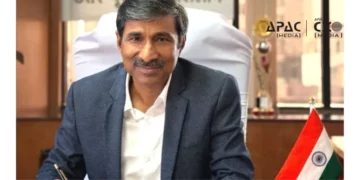
In an exclusive interview, Satender Kumar (IFS), Retired Ambassador, speaks to Ketan Ram Kataria, Correspondent, APAC Media on India-Russia ties, BRICS expansion, West Asia tensions, and the policy measures needed to strengthen India’s economic resilience, energy security, and strategic autonomy in an uncertain world.
With energy security facing new challenges and global oil markets under pressure, what immediate diplomatic and economic measures should the Government of India prioritise?
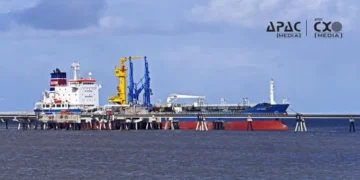
India should focus on diversification rather than dependence. Diplomatically, it must deepen engagement with all major energy suppliers—Russia, Saudi Arabia, the UAE, Iraq, and Iran—while supporting de-escalation in West Asia and securing sea lanes. Economically, strategic petroleum reserves should be expanded, long-term contracts strengthened, and investments in renewables, nuclear power, and overseas energy assets accelerated. Energy security ultimately rests on flexibility, not alignment with any one geopolitical bloc.
India and Russia have maintained a strong strategic partnership for decades. How do you see India-Russia relations evolving in the current geopolitical environment, particularly in defence, energy, and trade?
India-Russia ties remain important because they are based on long-term trust and convergent interests. Defence cooperation should move towards co-development and technology sharing. Energy cooperation is likely to remain strong in the oil, gas, and nuclear sectors. The real challenge is expanding trade beyond energy through better connectivity and local-currency settlement mechanisms. India should neither romanticise nor abandon the relationship; it should preserve it as an essential pillar of strategic autonomy.
As BRICS expands its global footprint, how can India use the grouping to strengthen its strategic and economic interests while managing ties with both the West and China?
BRICS offers India an opportunity to strengthen the voice of the Global South and promote reforms in global institutions. It can expand markets, development financing, and technological cooperation. At the same time, India must ensure that BRICS does not become dominated by any single power.
The objective should be balance: productive engagement with BRICS while maintaining strong relations with Western economies. India’s strength lies in engaging multiple centres of power simultaneously.
As rapid economic and geopolitical changes redefine the global order, what major policy steps should India take to strengthen its economic resilience and strategic autonomy?
India’s strategic autonomy will ultimately be sustained by economic strength. Priorities include manufacturing competitiveness, technological self-reliance, resilient supply chains, infrastructure development, and investment in education and innovation. Foreign policy should support economic transformation rather than substitute for it. In a fragmented world, India must avoid excessive dependence on any one power and preserve decision-making freedom across all major partnerships.
In the event of a further escalation in the Iran conflict affecting key trade and energy routes, what contingency measures should India activate to protect its energy security, overseas citizens, and broader strategic interests?
India should adopt a three-track response that focuses on securing alternative energy supplies, strengthening evacuation and protection plans for Indian citizens in the region, and intensifying diplomatic engagement with all stakeholders to support de-escalation. Recent developments reaffirm a fundamental reality: West Asia remains central to India’s energy security, trade, and diaspora interests.
The key takeaway is that India’s foreign policy must remain firmly anchored in strategic autonomy and a balanced approach, enabling it to safeguard national interests while navigating an increasingly complex and uncertain global geopolitical environment.
Economically, strategic petroleum reserves should be expanded, long-term contracts strengthened, and investments in renewables, nuclear power, and overseas energy assets accelerated. Energy security ultimately rests on flexibility, not alignment with any one geopolitical bloc.
Satender Kumar (IFS, Retd.)
Satender Kumar is a retired officer of the Indian Foreign Service (IFS) who joined the Ministry of External Affairs in 1984 and retired on June 30, 2018, after completing 34 years of distinguished diplomatic service with the government of India.
During his diplomatic career, he served in Indian missions across multiple continents, with postings in Karachi, Johannesburg, Hamburg, Colombo, Reykjavik, The Hague, Zanzibar, and Paramaribo. His experience spanned diverse geopolitical regions across South Asia, Africa, Europe, and the Caribbean.
He held several senior positions, including consul general, high commissioner, and ambassador. In these roles, he was responsible for bilateral relations, consular services, community welfare, and mission administration. Over his long service, Kumar contributed significantly to India’s diplomatic outreach before retiring from the Ministry of External Affairs after more than three decades of service.
— Ends —
Disclaimer:
This is an APAC exclusive interview published for informational purposes only. APAC Media is not liable for any errors, omissions, or consequences arising from the use of this content. Views expressed are those of the interviewee and do not necessarily reflect the position of APAC Media.