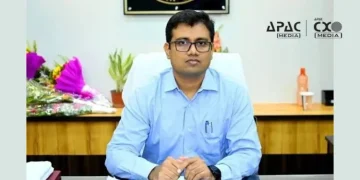






Noida, Sep 29 (APAC Media): The government is working on a new National Steel Policy that envisages raising India’s steelmaking capacity to more than 600 million tonnes and domestic consumption to over 500 million tonnes by 2047, Steel Secretary Sandeep Poundrik said on Tuesday.
The draft policy is likely to be placed in the public domain within a week for comments from industry stakeholders, he said.
“In about a week, we will put this policy into the public domain for consultation and for comments from stakeholders,” Poundrik said on the sidelines of a CII event.
The proposed policy will replace the National Steel Policy, 2017, which has targets extending up to 2030-31. The new framework will set a longer-term roadmap for the sector in line with the government’s Viksit Bharat vision for 2047.
Poundrik said the government is estimating steel consumption of more than 500 MT by 2047, with around 45 MT expected to be accounted for by exports, either directly or through steel embedded in manufactured products.
“These are conservative numbers,” he said.
India’s crude steel capacity has already risen significantly in recent years and stood at around 222.7 MT as of July 2026, according to government data.
The National Steel Policy, 2017, had envisaged crude steel capacity of 300 MT by 2030-31.
The new policy is expected to focus on technology adoption, artificial intelligence, machine learning, sustainability and decarbonisation of the steel industry.
The government is also examining measures to address imports of cheap and sub-standard steel, including the use of safeguard and anti-dumping duties.
“As far as imports are concerned, the policy also gives measures to discourage cheap substandard imports, including safeguard measures like safeguard duty, anti-dumping duty, etc.” Poundrik said.
The policy will also seek to improve the competitiveness of smaller steel producers, particularly on technology and production costs.
The government has proposed a ₹5,000-crore Viksit Bharat Ispat scheme aimed at small steel producers. Incentives under the scheme would be linked to production and reduction in carbon emissions.
“We are proposing a scheme which is called Viksit Bharat Ispat, which is only targeted at small steel producers where they will be given incentives linked to their production, which will be dependent on reduction of carbon emission,” Poundrik said.
The steel sector’s expansion is expected to increase demand for raw materials. India may require more than 700 MT of iron ore by 2047, the secretary said.
“Raw material availability will become a major challenge. We will have to work on that,” he said.
The government is also promoting speciality steel production for sectors including automobiles, defence and aerospace. Around 175 speciality-steel projects involving investments of about ₹55,000 crore are currently under implementation.
The government expects the proposed policy to provide a long-term framework for capacity expansion while addressing raw-material availability, competitiveness and the sector’s transition towards lower-carbon production.
–ENDS–
Disclaimer: This article is for informational purposes only and is based on publicly available information. APAC Media is not responsible for investment decisions or losses. Please conduct your own research or consult a financial adviser before investing.
Also Read: