

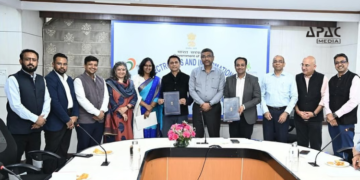















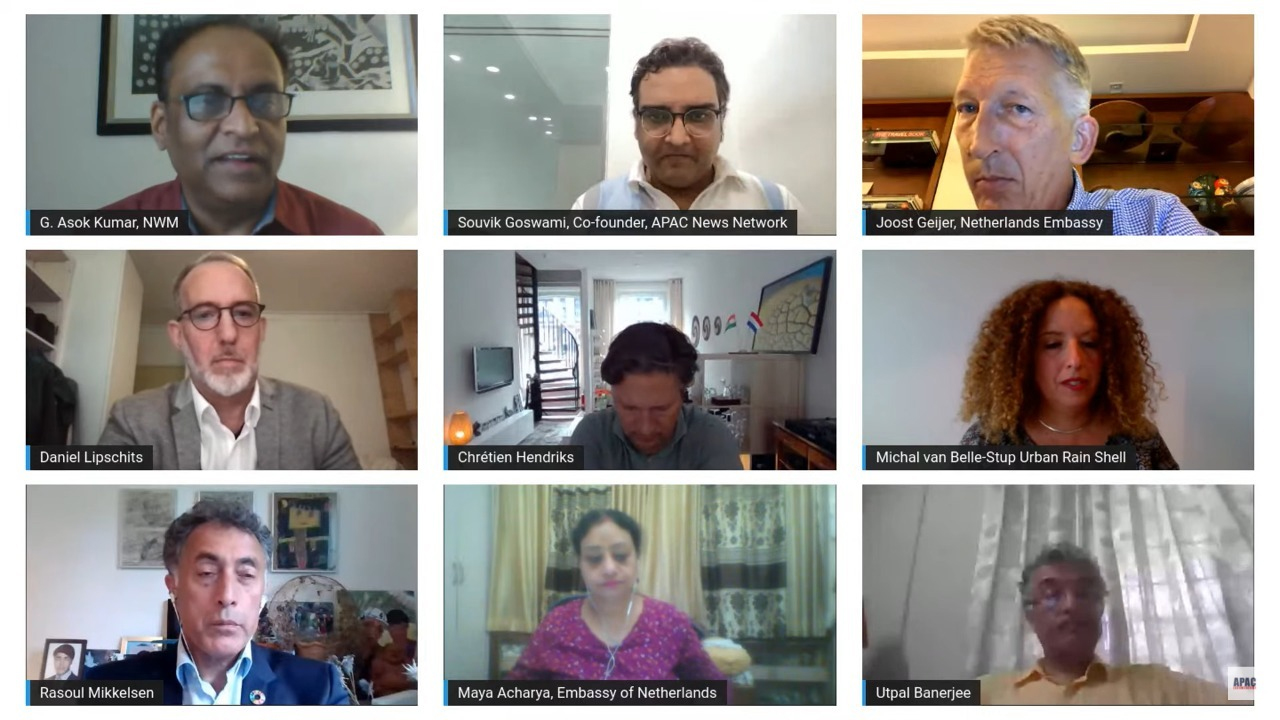
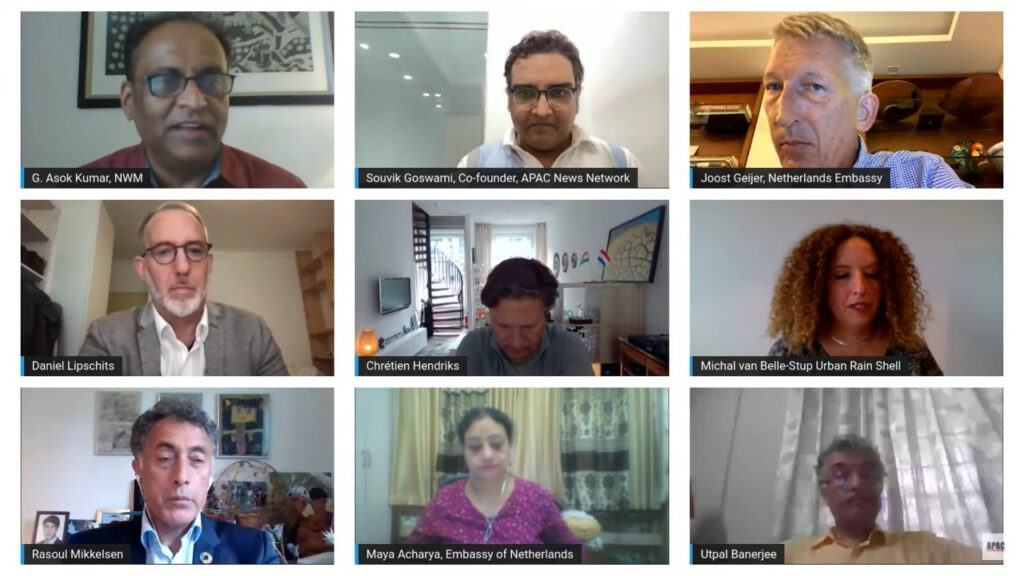
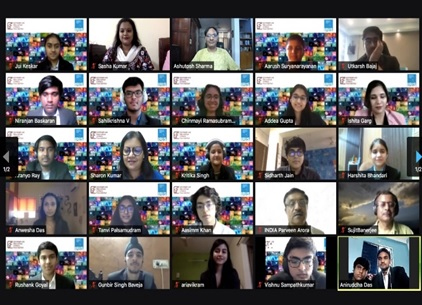
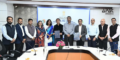
 New Delhi: A brainstorming session on leveraging Dutch expertise for rain water harvesting in India has gained interest among the stakeholders. A virtual dialogue on ‘Catch the Rain’ campaign has proved that on Friday. The dialogue was presented by the ‘National Water Mission, Ministry of Jal Shakti, Government of India’ and the ‘Embassy of the Kingdom of the Netherlands, New Delhi’ and was organised by APAC News Network. The event saw the presence of policymakers and diplomats from India and Netherlands and Dutch water industry experts.
The Ministry of Jal Shakti is taking up 7,000 blocks under ‘Catch the Rain’ campaign covering the entire country informed G. Asok Kumar, IAS Additional Secretary & Mission Director, National Water Mission Ministry of Jal Shakti, Government of India while delivering the keynote address at the Virtual Dialogue.
G Asok Kumar said that India had traditional harvesting structures but due to poor maintenance they have disappeared. There is no scarcity of water in India but management of water is an issue. He added, “The Water Knowledge Centres or Jal Shakti Kendras are undertaking geotagging of water bodies and plan for water harvesting structures are afoot.”
Netherlands and India have been working closely especially in the area of water harvesting. Joost Geijer Economic Counsellor Embassy of the Kingdom of the Netherlands New Delhi shared, “We upgraded cooperation with India and rainwater harvesting is very important. The problem of placing concrete is common and people should break it and plant trees on soil in gardens, parks and all places.”
Michal Stup of Urban Rain Shell explained about a new possibility by the use of sea shells for the reuse of rainwater and reintroduction of rainwater that would otherwise runoff by storing the water with nature based and low maintenance and above all t prevent contamination of aquifers.
There have been a few companies working in India, one such company is Biosfera Foundation. Daniel Lipschits of Biosfera Foundation said that climate change refugees would touch the 700 million mark and there is need to look at the grim reality. He shared the experiences of the company’s work in the Rajasthan desert in India since 2015. 93% of the trees are growing well and landscape restoration is important to mitigate climate change, he added. “It is important to invest in rural areas and we are developing IoT and blockchain technology based real-time feedback for recharging aquifers.
Taking the discussion further, Rasoul Mikkelsen of Royal Eijkelkamp shared an interesting way of rainwater harvesting and managing aquifer recharge by controlled drilling, inject glass walls and installing tubes. He further added that the technology could be used to stop salt water intrusion into soil and the lifespan of such reservoirs is 100 years.
Genap, a company based out of Netherlands is working in the North-eastern part of India by providing tanks. Chrétien Hendriks of Genap explained about the storage solutions. Utpal Banerjee who is a senior officer working in Siliguri unit of Genap said that the solutions the company offers are very helpful for people living in hilly regions. He also said that Genap set up tanks 15,000 ft above sea level and Army jawans use them. Maya Acharya Senior Policy Advisor Water & Infrastructure Embassy of the Kingdom of Netherlands, New Delhi moderated the session.














Discussion about this post