










The President Draupadi Murmu in her maiden Budget address outlined an idea for the country by 2047. She extolled to create such an India – whose youth power and women power stand at the forefront to give direction to the society and the nation, whose youth walk two steps ahead of time. In a nutshell she asked for an India whose diversity is more vivid, whose unity is more unshakable.
This 25-year period of Amritkal is the golden century of independence and the period of building a developed India. These 25 years are for all of us and for every citizen of the country to show the culmination of our duties, she emphasized. “We have to build such a nation by 2047, which is associated with the glory of the past and which has every golden chapter of modernity, she says. We have to make such an India which is self- reliant and which is also able to fulfill its humanitarian obligations. Such an India – in which there is no poverty, whose middle class is also full of glory,” she added.
Murmu also highlighted the ease that technology has provided in governance. She cited the e-marketplace and income tax refunds, DBT as .examples. “Earlier there was a long wait for tax refund. Today, refund is received within a few days of filing ITR. Today, along with transparency, the dignity of the tax payers is also being ensured through GST,” she clarified. Over the years, in the form of DBT, in the form of Digital India, the country has prepared a permanent and transparent system. Saying that money of more than 300 schemes is directly reaching the bank accounts of the beneficiaries, President Murmu says that with full transparency, an amount of more than ₹27 lakh crore has reached crores of people.
Focusing on the Made in India and Atmanirbhar Bharat campaigns, the President said that the country’s manufacturing capacity is increasing and manufacturing companies from all over the globe are coming to India. “Until a few years ago, we used to import mobile phones in large numbers. Today India has become a major exporter of mobile phones in the world. The import of toys in the country has decreased by 70%, while the export has increased by more than 60%,” she said.
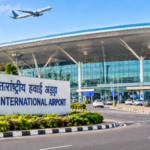
The President’s address now moves to speak on the infrastructural progress in the country, including in aviation and the railways. She said that many inaccessible areas are being added to the railway map of the country, and that Indian Railways is fast moving towards becoming the largest electric railway network in the world.
The President also cited the metro network which she says has increased more than three times. “Work on metro trains is going on in 27 cities, and more than 100 new waterways are also being developed across the country. These new waterways will help in rejuvenating the transport sector in the country.”
Since 2014, Murmu informed a medical college has come up almost every month in India. “During this period two colleges have been established in the country every day, one university has been established every week,” she says. She said that while there were only 725 universities in the country, in the last eight years more than 300 new universities have been added.
The number of graduate and post graduate seats for medical students has now doubled in the country as compared to earlier, she adds. Murmu also highlighted the country’s achievement in vaccinating the population against COVID-19. “In two years, India has given more than 220 crore vaccine doses.”
Subsequently, the Finance Minister Nirmala Sitharaman tabled the Economic Survey 2022-23 in the Parliament. The Survey said that India’s economy will grow 6.5% in 2023-24, compared to 7% in the current fiscal and 8.7% in 2021-22. India will remain the fastest-growing major economy in the world, the pre-Budget Economic Survey stated. It also mentioned that the current account deficit may continue to widen as global commodity prices remain elevated and that the Rupee may come under pressure.
“6.8% inflation for the current fiscal is not high enough to deter private consumption or low enough to weaken investment. Borrowing cost may remain ‘higher’ for a longer period and entrenched inflation may prolong the tightening cycle,” it added. It said India’s recovery from the Covid-19 pandemic “was relatively quick” and that the country has withstood an extraordinary set of challenges better than most economies.
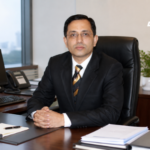
Chief Economic Advisor V Anantha Nageswaran offered to elucidate on the Economic Survey “The philosophy of economic management revolves around making it easier for people and businesses to pursue their economic activities, leading to enhanced potential for higher growth. It’s not just about the government being an enabler, but a partner. Share of private sector investment in agriculture has reached a high level, facilitated by various government initiatives. The sector is no longer about being a primarysector, it has tremendous export potential as well.”
“Quality of public expenditure has gone up. The government has become more transparent with Budget deficit numbers. There is increased transparency in public procurement. Various such dimensions have led to improved expenditure management,” he added.