





















Across India, cities have been struggling for years with legacy waste. Even large metropolitan centres continue to battle massive garbage dumps that pollute the air, contaminate the soil, and occupy valuable urban land. Clearing these sites is often seen as slow, expensive, and complicated.
In 2018, a 100-acre garbage dump stood like a scar on the landscape of Indore. Nearly 13 lakh metric tons of legacy waste had piled up over decades. The air was polluted. Fires broke out often. Nearby housing colonies suffered. The land had no value and no future.
But within six months, this mountain of waste vanished!
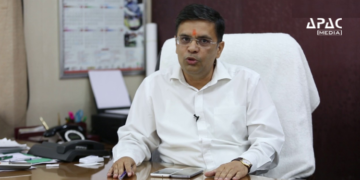
This turnaround came under the leadership of IAS Asheesh Singh, currently the Divisional Commissioner & Meladhikari of Ujjain.
Singh took charge as Municipal Commissioner of the Indore Municipal Corporation in May 2018. What followed became one of India’s fastest and most cost-effective legacy waste clearance drives.
The Problem: Slow Progress and High Costs
The cleanup had started earlier under a private contractor. The contractor charged around Rs. 500 per cubic metre. At that rate, clearing the entire waste would have cost nearly Rs. 65 crore. In two years, only about 2 lakh metric tonnes had been removed.
Meanwhile, garbage kept piling up. Plastic, cloth, wood, and paper often caught fire. Toxic smoke spread across nearby areas. The land remained unusable.
When Singh assessed the situation, he saw that the outsourced model was both slow and expensive. He chose a different path.
The Strategy: In-House Bio-Mining at Scale
Instead of hiring another contractor, Singh rented heavy machinery such as trommels, excavators, and screens. The municipal corporation ran the machines using its own staff and resources.
The team worked in two shifts, operating 14 to 15 hours a day. Progress was tracked closely.
The city adopted bio-mining and bio-remediation techniques. Workers first treated the top layer with biological sanitisers. Then they separated the waste step by step. Recyclables like plastic, metal, and paper were sent to recycling units. Polythene was supplied to cement plants and used in road construction. Stones and debris were removed through screening. Recovered soil was reused to level the land and support green development.
Only about 15 percent of the waste went to a secured landfill.
The entire operation was completed on December 5, 2018.
Total cost: under Rs. 10 crore. That was nearly one-sixth of the earlier estimate.
The Impact
The reclaimed land is now valued at around Rs. 400 crore and is being developed for public use, including a recreational golf course. More importantly, pollution levels got reduced, and nearby residents got relief.
Other cities took note. Officials from Chandigarh reached out to understand the model. The Union Ministry of Urban Development also showed interest in scaling the approach.
Indore had already built a reputation as one of India’s cleanest cities. This project strengthened that identity. It showed that with decisive leadership, smart planning, and efficient use of public resources, even the toughest urban problems can be solved quickly and responsibly.



















Discussion about this post