
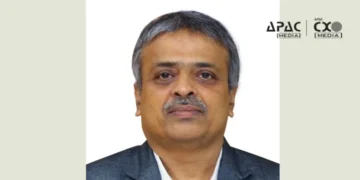


















Director, National Institute of Urban Affairs (NIUA)
New Delhi: The Urban Think Tanks should act as a catalyst and bridge the gap between policy and practice. I see urban think tanks playing a critical role by adopting a four ‘P’ approach in post covid era,’ explains Hitesh Vaidya to Souvik Goswami, APAC News Network in a tete-a-tete.
How NIUA has played it’s part in the urban transformation in India in the last five years?
Rapid urbanization has given rise to multiple challenges putting a pressure on the existing resources and infrastructure. To address these issues; the Government of India brought landmark changes in its urban scenario in the last 5 years through its flagship programs such as Swachh Bharat Mission, AMRUT, PMAY(U), Smart Cities Mission, Housing for all and National Urban Livelihood Mission.
NIUA has been assisting, advising and supporting in roll out of various flagship missions. The action research carried out at NIUA has been contributing in taking forward India’s urban vision of data driven, inclusive, sustainable and responsive urban development. NIUA has also been providing recommendations on different reforms and urban strategies on wide-ranging subject areas such as finance, heritage, data management and mission implementation, river management, building resilience and making cities accessible. The broad objective is to foster collaborative research, innovation, engagement and sharing of knowledge, good practices and cutting edge technology to accelerate to chart out a niche urban future for India.
How Covid crisis impacted urban planning in India & the world over?
COVID-19 has left several marks on urban areas, its impacts on urban planning are still being explored and understood by researchers and planners around the world. COVID crisis has definitely raised an important question on how should we be better prepared and respond to current and future crises. COVID-19 has reemphasized the need for spatial granular data at a neighborhood level to respond to future pandemic like situations. Historically, most pandemics have led to introduction of some new practices/interventions. For instance, Cholera epidemics in the 19th century sparked the introduction of modern urban sanitation systems. Similarly, COVID-19 has also led to rapid adoption of various technological solutions across countries for the better. The pandemic has also brought into focus the need for empowered local governments with a capacity and tools to respond for building resilient and inclusive cities.
How do you foresee the role of urban think tanks in the new world order in years to come?
An “Urban Think Tank” should act as a catalyst and bridge the gap betweenpolicy and practice. I see urban think tanks like NIUA, playing a critical role by adopting a four ‘P’ approach:
- Position as thought leader promoting critical thinking and supporting evidence-based policy preparation
- Platform for research, capacities, innovations and collaborations
- Pioneer new tools,standards, templates and best practices and act as knowledge aggregator
- Propagate country’s urban story both locally and globally
Do you think that the urban health infrastructure will have more focus in coming years while making cities smart & resilient?
The current crisis, which the world has been facing calls for attention towards a more robust health infrastructure across the globe. The only way to build back better and develop resilience is to revisit our planning and local governance frameworks. Only way to address India’s urban challenges is to ensure that the underlying governance principles of participation, decentralization, autonomy, and accountability of representative urban local governments are kept in view.
Your opinion on the role of technology & innovation for urban development in a country like India.
Technology coupled with innovation provides revolutionary ways to plan and execute urban development in our cities in the form of intelligent traffic management, new efficiencies in energy consumption, waste management, information exchange and establishment of stronger and faster communication links among the people. Moreover, the GoI is putting a greater emphasis on digital economy and urban transformation through its various missions such as Digital India, where technology and innovation are proving critical tools to successfully achieve this transformation.
Building on these initiatives, NIUA in order to consolidate and institutionalize urban digital efforts has instituted the Centre for Digital Governance, an initiative to accelerate the digital transformation of urban governance across India. The first initiative under this initiative is establishing National Urban Learning Platform NULP, which provides a set of ingredients to ignite urban eco-system, to generate, share, reuse, and create information and knowledge on urban issues.