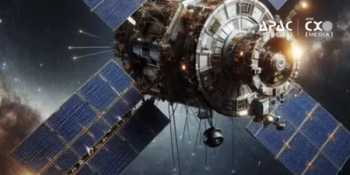























New Delhi: The Chandrayaan-2 orbiter recently captured data from the most powerful solar eruption to hit Earth in nearly 20 years. Orbiting the moon, the Solar X-ray Monitor (XSM) on Chandrayaan-2 documented a series of X-class flares and coronal mass ejections (CMEs) from the active sunspot AR13664. An increase in high-energy particles was also detected around the Moon starting from May 9.
The data collected by XSM also showed extreme fluctuations in solar X-ray flux, indicating a dramatic increase in X-ray intensity during the peak of the solar storm. Accelerated by solar eruptions, the high-energy particles could hinder deep space missions, and potentially pose a risk to its spacecrafts and astronauts.
India’s solar observatory, Aditya-L1, positioned at the Sun-Earth Lagrange point 1, also recorded the solar storm. The Solar Wind Ion Spectrometer on Aditya-L1 detected an increase in alpha particles and protons in the solar wind, providing further details on the characteristics of this event.