














The Gati Shakti Digital Platform (National Master Plan Portal) has significantly transformed the planning and execution of railway infrastructure projects. Md. Tanveer Khan, Director (Gati Shakti/Civil), Ministry of Railways, in an exclusive conversation with Nisha Samant, Associate Editor at APAC Media, shares how Indian Railways is actively pursuing a range of strategies to attract private sector investment and public-private partnerships (PPP) in logistics infrastructure.
How do you envision the role of Indian Railways evolving under the PM Gati Shakti National Master Plan in the next five years, especially in terms of multi-modal logistics and infrastructure integration?
The PM Gati Shakti National Master Plan (NMP), launched by the Government of India, is a transformative initiative aiming to create a seamless, integrated and efficient multi-modal transport and logistics ecosystem across the country. Within this framework, Indian Railways is poised to play a central and evolving role over the next five years. Here is how:
Railways is the Backbone of Multi-Modal Logistics. Indian Railways is set to become the core pillar of India’s integrated logistics system:
- Aims to increase the share of railways in total freight movement in the next decade, with significant progress expected in the next five years.
- Development of cargo terminals (PM Gati Shakti Cargo Terminals): More and more cargo terminals are being developed to support smooth intermodal transitions.
- Indian Railways is the key to lowering India’s logistics cost.
Under Gati Shakti, Indian Railways is focusing on building modern, high-capacity infrastructures:
Dedicated Freight Corridors (DFCs): Completion and operationalisation of the Eastern and Western DFCs, with new corridors planned, will segregate freight and passenger traffic to improve efficiency.
Gati Shakti emphasises synergy across ministries and transport modes, pushing Indian Railways toward integrated logistics. Improved first-mile and last-mile connectivity through feeder routes and link roads. Rail-port-air linkages: Railways are expanding links to major ports (Sagarmala).
Modal shift from road to rail will also reduce congestion, fuel consumption and emissions.
By leveraging the Gati Shakti NMP, Indian Railways is transitioning from a transport provider to a logistics integrator.
In the next five years, we can expect a vast network of multimodal cargo terminals, Integrated planning and execution across ministries and modes, a digitally enabled, predictive and customer-friendly freight service and Substantial progress toward reducing logistics costs and enhancing global competitiveness
PM Gati Shakti aims for synchronised planning across ministries. What are the key challenges you have faced in ensuring coordination between Railways and other departments like Roads, Ports and Civil Aviation? How have you addressed them?
Ensuring synchronised planning across ministries under the PM Gati Shakti National Master Plan (NMP) is a bold but complex undertaking. Indian Railways, as a major stakeholder, is committed to aligning its infrastructure development with departments such as Roads, Ports and Civil Aviation.
The key challenges that are usually encountered in the interdepartmental coordination and their strategic solutions can be summarised as follows:
- Departmental Silos and Legacy Workflows: Departments traditionally operate in silos with independent project planning, budgeting and execution. Data incompatibility and a lack of shared planning make it difficult to align the project timelines and priorities.
- Overlapping Jurisdictions: Projects often span jurisdictions (e.g., a rail-port connector crossing state or municipal boundaries), leading to disputes and delays in land acquisition and approvals. Conflicting mandates between central and state-level agencies.
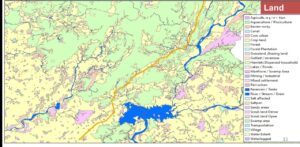
Land Layer in GatiShakti BISAG-N portal - Inconsistent Project Timelines: Railways may complete a line or terminal, but connecting roads or port infrastructure may lag, affecting the utility. Asynchronous planning results in under-utilised assets.
- Technical and Geospatial Misalignment: Different departments use different GIS systems, planning tools and standards, complicating the integration. Lack of real-time data sharing across departments.
- Funding and Budgetary Coordination: Independent budgeting cycles often mean misaligned fund flows for interlinked projects. Prioritisation of projects differs across ministries based on their internal metrics.
Addressing the Challenges: Strategic Measures
- Integrated Digital Platform (NMP GIS Portal): The creation of a centralised, GIS-based platform where ministries upload and visualise all infrastructure projects. Indian Railways can now plan freight corridors, terminals and sidings in real time, accounting for road, port and airport connectivity.
- Institutional Coordination Mechanisms: Formation of the Empowered Group of Secretaries (EGoS) and Network Planning Group (NPG). These bodies ensure that every new project proposal undergoes cross-ministerial vetting for alignment with Gati Shakti principles.
- Co-location of Infrastructure: Focus on developing multi-modal logistics parks (MMLPs) where rail, road and sometimes port/air infrastructure are co-located. Ensures physical integration at the design stage itself.
- Joint Monitoring and Review: Implementation of dashboards and review mechanisms for real-time progress tracking. Ministries and departments are jointly accountable for interlinked deliverables.
We ought to promote “One Nation, One Infrastructure” mindset.
While challenges are there but PM Gati Shakti has institutionalised coordination, turning fragmented infrastructure planning into a unified, mission-mode program. The role of Indian Railways is increasingly seen not just as a transport operator but as an active co-architect of India’s integrated logistics ecosystem.
How has the Gati Shakti digital platform (NMP portal) improved the planning and execution of railway infrastructure projects? Can you give an example of how data-driven decision-making has transformed project delivery?
The Gati Shakti Digital Platform (National Master Plan Portal) has significantly transformed the planning and execution of railway infrastructure projects by enabling data-driven, integrated and real-time decision-making. For Indian Railways, it has moved the needle from siloed planning to collaborative and evidence-based infrastructure development.
- Unified Geo-Spatial Visualisation
- The portal allows Indian Railways to view the different layers of spatial data, including land use, forest cover, topography, economic zones, existing infrastructure and utility lines.
- Railway planners can now pre-assess terrain, land ownership and environmental constraints before finalising routes or locations.
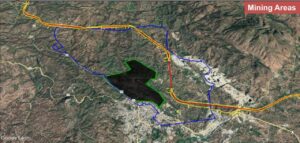
Land in GatiShakti BISAG-N portal showing mining areas
- Cross-Department Alignment
- The platform enables real-time integration with data from other ministries (MoRTH, MoPSW, MoCA etc.).
- Rail projects can be aligned with roadways, ports and industrial clusters for seamless connectivity.
- Optimised Routing and Resource Planning
- Railway lines, DFCs, sidings and terminals can now be planned with shorter alignments, fewer land acquisition hurdles and minimal environmental disruption.
- Improves cost-efficiency and project timelines.
- Bottleneck Identification and Conflict Resolution
- The portal helps detect conflicts in planned infrastructure, such as a rail line overlapping with a power line, highway, protected forest areas etc.
- Early detection enables design changes without delays.
- Faster Approvals and Project Monitoring
- Digital workflows and layered approvals mean faster clearances from multiple departments.
- Real-time project tracking allows for continuous monitoring and mid-course corrections.
Real-World Example: MMLP at Jogighopa (Assam)
Project: Multi-Modal Logistics Park (MMLP) at Jogighopa
Stakeholders: Indian Railways, Ministry of Ports, Shipping and Waterways, MoRTH, Assam Government
In short, we can say that through the Gati Shakti platform, Indian Railways has moved from reactive to proactive planning. Instead of dealing with challenges mid-project, planners now anticipate and mitigate risks during the design phase itself.
What strategies is the Railways adopting under Gati Shakti to attract private sector investment and PPP in logistics parks, terminals, or multimodal hubs?
Under the PM Gati Shakti National Master Plan, Indian Railways is actively pursuing a range of strategies to attract private sector investment and Public-Private Partnerships (PPP) in logistics infrastructure, particularly in cargo terminals, multimodal logistics parks (MMLPs) and integrated freight hubs. The key idea is to leverage private sector efficiency and innovation to modernise India’s freight ecosystem while minimising public capital outlay.
Some of the key Strategies to Attract Private Investment in Rail Logistics Infrastructure
- Gati Shakti Cargo Terminal (GCT) Policy: Indian Railways launched a liberalised GCT policy (2021) to promote private sector development of cargo terminals.
- Multimodal Logistics Parks (MMLPs) through PPP
- Plug-and-Play Infrastructure Readiness
- Indian Railways is investing in backbone infrastructure (tracks, connectivity, signalling, electrification) so that private players can focus on value-added logistics services.
- Ready-to-use sites near freight corridors, ports and industrial zones are being prioritised.
- Revenue Sharing & Incentive Models
- Simplification of Rules and Procedural Ease
- Digital Integration via Gati Shakti Portal: Helps private players make data-informed site selection and investment decisions.
- Promotion of Private Freight Terminals (PFTs): PFTs are now being treated as logistics business nodes, not just loading/unloading points.
What monitoring mechanisms are in place to ensure the timely completion and quality of infrastructure projects under Gati Shakti? How do you ensure accountability at various levels?
I would like to inform that in Railways, a comprehensive and multi-tiered monitoring and accountability framework has been established to ensure the timely completion and high quality of infrastructure projects. Emphasis is being given to digital transparency, inter-ministerial coordination and outcome-based reviews, with several robust mechanisms in place. 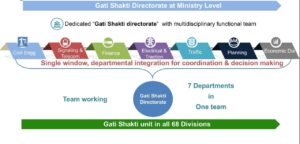
Monitoring Mechanisms and Quality Assurance:
- Integrated Digital Dashboard (Gati Shakti Portal): A centralised project monitoring dashboard powered by GIS and real-time data is the backbone of project oversight. Tracks progress of projects across infrastructure ministries, including Railways, Roads, Ports, Civil Aviation, etc.
- Network Planning Group (NPG): Composed of senior officials from infrastructure ministries, including Indian Railways. All new projects above Rs 500 crore are reviewed pre-approval to ensure alignment with multimodal connectivity goals and feasibility. It helps avoid duplication, cost overruns and delays from poor inter-agency planning.
- Empowered Group of Secretaries (EGoS): Chaired by the Cabinet Secretary, this group meets regularly to review the progress of key projects, resolve inter-ministerial or inter-state bottlenecks, escalate and address delays or non-compliance.
- Monthly Monitoring by Prime Minister’s Office (PMO): High-priority infrastructure projects are tracked through PRAGATI (Pro-Active Governance and Timely Implementation). PMO intervenes directly in resolving stalled issues and bureaucratic bottlenecks.
- Ministry-Level Monitoring (MoR – Railways): The Ministry of Railways has its own Project Monitoring Units (PMUs) at zonal and divisional levels. Use of Enterprise Resource Planning (ERP) tools for real-time site tracking. Field inspections, digital documentation, drone-based surveillance and photo-verification are increasingly being used.
Mechanisms to Ensure Accountability: Senior officials and project managers are evaluated based on milestone delivery, budget adherence and stakeholder coordination.