




























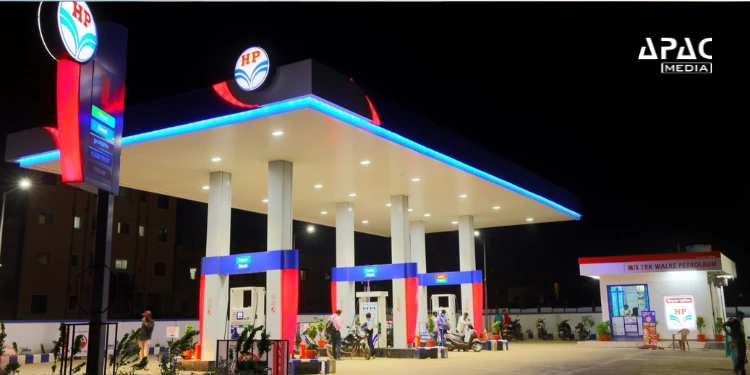
Noida, May 15 (APAC Media): India’s state-run oil marketing companies on Friday increased petrol and diesel prices by Rs 3 per litre, marking the first major nationwide fuel price revision in nearly four years amid a sharp rise in global crude oil rates.
Following the hike, petrol prices in Delhi rose from Rs 94.77 to Rs 97.77 per litre, while diesel rates increased from Rs 87.67 to Rs 90.67 per litre. Similar revisions were implemented across Mumbai, Kolkata, Chennai and other major cities with immediate effect.
The decision comes as international crude oil prices surged due to escalating geopolitical tensions in West Asia and disruptions in global supply chains.
| City | Petrol (₹/Litre) | Petrol Change (₹) | Diesel (₹/Litre) | Diesel Change (₹) |
|---|---|---|---|---|
| Delhi | 97.77 | +3.00 | 90.67 | +3.00 |
| Kolkata | 108.74 | +3.29 | 95.13 | +3.11 |
| Mumbai | 106.68 | +3.14 | 93.14 | +3.11 |
| Chennai | 103.67 | +2.83 | 95.25 | +2.86 |
Brent crude briefly crossed the $120-per-barrel mark earlier this week, raising concerns over higher import costs for energy-dependent economies such as India’s.
Oil marketing companies said the revision was necessary to offset mounting losses caused by rising crude prices and currency fluctuations. Officials indicated that retailers had been absorbing a significant portion of the increase in international oil prices over the past several weeks.
Latest Update:-
Indraprastha Gas Limited (IGL) has increased CNG price by Rs 2/kg.
New rates: Delhi Rs 79.09/kg, Ghaziabad, Noida Rs 87.70/kg, Gurugram Rs 84.12/kg.
⛽ CNG Price Change (15 May 2026)
| Metro City | Old Price (₹/kg) | New Price (₹/kg) | Change |
|---|---|---|---|
| Delhi | 77.09 | 79.09 | +2.00 ↑ |
| Mumbai | 81.00 | 84.00 | +2.00 ↑ |
| Kolkata | 93.50 | 95.50 | +2.00 ↑ |
| Chennai | 91.50 | 93.50 | +2.00 ↑ |
| Bengaluru | 90.00 | 92.00 | +2.00 ↑ |
“The present global energy situation has created extraordinary pressure on fuel retailers. The revision in retail prices has become unavoidable to ensure uninterrupted fuel supplies and maintain financial stability in the sector,” a senior petroleum ministry official said.
The official added that the government is closely monitoring developments in international markets and is prepared to take additional measures if volatility continues.
“The modest hike in the retail price of Rs. 3/litre for petrol and diesel provides limited relief to the oil marketing companies. ICRA estimates that at a crude price of $105-110/barrel and considering the past 10-year average crack spreads of auto fuels, oil marketing companies incur a loss of about Rs 500 crore daily on the sale of auto fuels and domestic LPG, even after factoring in the fuel price hike. Accordingly, the oil marketing companies would need to relook at the retail prices in case elevated crude oil prices persist.” Prashant Vasisht, VP, Corporate Ratings. ICRA Ltd.
Apart from petrol and diesel, compressed natural gas (CNG) prices were also increased by Rs 2 per kg in several cities, including Delhi-NCR and Mumbai, further adding to transportation and household costs.
VIDEO | As petrol and diesel prices go up by Rs 3 per litre each, a consumer at a fuel station in Mumbai says, "Petrol was already Rs 103, which was difficult for us. Now it has gone up by another Rs 3.13, making things even harder. Salaries are not increasing, but expenses keep… pic.twitter.com/E5tqZfTbZ9
— Press Trust of India (@PTI_News) May 15, 2026
Video Source: PTI
Earlier this week, Union Petroleum and Natural Gas Minister Hardeep Singh Puri had indicated that sustained pressure in global crude markets could lead to domestic fuel price adjustments.
“There has been no fuel price increase in the country over the past four years. Even as several nations across the world faced supply disruptions and sharp price hikes of 50-60%, India managed to maintain stable fuel availability and comparatively controlled prices,” Minister Puri said.
Reserve Bank of India Governor Sanjay Malhotra also warned that prolonged geopolitical instability could impact inflation and energy prices.
Industry analysts said the latest fuel hike is likely to increase logistics and transportation expenses, which may eventually push up prices of essential commodities.
Economists also cautioned that rising fuel costs could add pressure on inflation, potentially affecting household budgets and consumer spending in the coming months.
However, the government maintained that India’s fuel pricing mechanism remains linked to international market trends, and revisions are made based on prevailing global conditions.
Disclaimer: Views expressed are those of experts and do not reflect APAC Media. This is for informational purposes only, not financial advice. We are not responsible for investment decisions. Please consult a qualified financial advisor before investing.
Also Read:
Centre Govt Bans Sugar Exports till September 2026 to Stabilise Domestic Prices












Discussion about this post