
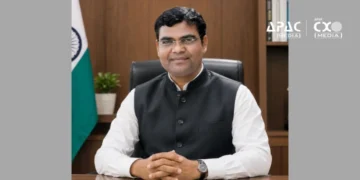
















New Delhi, June 24 (APAC Media): Union Minister for Steel and Heavy Industries H. D. Kumaraswamy on Wednesday said that digitalisation is no longer optional but a “foundational cornerstone” for the long-term survival of India’s steel sector, stressing that the industry must adopt emerging technologies to stay globally competitive.
Addressing industry stakeholders, the minister said embracing modern production methods would be critical for improving efficiency, competitiveness and the long-term survival of steel producers in an increasingly challenging global market.
The remarks were made by the minister while addressing the ‘Chintan Shivar 2026: Focus on Digitalisation in the Steel Sector’ event organised by the Ministry of Steel in New Delhi.
“The future of the steel sector will not be shaped by production capacity alone; it will be shaped by intelligent ecosystems,” the minister said while addressing participants from the public and private sectors.
Adani Targets 11 New Airports As Group Plans Rs 1 Lakh Crore Aviation Push
The minister said technologies such as artificial intelligence (AI), machine learning, the industrial Internet of Things (IIoT), digital twins, robotics and advanced data analytics are redefining steel manufacturing globally. He noted that the adoption of these technologies can significantly improve productivity.
“India aims to reach 300 million tonnes of steelmaking capacity by 2030 and 400 million tonnes by 2035. To achieve these targets, the industry will need to address challenges related to raw material security, operational efficiency, decarbonisation, modernisation and export competitiveness,” Kumaraswamy expressed.
He added that technologies such as artificial intelligence, machine learning, the industrial internet of things, digital twins, robotics and advanced data analytics are transforming global steel manufacturing and must be adopted extensively in India.
“The growth outlook for the steel sector remains highly promising. However, the industry must proactively address key challenges, including raw material security, modernisation, competitiveness, environmental sustainability, operational efficiency, decarbonisation and export competitiveness in an evolving global trade environment,” Kumaraswamy said.
The union minister noted digitalisation and automation can enable predictive maintenance by helping identify potential equipment failures before they occur. This, he said, would not only minimise unplanned downtime but also reduce human error and the risk of workplace accidents, thereby making plants safer for workers.
Digitalisation has the potential to optimise energy consumption, reduce operational costs, and improve overall plant efficiency.
“Tools are available; the steel industry just needs to integrate and customise them according to its requirements. Companies must identify problems and work towards solutions,” Steel Secretary Sandeep Poundrik said.
Held under the Ministry of Steel, the conclave brought together senior officials of the Ministry, along with Chairpersons and Managing Directors of major steel public sector undertakings, including Steel Authority of India Limited (SAIL), National Mineral Development Corporation (NMDC) and MOIL Limited, as well as industry leaders, startups and technology experts.
–ENDS–
Disclaimer: Views expressed are those of experts and do not reflect APAC Media. This is for informational purposes only, not financial advice. We are not responsible for investment decisions. Please consult a qualified financial advisor before investing.
Also Read: