




















Jidoka Technologies is a Chennai-based next-gen start-up in the field of automated cognitive inspection, delivering cutting-edge engineering solutions to automate the process of visual quality checks at high speed by leveraging Deep Learning, AI/ML and Analytics.
Jidoka caters to the automotive industry in the areas of Surface Inspection, Shape or part mix-up Inspection, Part counting applications, Dimension Check, Wet Leak Inspection, Radiography based Inspection, Assembly Inspections – for all varieties of components and assemblies like forgings, machined/ground components, castings, plastics and rubber among others.
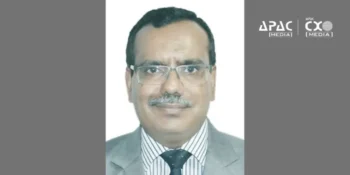
Sekar Udayamurthy, Co-founder and CEO, Jidoka Technologies in an exclusive interaction with Rajneesh De, Consulting Editor, APAC News Network explains how Jidoka is supporting the auto manufacturing industry in the QC function.
How would you trace the genesis of Jidoka Technologies?
Jidoka Technologies is a Chennai-based next-generation start-up, in the field of automated cognitive inspection, delivering an AI Powered Defect Detection system specially designed for the manufacturing industry. It enables 100% visual inspection, consistently, delivering detection accuracy of at least 98% and throughput gains of 30% and more. We, Dr. Krishna Iyengar and Vinodh Venkatesan and I – founded Jidoka in 2018.All of us had rich experience in Manufacturing and Digital technologies and understood the domain and its workings from the inside. We started off by identifying several pain-points faced by manufacturers on the shop floor when usingmanually driven QC processes. Due to human subjectivity, decision making varied based on the experience and expertise in addition to fatigue setting in. Accuracy rate of human inspection to detect defects was generally not more than 90%. Moreover, in high volume production lines where visual inspection was not deployed 24X7, there were backlogs that created bottlenecks in the process.
Coming from a manufacturing background, we recognised the humongous opportunity for automated QC solutions that would help to increase the efficiency of the manufacturing processes across industry verticals and decided to start the venture to serve the fast-expanding manufacturing market.
Today, due to the pandemic, manpower for manufacturing has become scarce and sometimes erratic. This, coupledwith increase in exports of manufacturing goodsdue to China +1 policy, has increased the demand-supply gap in the manufacturing Industry. This makes our solution very lucrative for manufacturers keen on leveraging AI powered Machine Vision to ensure business continuity.
What are the solutions and services in the Jidoka portfolio?
Jidoka’s state-of-the-art solution combines the power of AI with automation and computer vision in defect detection, delivering 98% or higher accuracy in the QC process. The Jidoka solution has both hardware and software components.
The Hardware platform has three trademarked structural shells that we use to customise the right solution for different products,
- Huron for large volume complex products
- Tigris for flat and lightweight products
- Miyake for manual load and unload with selective checking
The Software – A software platform, Kompass, marries real-time decision making to state-of-the-art AI to create an end-to-end system for visual defect system. The software provides a turnkey solution that fits seamlessly into the production line of different manufacturers. The system uses a digital twin created by the hardware and maps it to the AI to deliver up to 250 decisions per minute.
We also integrate our software with 3rd party radiography equipment to identify defects in X-Ray images, Bubble Test (wet leak) systems to identify cracks in castings.
Other hardware designs can be specially built depending on the component requirement. Solutions that can be integrated with robot is also in progress.
How is AI/ML being leveraged in auto parts manufacturing?
In the automotive industry, the solutions are able to detect errors such as dent, damage, line mark, face burr, deburring, colour mismatches, rust and processes that are missed for various types of products. The range of products include, assembly and sub-assemblies, casting, ground and machined parts, fine blanking besides hot and cold forging.
Deep Learning, a subset of Machine Learning in AI is leveraged to teach machines to learn by example. This technology can recognise features that distinguish trends and make intelligent predictions and decisions. It also scales the intelligence of human visual inspection with the reliability, consistency and speed of a computerized system. We use a combination of Supervised and Unsupervised Computer Vision AI algorithms. In the low data regime, we use our patented anomaly detection algorithm along with clustering.
How is Jidoka supporting the auto manufacturing industry in the QC function?
Jidoka’s AI based Machine Vision solutions helps automate the process of visual quality check in auto parts manufacturing by leveraging AI (Artificial Intelligence), ML (Machine Learning), Deep Learning and Analytics. This technology has the ability to recognise features and distinguish trends, and make intelligent predictions and decisions. It scales the intelligence of human visual inspection with the reliability, consistency and speed of a computerised system.
We deliver customised dashboards for Management, Quality Assurance, Supervisor and the Operator so that the right information is presented to the right people at the right time. Users can analyze data on various products, types of defects, severity, and occurrence and generate reports.
What are the components of the QC function?
There are four main components to a QC function – quality planning, quality control, quality assurance, and quality improvement.
Quality Planning, as the word suggests is about understanding the requirement – of the organization as well that of standards, and figuring out how the team will be able to meet them. The right tools, the right expertise and the processes that will work optimally to ensure that the customer receives only defect-free products.
Quality Control is the process of executing the quality check on the products manufactured. It includes document management, training and deploying the plans in the most efficient manner Quality Assurance is the watchful eye that controls, measures and monitors the output, checks to see if the standards have been met. Because they do this, the team is also in a position to work on areas of improvement.
Quality Improvement is more futuristic in nature – reviewing and evaluating systems and processes to see how it can be improved, what can be done differently, what more can be done.
What is the GTM strategy that Jidoka Technologies follows?
Our first customers have been from the automotive industry and so obviously we have seen great traction from there. It continues to be our largest customer segment. But we have also made very good inroads in Pharma, food and general manufacturing over the last year. We intend to continue focusing on these segments. In terms of geographies, we have been working on the European and the USA. The initial response has been most encouraging and we are hoping the coming year will see us grow not just in terms of industry but also in region. We also very aggressive about partnerships and knowledge share.
What are going to be your key focus areas in the next few quarters?
To begin with, we would want to move to a KPI driven triaging of Quality for organizations- i.e., manage economic, quality and production constraints and drive incremental change to quality, rather than looking at quality as an isolated module.
Secondly, we are looking at the need for customers to have data to ensure higher levels of accuracy, which is done by various features for data augmentation and experience driven inferencing. For this, we will leverage the cutting-edge work done in AI/Machine vision such as Anomaly detection, 3D image generation, etc., and to this effect we are productionising some of the concepts while patenting them as well.
We are also continuously updating the hardware platforms as well.
By 2025, we aim to expand our services across the global market of the US, UK, Europe, South East Asia besides serving in the Indian sub-continent.