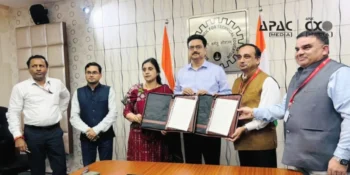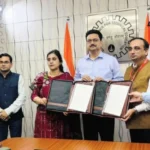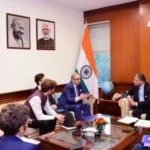







The Indian Institute of Technology (IIT) Kanpur and William Marsh Rice University, USA have signed a cooperation agreement at IITK. A delegation from Rice University visited IIT Kanpur to arrange new avenues to work towards collaborative teaching, training, and research in areas of mutual interest. IITK already has a Rice-IITK collaborative center working in areas including sustainable energy, materials, water, and alternative fuels among others on its campus.
The signed agreement details guidelines for both the universities to develop joint research and academic engagements in domains such as engineering, sciences, medicine and healthcare, humanities, management and business. The initial phase of the collaboration will be focusing on the areas of energy and environment, healthcare, biomedical sciences and biomedical engineering and data science, information technology and computer science and engineering.
As a part of the agreement IIT Kanpur and Rice University will be exploring opportunities in student exchange activities, joint research and publications, and organizing joint conferences and workshops that involve scholars, policy makers, and business leaders from around the world. While on the academic front, the partnership will focus on development of undergraduate or postgraduate coursework units jointly taught by both the institutions’ faculty and the establishment of a joint doctor of philosophy (PhD), masters and bachelors-masters programmes.
The Rice-IITK collaborative centre was established on January 9, 2022. Since its inception, the centre has been spearheading research in sustainable energy, materials, water, and alternative fuels among others. The new agreement aims to accelerate existing work and open newer scope for the institutions.
Upon signing the agreement, IIT Kanpur director, Abhay Karandikar, said: “IIT Kanpur’s collaboration with Rice University has been going from strength to strength. Under the Rice-IITK Collaborative Center, we have initiated important joint research, organized a virtual joint symposium for faculty collaborations and have provided once-in-a-lifetime opportunities for our students. I am sure this next chapter of our partnership will lead to strengthening our relations further.”