
















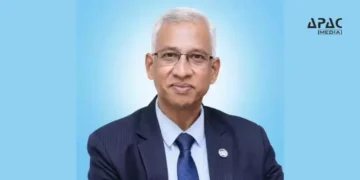





Kochi Metro is playing a large role in Kerala’s infrastructure ecosystem by enabling transit-oriented development, promoting sustainable urban planning, and driving renewable energy adoption in public transport. Loknath Behera, Managing Director, Kochi Metro Rail Limited and Kochi Water Metro, exclusively speaks to Nisha Samant, Associate Editor, APAC Media & CXO Media, about how KMRL plans to become a model for urban transport across Kerala.
What is your long-term vision for Kochi Metro, and how do you see KMRL contributing to the larger urban mobility and infrastructure ecosystem in Kerala?
Our long-term vision for Kochi Metro is to evolve into a sustainable, integrated, and people-centric mobility network that not only serves the city of Kochi but also becomes a model for urban transport across Kerala. Metro systems are not just about trains and stations—they are about shaping cities, reducing congestion, improving air quality, and offering people a dignified and reliable mobility choice.
Kochi Metro Rail Limited (KMRL) is working towards a seamless mobility ecosystem that connects the metro with buses, water metro, non-motorized transport, and future transit solutions. This multimodal integration ensures that a passenger can move from their home to workplace or leisure destinations with minimal reliance on private vehicles, thereby reducing traffic congestion and carbon emissions.
We also see KMRL playing a larger role in Kerala’s infrastructure ecosystem by enabling transit-oriented development (TOD), promoting sustainable urban planning, and driving renewable energy adoption in public transport. Our ongoing efforts in solar integration, waste and water management, and net zero commitments for Phase II reflect this commitment.
In the long run, we aim for Kochi Metro to be more than a transport system—to become a catalyst for urban transformation, improving quality of life, creating inclusive growth opportunities, and setting the benchmark for future infrastructure projects in Kerala.
How is KMRL working towards better integration of metro services with buses, ferries, and other modes of public transport to provide seamless last-mile connectivity?
At KMRL, we believe that true urban mobility goes beyond running a successful metro system—it is about ensuring seamless integration across all modes of transport. Kochi is unique in having India’s first integrated metro and water metro network, and we are working to strengthen this multimodal ecosystem further.
We are actively coordinating with private bus operators, auto rickshaw society, Kochi Water Metro, and to align schedules, introduce common ticketing and fare systems, and provide feeder services such as e-buses and e-autos for last-mile connectivity. Passenger information systems and mobile applications are also being upgraded to give real-time updates across different modes, helping commuters plan their journeys more efficiently.
Our goal is to ensure that a commuter can move from metro to bus to ferry with minimum waiting time, a single ticketing interface, and smooth physical access. By doing so, KMRL is not just improving connectivity but also encouraging more people to shift from private vehicles to public transport, thereby reducing congestion and emissions in the city.
KMRL has been recognized for its focus on sustainability. What new initiatives are being planned to further reduce the carbon footprint and promote green mobility in Kochi?
Sustainability has always been at the heart of KMRL’s vision, and we are continuously working to strengthen our role as a green mobility leader. Nearly 60% of the power for Phase I already comes from solar energy, and with Phase II, we are moving towards a net-zero carbon framework. This includes greater use of renewable energy, energy-efficient construction practices, and green building standards across all stations.
We are also introducing rainwater harvesting, advanced waste management systems, and water recycling at stations and depots. On the mobility front, we are expanding last-mile electric solutions such as e-buses, e-autos, and bicycles, ensuring passengers can complete their journeys sustainably.
Our long-term plan is to make Kochi Metro a model for carbon-neutral urban transport in India, setting benchmarks in renewable integration, eco-friendly infrastructure, and environmentally responsible operations.
Beyond transportation, what role is KMRL playing in boosting the local economy, real estate development, and social inclusivity in the region?
KMRL’s role goes far beyond providing transportation—we see ourselves as a catalyst for urban transformation in Kochi and Kerala. The metro has already spurred real estate development and commercial growth around stations, making these areas more attractive for investment and business activity. By improving accessibility, we are enabling new economic opportunities and helping local businesses thrive.
Equally important is our commitment to social inclusivity. KMRL has been a pioneer in employing transgender persons, women, and differently-abled staff across operations, ensuring that the metro reflects the diversity of the community it serves. We also engage actively with local artisans, self-help groups, and small businesses by providing them spaces in our stations, thereby creating a direct link between urban mobility and community development.
In essence, KMRL is not just moving people—it is helping to reshape the city’s economy, social fabric, and inclusivity, contributing to a more vibrant and equitable urban ecosystem.
With rapid advancements in technology and smart city initiatives. How is KMRL preparing itself to remain future-ready in terms of passenger services, digitalization, and infrastructure expansion?
At KMRL, we strongly believe that technology and innovation are central to the future of urban mobility. Our focus is on building a digitally empowered, passenger-friendly metro system. We have already introduced cashless ticketing through QR codes and mobile apps and are moving towards a Unified Mobility Card that will allow seamless travel across metros, buses, and ferries.
As part of Smart City initiatives, we are expanding real-time passenger information systems, AI-based crowd management, and digital tools for better asset monitoring and predictive maintenance. These measures not only enhance the passenger experience but also improve operational efficiency.
Looking ahead, our infrastructure expansion is aligned with sustainability and scalability. Phase II of the metro is being planned with smart stations, renewable energy integration, and intelligent transport systems so that Kochi Metro remains future-ready. Our vision is to ensure that KMRL evolves in step with the city’s growth, offering a transport system that is smart, green, and seamlessly integrated into the broader urban mobility ecosystem.




Discussion about this post