



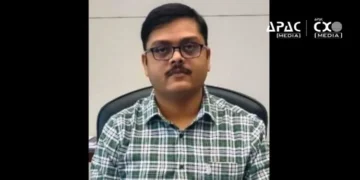















Building a home healthcare business in India is both a massive opportunity and a structural challenge. Vaibhav Tewari, Co- Founder & CEO, Portea, speaks to APAC Media about how, over the last decade, the perception of home healthcare in India has undergone a fundamental shift.
Portea is currently focusing on AI-powered health solutions. How are you integrating AI into daily home care to improve patient outcomes? How are you leveraging technology and digital-first services to make home healthcare more accessible and reliable?
AI for us is not a standalone product —we are leveraging it to offer holistic care plans to our patients and serve them get the best outcomes.
For us, AI is an embedded intelligence layer across operations, clinical governance, and patient engagement.
Our goal is simple: better outcomes, higher reliability, and scalable access.
AI in Daily Home Care: Improving Patient Outcomes
Predictive Risk Identification
We use data models to:
- Identify patients at risk of deterioration (chronic DM, cardiac, COPD, stroke cases)
- Flag early warning signs based on vitals trends
- Predict potential service drop-offs or dissatisfaction
This enables proactive intervention rather than reactive response.
Smart ClinicianMatching
Not every patient requires the same skill set.
AI-assisted allocation helps us match:
- Patient condition
- Required clinical skill (ANM, GNM, Attendant)
- Language preference
- Location proximity
- Historical performance metrics
Right clinician → Right patient → Better outcomes.
Data-Driven Chronic Care Management
For long-term elder and chronic patients, we integrate:
- Remote vitals tracking
- Trend analysis dashboards
- Automated follow-up triggers
This allows earlier intervention and reduces avoidable hospitalisations.
Digital-First Patient Experience
We are strengthening:
- Teleconsultations
- Video assessments
- Digital care documentation
- Structured follow-up workflows
This improves accessibility, especially in Tier 2 and Tier 3 markets where specialist access may be limited.
Portea has expanded to 40+ cities. What is your strategy for maintaining service quality while scaling rapidly in Tier 2 and Tier 3 cities?
When we expanded to 40+ cities, especially across Tier 2 and Tier 3 India, our focus was never just footprint — it was replicable quality at scale. Now we are offering services in 120 cities.
In healthcare, growth without governance is a risk. So our strategy rests on four clear principles:
Standardisation Before Expansion
We do not enter a new city until our operating model is ready to be replicated.
That includes:
- Uniform clinical protocols
- Defined escalation pathways
- Structured patient assessment frameworks
- Clearly mapped skill categories (ANM, GNM, Nursing Attendant)
Whether a patient is in a metro or a smaller city, the care pathway remains consistent.
Technology as the Control Tower
Technology allows us to scale responsibly.
Our centralised systems enable:
- Real-time tracking of service delivery
- Replacement and cancellation monitoring
- Complaint resolution dashboards
- Skill-based staff matching
This creates transparency and accountability across geographies.
Local Execution, Central Governance
Healthcare is deeply local. Trust matters.
We empower strong city leadership teams who understand local nuances — cultural expectations, workforce realities, referral ecosystems — while maintaining central oversight on quality metrics.
This hybrid model ensures responsiveness without dilution of standards.
Building Workforce Depth in Emerging Cities
We invest in:
- Structured onboarding and verification
- Continuous skill training
- Tiered service offerings for affordability
- Career pathways to improve retention
What are the biggest challenges in building a sustainable, profitable home healthcare business in India, and how has your model evolved to address them?
Building a home healthcare business in India is both a massive opportunity and a structural challenge. The demand is undeniable — ageing population, chronic diseases, rising hospital costs — but sustainability requires solving some deep-rooted realities of the Indian healthcare ecosystem.
Let me outline the biggest challenges and how our model has evolved to address them.
Workforce Reliability & Professionalisation
We built it with strong SOPs and governance.
- Structured hiring and background verification
- Skill segmentation (ANM, GNM, Nursing Attendant)
- Defined patient complexity levels (e.g., supportive care vs post-operative vs critical)
- Centralised replacement tracking and escalation dashboards
- Continuous training and digital monitoring
High Out-of-Pocket Healthcare Spending
The Challenge:
India has one of the highest out-of-pocket healthcare expenditures globally. Families are extremely price-sensitive, especially for long-term chronic care.
We are working with Insurance companies to build policies and cover homecare under Insurance.
Operational Complexity Across Cities
We built a model that balances local agility with central discipline.
We have transitioned from:
Home Visit Model ➝ Managed Service Model ➝ Tech-Enabled Chronic Care Platform
The future of sustainable home healthcare in India lies in:
- Subscription-based chronic care
- AI-led patient risk stratification
- Integrated hospital partnerships
- Outcome-driven care models
Sustainability in this sector is not about rapid growth.
It’s about building systems that ensure continuity, trust, and clinical governance — at scale.
That is how we are building a profitable, long-term home healthcare platform in India.
What role do partnerships with hospitals and insurance companies play in your current growth model?
Partnerships are not an add-on to our strategy — they are a core growth engine.
Home healthcare does not operate in isolation. It sits between hospital care and long-term community care. To scale responsibly, we must integrate with the broader healthcare ecosystem.
Hospital Partnerships: Enabling Continuity of Care
Hospitals are critical partners because they represent the transition point from acute to recovery care.
Why They Matter
- Structured post-discharge programs
- ICU-to-home transitions
- Post-operative nursing pathways
- Chronic disease follow-ups
For hospitals, this reduces:
- Readmission rates
- Bed occupancy pressure
- Patient complaints post discharge
We are a continuity-of-care extension of the hospital.
Insurance Partnerships: Improving Affordability & Scale
India’s biggest healthcare challenge is high out-of-pocket expenditure.
Insurance partnerships help us:
- Enable cashless home treatments (where policy permits)
- Create bundled post-hospitalization packages
- Pilot chronic care reimbursement models
- Expand access in Tier 2 & 3 cities
As insurers shift toward value-based care, home healthcare becomes a cost-efficient alternative to prolonged hospitalization.
How are you addressing the high out-of-pocket expenditure in Indian healthcare?
India continues to have one of the highest out-of-pocket (OOP) healthcare expenditures globally. For most families, especially in chronic and elder care, healthcare spending directly impacts household savings.
At Portea, we see affordability not as a pricing issue — but as a structural design challenge. Our approach focuses on reducing total cost of care, not just service fees.
Subscription & Preventive Care Models
Reactive care is expensive. Preventive care is sustainable.
We are investing in:
- Annual elder care packages
- Chronic disease monitoring programs
- Regular vitals tracking
- Early risk detection
Preventive engagement reduces emergency hospitalization, which is often financially disruptive for families.
Insurance & Corporate Partnerships
We are working with:
- Insurance providers to expand coverage for home-based care
- Hospitals to bundle discharge-to-home programs
- Corporations for employee elder care benefits
As reimbursement models evolve, home healthcare becomes a cost-efficient alternative for insurers and providers alike.
How has the perception of ‘home healthcare’ in India changed over the years, and what role did Portea play in that transformation
Over the last decade, the perception of home healthcare in India has undergone a fundamental shift.
Today, home healthcare is seen as:
- A preferred recovery environment post-surgery
- A structured chronic disease management solution
- A cost-effective alternative to prolonged hospitalisation
- A dignified ageing solution for elders
- A convenient option for physiotherapy, diagnostics, and doctor visits
Families now actively choose home healthcare — not as a compromise, but as a smarter, more comfortable care pathway.
The pandemic further accelerated this shift, normalising home-based consultations and strengthening confidence in decentralised care delivery.
The Role We Played in This Transformation
We contributed to this shift in four key ways:
- Professionalising the Workforce
- Building a Multi-Service Home Care Platform
- Partnering with Hospitals & Insurers
- Expanding Beyond Metros
With India’s ageing population, what is the next big step for Portea in elder care and chronic disease management?
India is entering a demographic shift. With a rapidly aging population and rising chronic conditions like diabetes, cardiac disease, COPD, stroke, and dementia, healthcare demand is moving from episodic treatment to long-term management.
The next big step for us is not expanding services — it is building an integrated, longitudinal elder care ecosystem.
- From Episodic Care to Subscription-Based Continuity
Traditionally, home healthcare has been reactive — families call when there is a surgery or crisis.
The future lies in:
- Annual elder care programs
- Structured chronic disease management plans
- Scheduled clinical reviews
- Preventive health tracking
This creates predictable outcomes and reduces emergency hospitalisations.
We are moving toward continuity of care, not transaction-based service delivery.
- Remote Monitoring + Predictive Intelligence
Chronic diseases require early intervention.
The next step includes:
- Remote vitals monitoring
- AI-based risk stratification
- Early warning alerts for deterioration
- Family dashboards for children living in other cities or abroad
Instead of responding to emergencies, we aim to prevent them.
- Integrated Clinical + Non-Clinical Elder Support
Elder care is not just medical — it is emotional and social.
Our model is evolving to integrate:
- Nursing care
- Physiotherapy
- Nutrition guidance
- Emotional counselling
- Companionship support
We see elder care as a holistic ecosystem — addressing mobility, cognition, mental health, and dignity.