











East Champaran is one of Bihar’s largest and most complex districts to administer. With a population of about 65 lakh, the district administration is responsible for implementing governance reforms, ensuring economic development, and carrying out one of the most important exercises of a democracy—elections. In this exclusive conversation, Saurabh Jorwal, IAS, District Collector of East Champaran, Bihar, speaks with Anannya Saraswat, Correspondent, APAC Media, about managing elections in such a large district by introducing a simple but powerful tech solution.
In addition, he also discusses the overall governance initiatives undertaken in the district and how the administration is building an ecosystem for boosting the local economy.
Can you give an idea of the scale and scope of the election process in East Champaran?
East Champaran has around 65 lakh people and nearly 35 lakh voters. The district has 27 blocks and 12 assembly constituencies, so we elect 12 MLAs. It also falls under three parliamentary constituencies, two full and one partial.
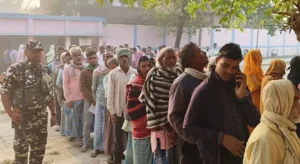
Elections here are a massive exercise. Around 50 government departments are involved at the district and lower levels. Nearly 35,000 government employees participate in the process. In addition, around 15,000 police and security personnel are deployed. So on polling day, close to 40,000 to 50,000 people work together to conduct elections smoothly.
There are clear SOPs and guidelines for everything. This ensures smooth functioning but also leaves limited room for innovation. Still, we try to improve processes where time and effort can be reduced.
What was one of the first administrative challenges you faced while conducting an election, and how did you address it?
My first election, during the early years of my service, was a panchayat election where around 5,000 candidates filed nominations. One important task was symbol allotment. The rule says candidate names must be arranged in Hindi alphabetical order before allotting symbols.
The challenge was that the software we used at the time could not sort names in Hindi. So the entire process was done manually. Around 100 employees worked for 10 days just to sort names.
We created a simple model using Excel VBA (Visual Basic for Applications) macros to sort names in Hindi automatically. It was a small solution, but the impact was huge. The time required dropped from 10 days to just 2 minutes.
How did the idea about using the CAPF deployment software in East Champaran during the 2025 Bihar assembly elections come about? What gaps were you trying to address through the system?
During the elections, allocation of polling parties to specific polling booths is done through the Election Commission software, which uses randomisation. But security forces, especially CAPF, have to be deployed statically at specific locations.
For the 2025 Assembly elections, we received 125 companies of CAPF. Each company had around 100 personnel. These had to be deployed across nearly 5,000 booths.
First, we had to distribute the companies across the district for their stay. Then we had to tag each company to the nearest polling booth. The rule is simple: the company should be assigned to booths near its stay location.
But in reality, some booths are clustered in one area. If the force available there is less than required, another company staying far away has to be assigned. Earlier, all this was done manually and took 10 to 15 days.
Another challenge was that these companies come from outside and are not familiar with the local geography. They often faced difficulty locating their assigned booths.
What solution did you design to address these issues?

We had GPS coordinates of all booths and the stay locations of all 125 companies. We also calculated distances between booths using a small script on Google Maps.
Using this data, we developed a small software tool that allocated companies to booths in a way that minimised travel distance. The system ensured balanced deployment and avoided overloading any company.
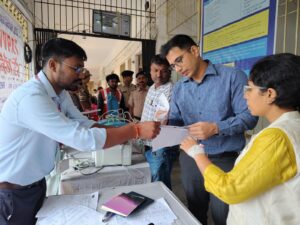
The software also generated a QR code for each assigned booth. Security personnel could scan the QR code and directly navigate to the booth location. The same QR codes were also made available to voters for easy navigation.
This reduced the allocation time from 10 to 15 days to just 5 minutes. It was a zero-cost innovation.
What were the outcomes of this system?
The system brought several benefits:
- Accurate and balanced force deployment
- Minimum travel distances
- Reduced fuel consumption
- No manual errors
- Transparent and auditable allocation
- Easier navigation for CAPF teams
- Significant savings in time and manpower
The manpower saved could then be used for other election management tasks. Overall efficiency was improved.
What challenges did you face while implementing the system?
The system depends heavily on correct input data. If the GPS coordinates of booths or stay locations are entered incorrectly, deployment will not be optimal.
Sometimes errors occurred during field data collection. We addressed this by verifying coordinates carefully before running the system. Once the data is accurate, the system works in a robust and simple manner.
Bihar faces unique challenges when it comes to water. Some areas are flood-prone, and some suffer from droughts. In this context, what initiatives have the Bihar government and the East Champaran district taken in water management?
Bihar has two distinct regions. North Bihar faces frequent floods, while South Bihar is more drought- prone. We have clear SOPs for flood management. In East Champaran, embankments have been constructed along rivers in flood-prone areas, and work is ongoing.
At the state level, before central flagship schemes, Bihar was already running the ‘Jal Jeevan Hariyaali scheme.’ Later, this scheme was integrated with the Jal Shakti Abhiyan. East Champaran was also one of the districts recognised for its good performance under this campaign.
What steps are being taken to strengthen healthcare infrastructure in the state?
Under the ‘Seven Resolves,’ or ‘Saath Nishchay (Part 3)’ of the Bihar government, strengthening healthcare is a priority. We aim to upgrade existing facilities to the next level.
District hospitals are being improved and are planned to be converted into medical colleges. The government’s priority is to have at least one degree college in every block and one medical college in every district.
What are the key priority areas for East Champaran in the near future?

Entrepreneurship and industrial development are key focus areas. Some young individuals in the district have started ventures such as garment manufacturing and interior decoration. They have learned skills through online platforms and received seed funding of Rs 10 lakh each under the Chief Minister Udyami Yojana.
Their main challenge now is marketing and building forward linkages, even when there is demand for their products. Our priority is to support them in connecting to markets.

Industrial development is a five-year focus area. We provide seed funding and continue to guide startups. Every Wednesday, meetings are held with industrialists in each district to address their concerns.
Food processing is another growing sector in East Champaran. Going forward, we will focus on strengthening the industry, supporting entrepreneurs, and building a strong local economy.