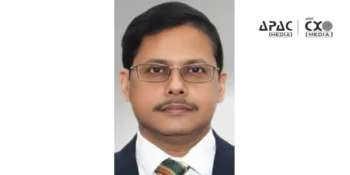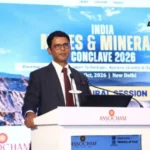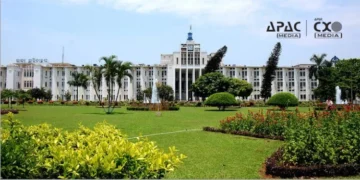
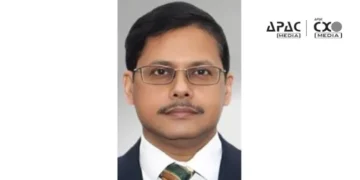




















In an exclusive interview with APAC Media, Dr Pradip Kumar Bora, Director of North Eastern Regional Institute of Water and Land Management (NERIWALM), discusses the North East’s paradox of abundant rainfall yet growing water scarcity, floods and land degradation. He outlines how climate change and fragile hill ecosystems are impacting water security and explains NERIWALM’s location-specific interventions, capacity-building efforts and scientific water management approach. He also highlighted institutional collaborations, food security initiatives and the institute’s roadmap to support Central and State government programmes in the coming years.
NERIWALM works across all the North Eastern States. What are the most pressing Water and Land Management Challenges unique to this region and how is the institute addressing them through location-specific technology?
The North Eastern Region (NER) of India faces a paradoxical water and land crisis: despite having some of the highest rainfalls in the world and 33 per cent of India’s annual water resources, the region is increasingly grappling with severe water scarcity and widespread land degradation specially in the fragile landscape of the hill states.
Water Management Challenges
The region is currently transitioning from a water-abundant to a water-stressed area due to both climate change and mismanagement.
- Recurrent floods in the valleys, coupled with high sediment load, cause devastation to lives and the economy of the region.
- River bank erosion and course migration of the Himalayan rivers are other associated problems.
- Monsoon rainfall has been steadily declining over the last seven decades. Some areas, like Assam, have seen deficits as high as 40 per cent. It is projected that “drought weeks” during monsoon months will increase by 25 per cent across most NE states.
- Dying Mountain Springs: Springs are the primary water source for many hill villages (e.g., 94 per cent of villages in Sikkim). Climate change and rising temperatures are causing these springs to dry up, which in turn reduces the base flow of major rivers like the Brahmaputra.
- Poor infrastructure with difficult terrains and acute shortage of drinking water in the hill states pose serious limitations in the further socio-economic development of the states.
- Concerns persist over upstream dam projects, such as China’s planned project on the Yarlung Tsangpo (Brahmaputra), which is feared as a potential “water bomb” for downstream communities in Arunachal Pradesh and Assam.
Land Management Challenges
Land in the NER is naturally fragile and is being further degraded by intensive rainfall and faulty agricultural practices.
- North Eastern Region is characterised with acidic soils, which essentially limit nutrient availability to the crops and hence productivity. Acidification is exacerbated by heavy rainfall and flooding, which wash away essential metallic minerals.
- Topography is primarily responsible for unsustainable agricultural practices, including shortened fallow periods in shifting cultivation, which contribute to roughly 30 per cent of land degradation in the region. Soil loss in some areas can exceed 836 t/ha/yr (tonnes per hectare per year).
- Recent floods have begun depositing much coarser sand in rice fields than in previous years, replacing fertile alluvial soil and diminishing agricultural productivity in the Brahmaputra plains.
- Open-cast coal mining in Upper Assam destroys natural hillocks, creates barren landscapes, and leads to acidic mine effluent discharge. Crude oil drilling often occurs in floodplains, where effluent pits can seep into nearby farms and water sources.
- Guwahati’s Bharalu River is now considered one of India’s most polluted due to rapid urbanisation, lack of a planned sewerage system, and untreated industrial waste.
- Over 290 habitations in Assam are identified as arsenic-affected, threatening safe drinking water access. Co-contamination of Arsenic and Fluoride as well as high concentrations of iron in groundwater, is further deteriorating the problems.
Capacity Building is central to NERIWALM’s mandate. How are your training and HRD programmes helping to improve agricultural productivity while ensuring sustainable water use?
The North Eastern Regional Institute of Water and Land Management (NERIWALM) integrates capacity building and Human Resource Development (HRD) to empower stakeholders across the eight NE states. These programs bridge the gap between technology and field application to boost productivity while conserving resources.
Sustainable Development Goals (SDGs) are definitely occupying the central position in the recent capacity-building programs. While it is difficult to enumerate the direct impact of the programmes of NERIWALM on the crop productivity and sustainable water use, stakeholders from the farming community, water users associations and the officials of the line department attending different training programmes have rated very highly about the training programmes of the institutes. Irrigation and water resource departments of all eight states are regularly reaching out to NERIWALM for routine as well as tailor-made training programmes. Some of the important thematic areas sought after by the state governments are:
- Induction programmes for irrigation and agricultural engineering departments.
- DPR preparation for irrigation projects
- Participatory irrigation management
- Organic farming
- Crop-specific water management
- Springshed Management
- Climate resilience water management
- Soil health management
- Water harvesting
With the Shrinking Landholdings, declining soil health and climate variability, how is the organisation integrating scientific water management to support food security in the North East?
To safeguard food security in the face of shrinking landholdings and climate variability, NERIWALM integrates scientific water management through a four-pronged strategy:
- Precision Irrigation for Small Landholdings
Recognising that 12.8 per cent of the North East is already water-stressed, NERIWALM promotes technologies that maximise output from small, fragmented plots:
- IoT-Based Smart Irrigation: Demonstrations at the NERIWALM Research Farm show how real-time soil moisture and climate monitoring can ensure precision water use.
- Farmers are trained in drip and sprinkler systems to maintain high yields in horticultural and field crops with minimal water dependency.
- Climate-Resilient Agricultural Planning
The organisation pre-positions the region to combat climate shocks through specialised HRD programmes:
- Sustainable Management of Irrigated Agriculture: Training programs focus on adaptive planning and irrigation scheduling for unpredictable rainfall patterns.
- Watershed & Springshed Management: Recent initiatives emphasise springshed restoration to preserve natural water sources that feed agricultural lands in hilly terrains.
- Integrated Soil Health Management
Scientific land management is treated as inseparable from water management to prevent declining productivity:
- Soil Testing & Monitoring: Through its NABL-accredited Soil and Water Testing Laboratory, NERIWALM trains farmers in soil health management, balanced fertilisation, and preventing contamination.
- Organic Inputs: Programs promote the use of bio-fertilisers like Jivaamrit to restore the organic carbon of ailing soils, which in turn improves water retention.
- Community-Driven Governance
NERIWALM bridges the “potential-to-utilisation” gap by empowering local stakeholders:
- Participatory Irrigation Management (PIM): Training Water Users Associations (WUAs) ensures that limited water resources are distributed equitably across community-held lands, preventing conflicts during dry spells.
- Multiple Cropping Strategies: Farmers are taught crop rotation and intensification techniques that allow for higher food production on the same small acreage by utilising stored rainwater.
According to the details available on the website, NERIWALM has sig ned multiple MoUs with institutions such as ICAR, TISS, IIT Water management and regional universities. How do these collaborations translate to the ground?
The primary objectives of the MoUs are to achieve both knowledge sharing and resource sharing. NERIWALM with the collaborating institutions are trying to create a win-win situation for the parties entered into the agreement.
- NERIWALM recently completed a research project on the livelihood challenges of the displaced people due to riverbank erosion in collaboration with the Tata Institute of Social Sciences, Brahmaputra Board and Rainforest Research Institute, Jorhat.
- A collaborative research project is presently pursued in collaboration with the National Institute of Hydrology on the impact of the Ranganadi Dam on the downstream population.
- A study was recently completed in collaboration with the Brahmaputra Board on good water management by the Apatani community of Arunachal Pradesh.
- The students of the M.Tech programme in Water Resource Management are regularly undertaking research projects for their M.Tech dissertation inthe North Eastern Space Application Centre and National Institute of Hydrology.
- College of Agricultural Engineering and Post-Harvest Technology (CAU), Sikkim, has come up as the main collaborating institute for most of the training programmes in Sikkim and is supporting NERIWALM with resource persons and other logistics.
- KVKs of ICAR are acting as regional hubs for NERIWALM in the training programmes conducted in the remote parts of the states.
- Dean, School of Engineering and Director of Extension Education, Assam Agricultural University are two members of the Academic Advisory Committee (formerly Technical Advisory Committee).
- Director, ICAR; Director, IIT Guwahati; Dean, Faculty of Agriculture, Assam Agricultural University are members of the Executive Council, NERIWALM.
- Director, ICAR; Director, IIT Guwahati and Vice-Chancellor, Assam Science and Technology University are also members of the Governing Body of NERIWALM.
Since R&D is the key pillar of the institute, could you highlight some recent research or innovations in soil and water management that have shown promising results in the North East?
NERIWALM, being a capacity-building institute, has not been involved in much basic or applied research so far. However, some of the strategic research has been carried out in recent years.
- A study has been conducted, as supported by the Brahmaputra Board on good water management (rice-fish culture) in the Ziro valley as practised by the Apatani Community.
- As directed by the Governing Body, a study on the livelihood challenges of displaced people due to river bank erosion along the river Brahmaputra.
- A study was conducted on the possibilities of the PPP mode of operation and maintenance of irrigation project in Kaliabor Lift Irrigation Project.
- A study was conducted on participatory irrigation management in Manipur, sponsored by ICSSE.
- A study is being conducted on the impact of the Ranganadi Dam on the socio-economy of the downstream communities.
- A major study is being conducted on the sustainable comprehensive irrigation plan for the state of Assam.
- A study has been conducted on groundwater quality and its possible health hazard in the district of Darang, Assam.
- Every year, about 12-15 M. Tech dissertation studies have also been conducted on various topics related to irrigation water management.
What is your strategic vision for NERIWALM to strengthen agriculture, water management and support Central and State government programmes in the region over the next five years?
- NERIWALM is looking forward to establishing itself as an institute for single-window solutions for any water-related issues. Apart from conducting routine water management training programmes, it has also been identified by the DoWR, RD & GR for a training programme on DSS for Flood Risk Assessment and Management sponsored under the Indo-EU water partnership.
- The institute’s soil testing laboratory is now recognised and accredited under GLOSOLAN.
- The water testing laboratory is NABL accredited for seven water quality parameter and accreditation for the other 15 parameters is in process.
- Its laboratory for soil and water testing is state-of-the-art with the necessary high-end equipment. It is also being discussed to bring the laboratory to the network for CGWB water samples.
- NERIWALM is in the process of engaging a Professor of Practice to conduct location-specific training and research. These professors of Practice are expected to be retired Sr. Engineers of the departments of water resources to overcome the shortage of manpower and to overcome language barriers.
- Springshed management is expected to be a central thematic area of training to address water scarcity in the hill states of the region.
- Apart from flagship programmes of the government of India, NERIWALM is also implementing programmes under the National Water Mission to address climate change issues and sustainability.
- Regular Training Needs Assessment will be conducted to achieve more cooperation among the states and to address needs-based training.
- More field workers, the water users association will be trained for both horizontal and vertical expansion of its outreach.
- Apart from a considerable presence in the i-GoT, NERIWALM will improve its online presence for reaching out to the maximum population and the programme will be made available in multiple languages as necessary for the NE Region.
- As supported by the Capacity Building Commission, NERIWALM will upgrade its audio-visual laboratory for the creation of suitable content, including videos on different water management techniques.
- Research books, bulletins, etc., will be published in different languages.
- Seminars/conferences will be conducted at least once a year on important topics aligning with the ministry’s programmes.
- Two numbers of internal research grants will be provided to its faculty at Rs 10 lakhs from the earnings of the Corpus Fund of the institute.