


















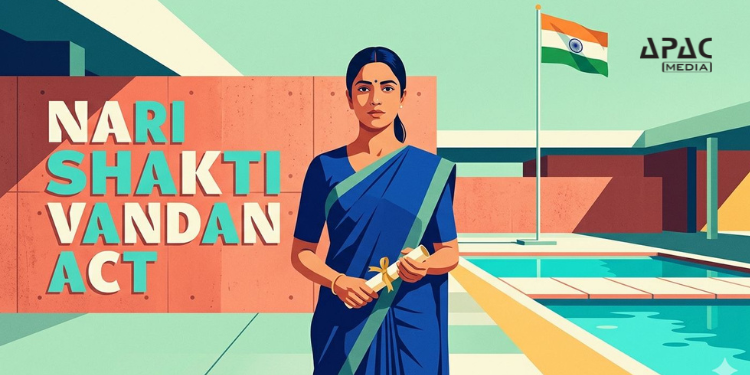
New Delhi, 5 Apr, (APAC Media): The Government of India has initiated the Women’s Reservation Bill, also known as the Nari Shakti Vandan Act, in a major step toward women’s empowerment. The Act seeks to increase women’s involvement in politics and guarantee them a more significant role in all levels of decision-making.
The Nari Shakti Vandan Act: What is it?
Women are granted a 33% reservation in the Lok Sabha and State Legislative Assemblies under the Nari Shakti Vandan Act. In order to ensure inclusive representation across categories, this quota would also be applied to seats that are already set aside for Scheduled Castes (SC) and Scheduled Tribes (ST).
Why is this crucial for women?
Women’s involvement in Indian politics has been restricted for many years. It is anticipated that this law’s implementation will:
- Expand the number of women serving in legislative bodies
- Increase women’s participation in policymaking;
- promote grassroots leadership; and hasten social and economic
empowerment
How could it affect Indian politics?
Experts believe that this reform could reshape India’s political landscape. Key anticipated changes include:
- Improved balance in a traditionally male-dominated system.
- New women leaders are emerging.
- Increased women participation in rural and urban areas.
- Strategic shifts within political parties to adapt to new leadership
dynamics.
When will it be rolled out?
The Act’s implementation is contingent upon the completion of the next Census and the delimitation process. The reservation will take effect only after the constituencies are redrawn.
Government’s vision
The Narendra Modi government sees this legislation as a watershed moment in empowering women by increasing their opportunities, independence, and participation. It has been described as the start of a new chapter in enhancing women’s participation in India’s democratic framework.
The Nari Shakti Vandan Act is more than just a policy reform; it represents a fundamental shift in Indian politics. Bringing women closer to the center of decision-making has the potential to make the country’s democratic system more inclusive, balanced, and forward-thinking.