





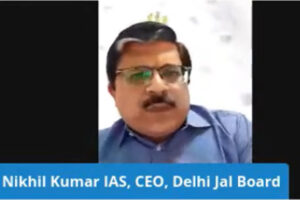
 New Delhi: Water body rejuvenation is one of the way out to mitigate the problems of water shortage. Delhi Jal Board CEO Nikhil Kumar has informed this while speaking recently at virtual ‘Global Water Management Conclave’ organised by APAC News Network in association with Ministry of Jal Shakti, Government of India. Speaking at a panel discussion he said, ‘Delhi is facing huge water shortage. There are two sources of water, surface water and groundwater. Yamuna is the biggest source of surface water. The challenge is that there is limited amount of water which we can access owing to inter-state water sharing clauses. Also, there are climatic and geographical challenges. Delhi is water stressed and we are exploring solutions such as rainwater harvesting.’
DJB CEO also added that they are thinking of another solution and that is treated affluent from the waste water treatment plants.
‘We can generate around 500 MGD of water through this. Delhi requires 1200 MGD of water and at present there is a gap of around 200 MGD of water. We are working towards recharging of groundwater and making sustainable extractions. We are heavily dependent on the river Yamuna for agricultural purposes. Rejuvenating this river is one of the challenges that we are facing today. Work is already on progress for the revival of Yamuna river under the aegis of National Green Tribunal (NGT) and the Honourable Supreme Court,’ said Nikhil Kumar.
He further stated that ‘DJB has identified over 250 water bodies for comprehensive rejuvenation. We are clearing the encroachments are demarcating the wet patch areas and using various technologies for revival of these areas. These are designed in a cost effective method. There has been due recognition and accolades and there is public involvement as well for the upkeep of these water bodies and the surrounding areas. We are in the process of developing five new water bodies by treating these affluent water at a cost of more than Rs 160 crore. We also plan to recharge and supply the treated water to the water deficit areas of Delhi. We have large number of drains and many of them carry waste water. DJB is working towards upgrading the number of waste water plants.’
Rainwater harvesting is another area which we are working on aggressively and supporting various buildings for installing the rainwater harvesting structures. The challenge is to make it a people’s movement. It should be made a way of life. We are involving each and every stakeholder to achieve the aim of successful water management, stressed DJB CEO.