




























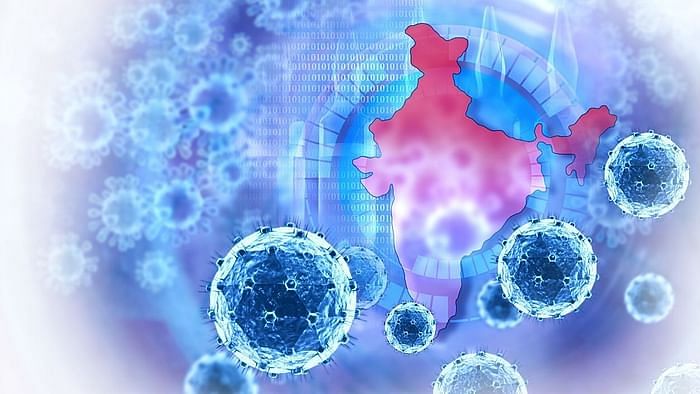
 New Delhi: A third wave of Covid could hit India and is inevitable said Dr Randeep Guleria, AIIMS chief to a popular news channel. Citing the challenge of vaccinating the whole population and the gaps in Covishield and providing protection to people a huge task.
Fresh concerns include the new Delta-plus variant, which has evolved from the Delta variant of COVID-19, triggering fresh concerns about monoclonal antibody treatment.
The reasons he stated for an inevitable third wave include the lack of Covid appropriate behaviour. It could hit the country in the next six to eight weeks, he added. Nearly 5 per cent of the country’s population has so far been vaccinated with two doses. The government aims to vaccinate 108 crore of over 130 crore people in the country by the end of this year.
“That (vaccination) is the main challenge. A new wave can usually take up to three months but it can also take much lesser time, depending on various factors. Apart from Covid-appropriate behaviour, we need to ensure strict surveillance. Last time, we saw a new variant – which came from outside and developed here – and led to the huge surge in the number of cases. We know the virus will continue to mutate. Aggressive surveillance in hotspots is required,” the AIIMS chief said.
“Mini-lockdown in any part of the country, which witnesses a surge and a rise in positivity rate beyond 5 per cent, will be required. Unless we’re vaccinated, we’re vulnerable in the coming months,” he underlined, stressing that “testing, tracking, and treating” should be the focus in hotspots.
“We have to factor in human behaviour while unlocking, which needs to be done in a graded manner,” Dr Guleria stressed.
On the spread of the Delta variant in the United Kingdom, which is now facing a third wave, he said, “Virus is still mutating, we need to be careful”.
The highly transmissible variant first identified in India is now making up 99 per cent of fresh COVID-19 cases in the UK, news agency PTI reported. The gap between the new waves is shortening and it’s “worrying”, Dr Guleria said.”
During the first wave (in India), the virus was not spreading that rapidly… all that changed during the second wave, and the virus became much more infectious. Now the Delta variant that’s spreading is much more infectious. Faster spread is likely,” said the AIIMS chief.














Discussion about this post