
























New Delhi: Insurance Regulatory and Development Authority of India (IRDAI) is determined to deploy Bima Vahaks in every Gram Panchayat before the end of the year 2024, the regulator said in a circular on Monday.
The release said, “As per the guidelines, every insurer shall endeavour to engage individual Bima Vahaks and/or corporate Bima Vahaks with the focus to progressively achieve coverage of every Gram Panchayat. Bima Vahaks shall be deployed in each Gram Panchayat before 31 December 2024.”
The guidelines for ‘Bima Vahaks (BV)’ were released by the IRDAI on Monday, where minor changes were further introduced to the framework released in May 2023. The new guidelines specify that Bima Vahak will face no restrictions on the number of insurers they are allowed to work with.
The following clause, appearing in the previous release, was removed by the IRDAI: “work with only one life insurer, one general insurer and one health insurer and additionally where permitted by the Authority, with the Agriculture Insurance Company of India Ltd.”
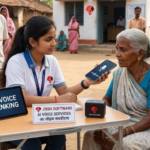
The aim of Bima Vahak, however, remains women-centric, and dedicated to ensuring a distribution channel ensuring the accessibility and availability of insurance in every corner of the country.
The guidelines include both corporate and individual Bima Vahaks within the distribution channel. A Bima Vahak refers to legal entities registered with respect to relevant laws and contracted by an insurer. An individual Bima Vahak, on the other hand, can be any person appointed by an insurer or appointed by a corporate Bima Vahak.
Bima Vahaks, both corporate and individual, will be authorised to perform tasks such as gathering proposal information, collecting know-your-customer (KYC) documents, and coordinating services related to claims.
According to the draft, insurers must provide various optional payment methods for premiums to potential customers or policyholders. Additionally, Bima Vahaks are expected to be motivated to adopt electronic payment procedures offered by insurers, allowing for the direct remittance of premiums, as added in the statement.