































New Delhi: Economists who took part in the Prime Minister’s pre-Budget interaction have cautioned the government about mounting fiscal pressures, pointing to rising interest obligations, a sharp decline in household savings and the risk of crowding out private investment, even as public capital expenditure remains elevated to support growth.
According to reports, participants flagged concerns that sustained high government capex, combined with weakening domestic savings, was tightening liquidity and pushing up bond yields.
Several economists suggested recalibrating capital expenditure to around 3 per cent of GDP, closer to the original Fiscal Responsibility and Budget Management (FRBM) framework, from the current level of above 3 per cent. For FY26, the government has budgeted Rs 11.21 lakh crore for capex.
Household financial savings, which have fallen from about 10-10.5 per cent of GDP to nearly 7-7.5 per cent, were identified as a key macroeconomic risk, potentially constraining financing for both the public and private sectors.
Rising interest payments, now accounting for nearly a quarter of total government expenditure, were also flagged as a concern for future fiscal flexibility.
Alongside fiscal issues, discussions covered Atmanirbhar Bharat and the Viksit Bharat roadmap, including climate finance, digital infrastructure and AI-related skilling.
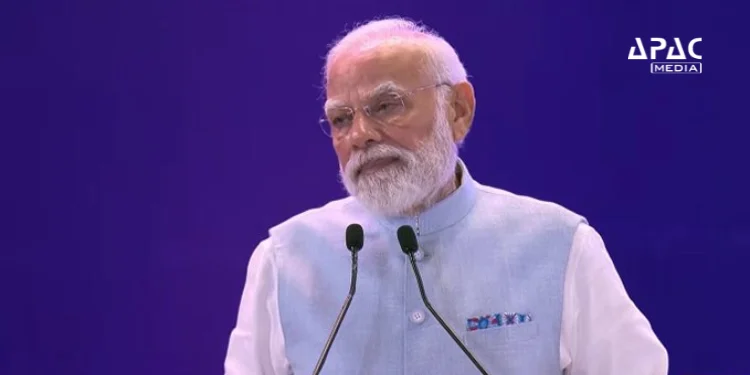
PM Narendra Modi underscored the need to address the aspirations of nearly 25 crore people who have moved out of poverty, with a focus on health, education, jobs, skills and infrastructure, reports stated.


Discussion about this post