

















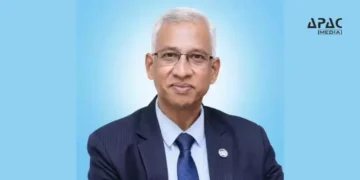






EESL is advancing integrated solutions that address both demand-side efficiency and clean energy supply. Anil Choudhary, Chief General Manager (Tech, Q&I, Sustainability),c Energy Efficiency Services Limited (EECL), exclusively informs Rajneesh De, Group Editor, APAC Media & CXO Media, about EESL’s strategy to include standardisation of specifications, large-scale procurement to reduce costs, IoT-based continuous monitoring, state partnerships for deployment, and innovative financing to reduce first-cost barriers.
How would you explain the operational functioning and business model of EESL?
EESL, a joint venture of leading Power PSUs (NTPC, Power Grid, REC, PFC), operates as India’s flagship Energy Service Company with a mandate to drive large-scale energy efficiency and accelerate the country’s clean energy transition. Our model combines demand aggregation, ecosystem enablement, and performance-driven deployment.
We identify high-impact sectors—lighting, buildings, cooling, mobility, smart metering, agriculture, municipalities, and industry—secure the most competitive prices through bulk procurement and implement solutions either through beneficiary-funded models or performance-based contracts with no upfront cost. Revenues are recovered through deemed energy savings or service fees. The overarching objective is strengthening India’s energy security while enabling a sustainable, affordable path to Net Zero.
What are your roles and responsibilities at EESL?
As Chief General Manager, I lead Quality Assurance and head the Cooling, Pumping (Municipal & Agriculture) and Sustainability verticals. My role spans designing scalable project models, developing technical standards, coordinating with state agencies and utilities, ensuring rigorous quality and performance measurement, and building policy and financing linkages to accelerate market adoption. The focus is on creating replicable, high-impact interventions that can transform sectors at scale.
What are the key regulatory requirements for EESL and what are the challenges in conformance?
EESL operates under stringent public procurement norms, government financial disclosure and audit requirements, appliance and safety standards, and sectoral regulations under electricity and environmental laws. The key challenges arise from multi-agency coordination, varying state regulatory frameworks, evolving technical standards for new technologies, and the need for timely clearances for large-scale deployments. Meeting these obligations while ensuring affordability, speed, and quality across diverse geographies is a continuous balancing act.
What are the key strategic plans for scaling Efficient Cooling, Cold Chain, Distributed RE & Sustainability?
EESL is advancing integrated solutions that address both demand-side efficiency and clean energy supply. For cooling, we are prioritising efficient active systems—super-efficient ACs, high-performance chillers—and complementing them with passive design measures to curb building-level cooling loads. In the cold-chain sector, where post-harvest losses remain high and energy demand is poised to rise sharply, our focus is on enabling efficient, sustainable models.
We have introduced Solar Powered Micro Cold Storages (5 MT & 10 MT) for arresting the 50% post-harvest losses occurring at the farm-gate level, with future extensions into other DRE-powered solutions, including biofuels and wind. Our strategy includes standardisation of specifications, large-scale procurement to reduce costs, IoT-based continuous monitoring, state partnerships for deployment, and innovative financing to reduce first-cost barriers. A strong ecosystem approach ensures these models can be rapidly replicated across India.
What are the bottlenecks and opportunities in EESL’s approach to E-mobility?
E-mobility initiatives are led by our 100% subsidiary, CESL, which focuses on fleet electrification, aggregated procurement of buses and light vehicles, and charging infrastructure development. Key bottlenecks include high upfront costs, grid readiness, and a lack of uniform charging standards.
However, the opportunity is transformative—electrified fleets offer lifecycle cost savings, cleaner urban air, and a scalable pathway for India’s transport transition. Aggregation, innovative financing, and close partnerships with state transport and urban agencies remain central to unlocking this potential.
What are the future focus areas for opening new opportunities in the energy ecosystem?
EESL will expand its leadership in efficient cooling and cold chains, scale distributed renewable energy with storage and strengthen Energy Efficiency-as-a-Service models for municipal and commercial consumers. Micro cold storage will be scaled through ecosystem building and large tendering, catalysing the potential 2.62 lakh-unit SPMCS market—critical for food security and rural resilience.
We are evaluating national-level interventions in chillers and district cooling, exploring DRE-based cold storage using biofuels and wind, and preparing for the next frontier in battery storage and sustainability projects. As India’s “Super ESCO,” EESL aims to nurture a nationwide ESCO ecosystem, unlocking innovation, investment, and market transformation.
How will EESL’s e-marketplace enhance access to energy-efficient appliances?
The e-marketplace brings transparency and trust into the energy-efficient appliance space by aggregating credible suppliers, standardising specifications and warranties, and enabling competitive pricing through demand aggregation. By making verified, energy-labelled products easily accessible to governments, institutions, and consumers, the platform reduces transaction friction, ensures quality, and drives market expansion—ultimately pushing manufacturers toward higher efficiency and affordability.
What is the main objective of Quality Assurance at EESL?
EESL’s Quality Assurance framework ensures every deployed solution delivers verified energy savings, safety, and long-term performance. It encompasses robust technical specifications, third-party testing, factory audits, site inspections, and rigorous measurement and verification protocols.
Beyond safeguarding public investment, QA cultivates a national culture of high-quality, energy-efficient manufacturing. Over time, “EESL-certified” is emerging as a mark of reliability, performance, and durability—propelling India towards sustained excellence in clean-energy technologies.
Also Read –
‘Kerala’s Energy Efficiency Action Plan to Drive Sustainability Across All Sectors’: R. Hari Kumar, Director, EMC, Kerala Govt





Discussion about this post