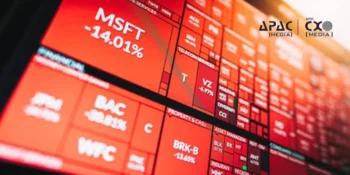
























Noida, Apr 2 (APAC Media): Indian benchmark indices tumbled sharply on Thursday, tracking weak global cues and heightened geopolitical tensions, as the Sensex plunged over 1,400 points and the Nifty slipped near the 22,250 marks. The steep decline wiped out significant investor wealth and triggered broad-based selling across sectors.
By 10:12 am, the BSE Sensex had plunged 1,532.38 points, or 2.1%, to 71,601.94, while the NSE Nifty 50 fell 479.85 points, or 2.12%, to 22,199.55. Market breadth was weak, with 2,545 shares declining against 810 advancing and 142 unchanged. Both key indices remained significantly below record levels, with the Sensex down about 17% and the Nifty 50 down around 16% from their respective lifetime highs.
Market sentiment was dented after US President Donald Trump warned of escalating action against Iran, raising concerns over geopolitical stability. The development sparked risk aversion among global investors, leading to sell-offs in equities worldwide, including India.
“We are closely monitoring the situation in the Middle East, and the United States will take strong and decisive action if necessary to protect our interests and ensure stability in the region,” US President Trump said.

Adding to the pressure, crude oil prices surged amid fears of supply disruptions, posing inflationary risks for import-dependent economies like India. Rising oil prices are seen as a key concern for macroeconomic stability, particularly for sectors sensitive to input costs.
Foreign Institutional Investors (FIIs) were significant sellers during the session, pulling out large sums from domestic equities.
“Foreign Institutional Investors’ heavy outflows reflect growing caution among global investors amid rising geopolitical tensions and market volatility,” said a market analyst.
The sell-off was widespread, with banking, financial, auto, and pharma stocks witnessing sharp declines. Heavyweights across indices dragged the markets lower, while midcap and smallcap stocks also came under pressure, indicating weak overall market breadth.
Global cues remained negative, with Asian markets trading lower and US futures indicating a weak opening. Analysts attributed the downturn to a combination of geopolitical tensions, rising bond yields, and profit booking after recent market gains.
Market experts expect volatility to persist in the near term as investors monitor geopolitical developments and commodity price movements. They advised caution, noting that further escalation in global tensions or continued FII outflows could keep markets under pressure in the coming sessions.
News Agency Inputs