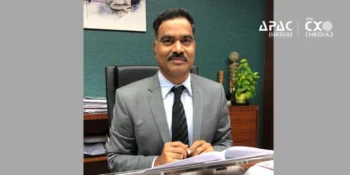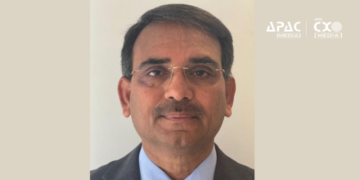
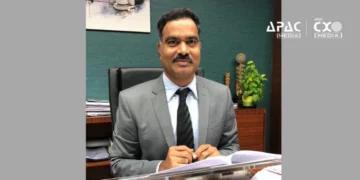




















IIT Gandhinagar envisions a learning ecosystem where research shapes teaching, industry informs curriculum, and students co-create knowledge. In an exclusive interaction, Prof. Rajat Moona, Director, IIT Gandhinagar, explains to Vidushi Gupta, Reporter at APAC Media, how the institute fosters curiosity, creativity, and continuous learning while preparing students for a rapidly evolving world.
How is IIT Gandhinagar aligning its academic structure with emerging industry expectations and evolving job roles?
At IIT Gandhinagar, aligning our academic structure with the evolving demands of industry is not an afterthought — it is embedded in the philosophy with which we were founded. Our motto, “Students First,” reflects our commitment to ensuring that every academic decision is oriented toward the long-term success and adaptability of our graduates.
Our curriculum is deliberately flexible and interdisciplinary. Unlike a rigid, siloed approach, we encourage students to explore broadly across engineering, sciences, humanities, and design before specializing thoughtfully. This breadth is not incidental — it mirrors the reality of modern workplaces, where engineers must collaborate across domains, communicate effectively, and lead with empathy.
In recent years, we have expanded our academic programmes to respond to emerging industry needs. We are introducing new programmes in Design, Maritime Engineering, and Integrated Circuit Design, reflecting both global trends and India’s strategic priorities. Our Senate and Board of Governors, which by statute include distinguished representatives from industry, research and development, and financial institutions, provide a live channel through which industry expectations inform our academic decisions.
Through our Innovation and Entrepreneurship Centre and Research Park, which hosts over 40 companies and has supported over 90 startups, we maintain a continuous pulse on where industry is headed. Our Research Park is an active ecosystem where academic knowledge meets enterprise reality. Over 40% of our students undertake voluntary internships, many of which emerge directly from these institutional relationships.
In what ways are digital technologies and AI-driven tools being integrated into teaching and learning practices across disciplines at the campus?
The integration of AI and digital technologies into teaching and learning at IITGN reflects both institutional conviction and the spirit of innovation that defines our campus culture. We see technology not as a delivery mechanism but as a transformative force in how knowledge is created, shared, and applied.
One of the most visible recent steps is the launch of three postgraduate diploma programmes in AI and Agentic AI Engineering, GenAI and Data Science Engineering, and AI-Powered Software Engineering with Cloud, through the IITGN Career Advancement Academy. Each programme offers over 600 hours of intensive, project-based learning, designed to give graduates skills equivalent to approximately two years of real-world experience. These programmes, which commenced in early 2026, are built on a “build, deploy, and scale” philosophy with 70% project-based and 30% faculty-led instruction — a ratio that reflects our deep commitment to applied learning.
More broadly, IITGN has been at the forefront of technology-enhanced learning. We hosted the ACM India Summer School 2025 on the theme “AI for Social Good,” bringing together students, faculty, and industry leaders to explore the social dimensions of artificial intelligence.
We partnered with Navneet Education to integrate AI into school education for curriculum support, tools, and teacher training, reaching beyond our campus into the broader educational ecosystem.
Our own undergraduate and postgraduate programmes increasingly incorporate modules, tools, and projects rooted in AI, machine learning, and data science, not only within computer science but across disciplines including biomedical engineering, cognitive science, and the social sciences. We believe that AI literacy, much like statistical literacy in the previous generation, is becoming foundational for all educated professionals.
We are also proud that our research outputs in AI are feeding directly into societal applications. A recent example is our team’s development of an advanced injectable hydrogel with applications in minimally invasive gastrointestinal procedures — a product of AI-augmented biomedical research.
How does IIT Gandhinagar collaborate with industry to provide students with practical exposure through internships, projects, or live engagements?
Industry collaboration at IITGN is institutionalized at multiple levels and is a central pillar of how we fulfill our mission.
Our Research Park and Innovation and Entrepreneurship Centre together host over 40 companies on campus, enabling day-to-day interaction between students, faculty, and industry professionals. Over 90 startups have been supported through our ecosystem, and our patent portfolio exceeds 100 filings — reflecting the depth of applied research undertaken in partnership with external organizations.
More than 40% of our students complete internships, many through partnerships that have been cultivated at the institutional level. In 2025 alone, IITGN signed over 10 MoUs with leading global universities and engaged with more than 40 international institutions and agencies. Domestically, our tie-ups range from public sector organizations to private technology companies, spanning sectors from manufacturing to digital services.
A particularly significant initiative is our collaboration with the Ministry of Statistics and Programme Implementation (MoSPI) through which students participated in the “Hack the Future 2025” hackathon, building AI and data science solutions for real-world policy challenges. This exemplifies our belief that the best learning occurs when students work on problems that matter.
The CPWD has also set up a Research and Development Cell at our Research Park, seeking efficient solutions to field-level challenges in construction — a reminder that our collaborations span both high-technology and essential-infrastructure domains.
IIT Gandhinagar provides a structure that brings industry voices into the heart of our decision-making. The Senate includes distinguished persons from industry and R&D nominated by the Senate Chairman, while the Board of Governors includes nominees from the Council with special knowledge of education, engineering, and science. This structural integration ensures that industry collaboration is not episodic but sustained.
On 11th June, we launched three major research clusters, namely in areas of healthcare, energy, and advanced material. These clusters provide an excellent opportunity for faculty members and industry to work together on a problem relevant to industry. Several industries have signed up for the same.
What initiatives are being taken to continuously upskill faculty so they can deliver technology-enabled and application-oriented education?
Faculty development at IITGN is grounded in an institutional culture that prizes curiosity, creativity, and continuous learning, values that are explicitly articulated in our Vision, Mission, and Values statement. We believe that a faculty member who is actively learning, researching, and engaging with the world is the most effective teacher.
IIT Gandhinagar provides generous provisions for faculty growth, including sabbatical leave after six continuous years of service, study leave for higher studies and specialized training, and special leave for practical training and international engagement. These are not merely administrative entitlements but expressions of our belief that faculty, like students, benefit from immersion in environments beyond the classroom.
We actively encourage and support faculty participation in cutting-edge research, which is perhaps the most potent form of continuous learning. Our interdisciplinary research centres, spanning Safety Engineering, Biomedical Engineering, Cognitive Science, and Design Innovation, create structured opportunities for faculty to engage with problems that cross disciplinary and sectoral boundaries.
IITGN has also taken deliberate steps to expand its global academic network. In 2025, we signed over 10 MoUs with leading global universities and conducted multiple joint international workshops. These engagements are not just student-facing; they create pathways for faculty to collaborate, co-research, and co-teach with international peers, continuously updating their own knowledge and pedagogical approaches.
We have invested significantly in our knowledge resources and management infrastructure, providing faculty with access to contemporary digital tools, electronic databases, and platforms that support technology-enhanced learning. Our campus IT infrastructure integrates high-end hardware, enterprise software licenses, and excellent connectivity, ensuring faculty have the tools they need to design and deliver modern, technology-enabled courses.
Fundamentally, we hire and retain faculty who embody the values of unparalleled quality and excellence, willingness to try new ideas, and social and moral responsibility.
How does IIT Gandhinagar focus on developing employability skills such as problem-solving, adaptability, and innovation alongside academic knowledge?
IIT Gandhinagar’s approach to employability is holistic and intentional. We do not treat employability as a set of add-on workshops or last-semester placements; it is woven into the fabric of how we educate, from the first day a student arrives on campus.
Our Foundation Programme, a four-to-five-week immersive experience for all incoming undergraduate students, is perhaps the most distinctive expression of this philosophy. Recognised with the World Education Award 2013 for innovations in engineering education, the Foundation Programme introduces students to hands-on activities, interactions with eminent personalities, physical fitness, creative expression, and social engagement, all before a single lecture in their core discipline. The message is clear: you are more than a technical specialist; you are a thinking, feeling, responsible human being who will lead and serve.
Across our curriculum, we emphasize project-oriented learning, design thinking, and the liberal arts. Compulsory courses in design and life sciences are part of every undergraduate’s journey, regardless of their engineering discipline. This breadth is not a distraction from technical excellence; it is what makes our graduates adaptable in a world where problems do not arrive neatly labeled by discipline.
Our student community is also an engine of skill development. With numerous student clubs, festivals, and social initiatives, including NYASA, which provides education to children of migrant construction workers, and TEDx IIT Gandhinagar provides students an opportunity to develop leadership, empathy, project management, and communication skills that no classroom can fully replicate.
The Innovation and Entrepreneurship Centre nurtures students who want to build, not just study. With over 90 startups supported, we have demonstrated that the entrepreneurial spirit is not reserved for a few; it can be cultivated in a supportive ecosystem.
We also maintain a student honour code and a strong ethical culture, recognising that integrity and responsibility are among the most valued attributes in any profession. In the spirit of our founding in the land of Mahatma Gandhi, we aspire to produce graduates who are not only competent but conscientious.
What is the institute’s long-term vision for building a future-ready learning ecosystem that combines technology, skills, and industry relevance?
IIT Gandhinagar’s long-term vision is to be an exciting, world-class place for learning, teaching, and research, one that cultivates critical and creative minds and propels them to greater heights of excellence. This vision, articulated since our founding, has only deepened in urgency and scope as the pace of technological change accelerates.
We envision a learning ecosystem that is alive and not static. One Where Research Shapes
Teaching, where industry challenges inform curriculum, and where students are active co-creators of knowledge rather than passive recipients. This is why our Research Park brings companies onto campus, why our Innovation Centre connects student entrepreneurs with mentors and markets, and why our governance structures keep industry voices at the table where academic decisions are made.
Technology will be central to this future, but not as an end in itself. At IITGN, we are expanding into AI, GenAI, data science, and cloud engineering not because these are fashionable, but because they are becoming the infrastructure of all human endeavour. Our new PG diploma programmes, our AI collaborations with educational organisations like Navneet Education, and our hosting of national-level programmes on AI for social good all reflect a conviction that India needs not just AI consumers but AI creators and AI thinkers.
At the same time, we remain committed to the humanities and social sciences, to design, and to the life sciences, because we believe that future-ready professionals must understand the human contexts in which technology operates. The most dangerous technologies are those designed without empathy; the most powerful are those shaped by wisdom.
Our vision is also shaped by our roots. In the land of Gandhiji, with his spirit of high work ethic and service to society, IITGN seeks to undertake ground-breaking research and develop breakthrough products that will improve the everyday lives of our communities.
Whether it is our injectable hydrogel for minimally invasive medical procedures, our AI collaborations with government for data-driven policymaking, or our community programmes for construction workers and village youth, we measure our success not only in rankings and placements but in the quality of life we help create.
The future-ready learning ecosystem we are building is one where technology, skills, and industry relevance are inseparable from social responsibility, ethical leadership, and global citizenship. That is the IITGN we are committed to nurturing, for our students, for India, and for the world.