



















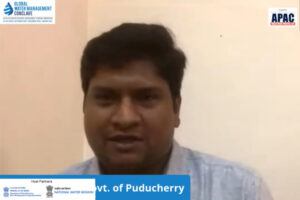
 New Delhi: Karaikal district in Pudecherry was in news for all good reasons. It became an example of water body rejuvenation. Presently secretary to the Chief Minister of Puducherry, A Vikrant Raja narrated the success model of Karaikal recently in virtual ‘Global Water Management Conclave’ organised by APAC News Network and Jal Shakti Ministry, Government of India.
The then district magistrate of Karaikal, Raja stated that Karaikal is a small coastal district and is a part of the Kaveri Delta region. The idea behind the Karaikal project came as a result of social media memes which raised the question that even if we are receiving the Kaveri water, how are we ensuring its storage?
‘Hence we decided to rejuvenate water bodies that were there in Karaikal since ages, but were not maintained or conserved. Community participation plays a key role in any project or movement. People only took care of these water bodies till they needed it. Once they got water supply from wells or taps, they stopped caring about the water bodies. This problem can be described as the tragedy of the commons. To bring a sense of belonging and ownership, we named the project Nam Neer, which means our water,’ said Raja.
He further added, ‘we collaborated with MG NREGA team which further engaged with the local people and raised some pertinent questions with an emotional undertone, which triggered the sense of responsibility among them to restore and rejuvenate the local water bodies. With the emotional connect, they were so much involved in the project that they even invested their own money in restoring some of the water bodies which were not even listed in the Nam Neer campaign. We also stated exploring other modes of sponsorship such as private companies for their Corporate Social Responsibility projects.’
Highlighting some of the unique initiatives Vikrant Raja said, ‘we came up with a concept called Employee Social Responsibility (ESR). Within this, each Government Officer had to either make financial contribution or provide physical labour for rejuvenating a water body. This created involvement among each and every stakeholder. We also sought involvement of temple authorities and named it Temple Social Responsibility. Within this, each temple had to restore a pond within its premises. Following this example, mosques and churches also took active participation in the project. I also promoted the project at schools and colleges and the students were so inspired that around 15 ponds were desilted by them. We also came up with an innovative idea of gifting a pond. People can approach us with their budget and we show them a pond or water body within that range which gets rejuvenated. Such emotional engagements brought greater impact. Within the process, we started getting rid of saline in the water bodies and planting more trees.’