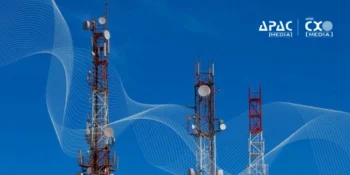













Telecom Regulatory Authority of India (TRAI) released a Consultation Paper titled “Framework for Service Authorizations for Provision of Broadcasting Services under the Telecommunications Act, 2023.” The paper, released today, seeks to gather stakeholder feedback on establishing a unified authorization system for broadcasting services, aiming to align the sector’s policies with the Telecommunications Act, 2023.
The Ministry of Information and Broadcasting (MIB) formally requested TRAI’s recommendations on the new authorization framework through a letter on July 25, 2024, following the publication of the Telecommunications Act, 2023, in the Official Gazette. The Act, in Section 3(1)(a), proposes that any entity wishing to provide telecommunication services, including broadcasting, must acquire an authorization. However, this provision has yet to be officially notified.
Currently, broadcasting services such as Direct-to-Home (DTH), Headend-in-the-Sky (HITS), Internet Protocol Television (IPTV), TV channel uplinking/downlinking, Satellite News Gathering (SNG), Digital Satellite News Gathering (DSNG), Community Radio, and FM Radio operate under licenses, permissions, or registrations granted by MIB under the now-repealed Indian Telegraph Act, 1885.
The consultation paper highlights that the MIB is seeking to harmonize and update these frameworks in line with the Telecommunications Act, ensuring consistent terms and conditions across all broadcasting services.
Broadcasting in India, with its extensive reach, plays a crucial role in informing and educating a vast audience. It spans two primary segments—radio and television broadcasting—with historical roots dating back to the first radio broadcast in 1923 by the Bombay Radio Club. The national broadcaster, All India Radio (AIR), established in 1936, remained India’s sole radio service provider until private FM channels entered the market in 2000. As of June 2024, India has 388 private FM stations across 113 cities, along with 29 AIR channels. Community Radio Stations (CRS) have also grown, with 499 operational stations providing localized broadcasting.
Television broadcasting similarly developed significantly, beginning in 1959 with Doordarshan (DD) in Delhi. The medium saw transformative growth during the 1982 Asian Games, which introduced colour broadcasts and expanded coverage. The 1990s ushered in satellite and cable TV, with CNN’s Gulf War coverage popularizing satellite dishes in India. By 2024, India’s TV broadcasting industry included 329 broadcasters offering 912 private satellite channels and approximately 182 million cable and satellite homes.
TRAI’s consultation paper is designed to address a range of issues relevant to service authorizations under the Telecommunications Act. MIB’s letter specifies that the terms and conditions, including fees for obtaining authorizations, should be reevaluated. TRAI is expected to develop a standardized framework to enhance the clarity, transparency, and consistency of authorizations. The consultation invites written comments from stakeholders by November 20, with counter-comments due by November 27, 2024. Submissions may be emailed to advbcs-2@trai.gov.in and jtadvisor-bcs@trai.gov.in.
Framework Alignment
In the document, TRAI acknowledges the complex policy landscape surrounding broadcasting services, such as those concerning DTH, HITS, IPTV, FM radio, and CRS, among others.
Here are the policy guidelines that are required to be aligned in accordance with the provisions of the new Telecom Act:
i. License to provide Direct-to-Home (DTH) services are given as per the ‘Guidelines for obtaining the license for providing Direct to Home (DTH) Broadcasting services in India’.
ii. Permission to provide Headend in the Sky (HITS) services is given as per the ‘Guidelines for providing Headend in the Sky (HITS) Broadcasting services in India’.
iii. Registration to provide Internet Protocol Television (IPTV) services to ISPs and MSOs is given as per the ‘Guidelines for provisioning Internet Protocol Television (IPTV) services’.
iv. Permission to provide Teleport Services, Uplinking and Downlinking of television channels, Digital Satellite News Gathering (DSNG)/ Satellite News Gathering (SNG) are given as per the ‘Policy Guidelines for Uplinking and Downlinking of Television Channels’.
v. Permission for FM Radio channels is given as per the ‘Policy guidelines for Phase-III expansion of FM Radio broadcasting through private agencies’. vi. License for setting up of Community Radio Stations (CRS) are given as per the ‘Policy Guidelines for setting up Community Radio Stations (CRS) in India’.
TRAI’s consultation paper notes that Section 3(1)(a) and other relevant sections of the Telecommunications Act, 2023, will apply to broadcasting service authorizations once formally notified. TRAI emphasizes that, given the evolving nature of broadcasting technologies and the need for fair and consistent regulation, aligning existing policies with the Telecommunications Act is essential for regulatory coherence.
Also Read –
Bhaswati Guha Majumder, APAC News Network