



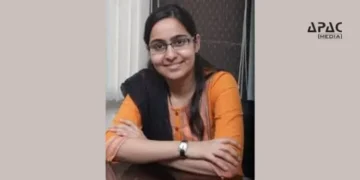

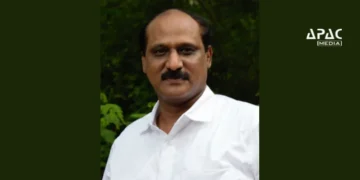









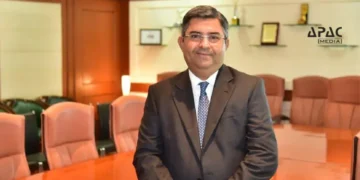





Himanshu Chawla, Head of the RWTH (Rheinisch-Westfälische Technische Hochschule) Aachen University India Office, in this exclusive conversation with Anannya Saraswat, Reporter (Public Sector & Leadership), at APAC Media, shares insights into how one of Europe’s top technical universities is strengthening its engagement with Indian students and institutions.
He discusses RWTH’s growing appeal amid shifting global education trends, highlights in-demand programs and collaborations with Indian universities, and outlines the university’s support systems designed to help Indian students thrive both academically and professionally in Germany.
How is RWTH Aachen University positioning itself to attract Indian students amid increasing visa challenges in countries like the UK, the US, and Canada?
RWTH Aachen University continues to see strong and growing interest from Indian students—many of whom are now consciously choosing Germany as their first option, rather than as an alternative to traditional destinations like the US or UK. The reasons are clear: Germany offers a stable visa framework, excellent public education with no tuition fees, and strong career prospects after graduation.
RWTH, as one of Europe’s leading technical universities and a University of Excellence, builds on these national advantages with a globally recognized academic reputation, a deep focus on research, and close integration with industry. With over 2,400 Indian students currently enrolled, RWTH is among the most sought-after German universities for STEM and related fields.
In India, we are present with a local office in New Delhi, which helps strengthen our ties with partner institutions and alumni and fosters long-term engagement. However, most of the student-facing support—including admissions, academic advising, and onboarding—is handled centrally by our departments in Aachen. This ensures that all students, regardless of origin, receive structured and consistent support throughout the application and study process.
More broadly, RWTH was one of the German universities represented at the recent press briefing hosted by the German Embassy in New Delhi, where the current trends in student mobility were discussed. This visibility—across academic, diplomatic, and media platforms—helps further position RWTH as a reliable, high-quality destination for Indian students looking for long-term academic and professional development in Europe.
Could you highlight some of the most popular courses among Indian students at RWTH Aachen University? How do these programs align with current and future industry demands, both globally and in emerging markets of India?
RWTH Aachen University continues to attract a growing number of Indian students, especially those pursuing degrees in engineering, data science, artificial intelligence, automotive technologies, and sustainable energy. Many of them are enrolled in the English-taught Master’s programmes offered by the Faculties of Mechanical Engineering, Electrical Engineering and Information Technology, Civil Engineering and Georesources, and Materials Engineering, which reflect the university’s strength in interdisciplinary and applied research.
These programmes cover areas such as mobility and transport engineering, materials science, information and communication technology, process and production engineering, medical science and technology, and the built environment. Designed to align closely with the needs of global industry, they prepare students to address challenges in clean energy, advanced manufacturing, healthcare innovation, and digital transformation—sectors that are just as critical to India’s development as they are to Germany’s industrial leadership.
By offering such forward-looking programs, RWTH ensures that Indian students are not only academically equipped but also professionally competitive in both European and emerging markets.
Is the university working with industry partners in designing or updating curricula to ensure relevance and employability?
RWTH Aachen University has long maintained close and structured ties with industry to ensure that academic offerings remain aligned with technological advancements and labor market demands. Being situated in one of Europe’s most prominent engineering ecosystems—with companies like Ford, Philips, and countless medium-sized firms in close proximity—enables constant dialogue between academia and the world of work.
Curricula across RWTH’s faculties are regularly updated with direct input from industrial advisory boards and research collaborations. Several degree programs have been co-designed or evolved in consultation with partners from sectors like mobility, energy, communication technology, and advanced manufacturing. Moreover, RWTH’s Research Clusters and Institutes are deeply embedded in industry-sponsored projects, and this cross-pollination is directly reflected in what is taught in the classroom.
Our Indian students benefit immensely from this. Many undertake master’s theses or internships in collaboration with companies, gaining not only hands-on experience but also access to employment networks within Germany and beyond. This model of theory intertwined with application is central to how RWTH defines employability and relevance in a globalized job market.
What specific support systems are in place at the university to help Indian students adapt to life and studies in Germany? Are there any scholarships, mentorship programs, or language support services specially tailored for Indian students?
RWTH Aachen University has built a comprehensive support ecosystem that addresses both the academic and everyday needs of international students. For Indian students in particular, the university offers tailored guidance starting even before arrival. We regularly organize pre-departure briefings and onboarding sessions, both in-person and online, to prepare them for life and studies in Germany.
A unique feature is the presence of the Foreigners’ Registration Office on campus—an exceptional convenience that allows international students to handle residence permits and other formalities without navigating external bureaucracies.
RWTH also runs the DAAD-funded “FIT for Success” project, which is specifically designed to improve international students’ integration and academic success. The project includes subject-specific tutorials, soft skills training, intercultural workshops, and structured mentoring, all of which significantly ease the transition into a German academic setting.
With around 2,400 Indian students currently in Aachen, the Association of Indian Students Aachen (AISA) plays a vital role in fostering community and peer support. This student-led group is deeply networked and actively collaborates with the India Office and university services to support both newcomers and continuing students, from airport pickups to cultural festivals and academic orientation.
While public universities in Germany like RWTH Aachen do not charge tuition fees, we also guide Indian students in applying for scholarships from DAAD and other foundations. Combined with language courses, intercultural counseling, and career services, RWTH offers Indian students not just an education, but a well-rounded support experience
How does RWTH Aachen University support international students in securing post-study work opportunities? Are there dedicated career services that help Indian students connect with employers in Germany?
RWTH Aachen University is deeply committed to the employability of its graduates. Our Career Center plays an active role in preparing students for the German and international job market through individualized counseling, application workshops, CV writing sessions, and job fairs. Indian students, in particular, benefit from this, as many aspire to stay and work in Germany after graduation.
Located in one of Europe’s leading technology and innovation hubs, RWTH is surrounded by a dense network of industrial partners. Companies like Siemens, Ford, Bosch, and many mid-sized “hidden champions” in the engineering and IT sectors regularly recruit our graduates. The cluster landscape around RWTH in areas like mobility, production, and digital engineering provides excellent real-world exposure and hiring opportunities.
In addition, RWTH’s curriculum, especially in English-taught master’s programs, is closely aligned with industry trends and research developments. Many students are able to take up research assistantships, internships, or thesis collaborations with companies or institutes like Fraunhofer, thereby building strong employer connections even before graduating.
Indian graduates benefit from Germany’s 18-month post-study work visa, giving them sufficient time to find relevant employment. Many of our alumni successfully transition into the German job market, especially in high-demand fields like mobility & transport engineering, ICT, energy systems, and production technology.
RWTH also supports student entrepreneurship and startup initiatives through its Innovation Factory, allowing motivated graduates to launch their own ventures—something that’s increasingly appealing to Indian students as well.
How has RWTH Aachen University integrated digital technologies into teaching, research, and student services? What role does hybrid or online learning play in the university’s long-term academic delivery strategy, especially post-pandemic?
Digitalisation has long been a strategic focus for RWTH Aachen University, and the pandemic served to accelerate many of these efforts. Today, digital technologies are firmly integrated across teaching, research, and student services.
RWTH has implemented a wide range of digitally supported teaching formats, particularly through its blended learning strategy, which combines the strengths of online and in-person learning. The Faculty of Architecture, for example, has developed multiple digital typologies for both teaching and research. These formats are continuously refined with a strong emphasis on didactic soundness and long-term curricular integration, ensuring that innovations benefit students across disciplines, regardless of the instructor.
Initiatives such as the Exploratory Teaching Space support educators in transforming creative teaching ideas into sustainable, scalable formats. Many lecture halls are now hybrid-ready, and platforms like RWTHmoodle enable interactive learning through quizzes, group work, and asynchronous materials. These advances also aim to reduce dropout rates and improve learning outcomes, while maintaining the university’s high academic standards and helping students graduate on time.
Digitalisation also plays a key role in research—particularly in areas such as Modeling & Simulation, ICT, or mobility engineering—where virtual labs, AI tools, and digital twin technologies are used in both academic and industrial contexts.
Beyond academics, RWTH has streamlined many student services through digital portals, allowing international students to manage registration, housing support, visa documentation, and course selection remotely. This has been particularly helpful for Indian students as they prepare to move to Aachen.
RWTH sees hybrid and digital learning formats not just as a response to the pandemic but as a core part of its long-term academic strategy, enhancing flexibility, accessibility, and global engagement across its programmes.
What kind of partnerships, if any, has RWTH Aachen University undertaken with Indian institutions or education bodies?
RWTH Aachen University has cultivated deep and multi-layered partnerships with Indian institutions over decades, going back to the 1960s. One of our most significant collaborations is with IIT Madras, which we proudly refer to as our “sister university.” This strategic partnership operates across all levels—from student exchange and research collaborations to regular leadership-level meetings. Our institutions complement each other in many academic areas, which allows for interdisciplinary engagement across teaching, learning, and innovation.
This partnership has seen several important milestones. In 1966, RWTH Aachen and IIT Madras signed the first Indo-German University Agreement. More recently, in 2024, both universities jointly launched the first Indo-German Joint Master’s Program in Water Security and Global Change along with TU Dresden. The long-standing collaboration is also reflected in initiatives like the Indo-German Centre for Sustainability (IGCS), which has been co-led for 15 years and is particularly strong in sustainability-related fields.
Another notable Indo-German initiative RWTH is involved in is the Global Water and Climate Adaptation Centre, also known as the ABCD-Centre (Aachen, Bangkok, Chennai, Dresden). Funded by the German Federal Foreign Office through DAAD, the centre is actively shaping research and academic cooperation on critical global challenges.
Additionally, RWTH Aachen University collaborates with the Indo-German Science & Technology Centre (IGSTC), a bilateral initiative established by the Department of Science & Technology (DST), Government of India, and the German Federal Ministry of Research, Technology and Space (BMBF). IGSTC’s mission to foster innovation-driven R&D through government-academia-industry collaboration aligns strongly with RWTH’s research philosophy. It supports projects that create real-world impact, catalyse industrial partnerships, and enhance knowledge networks across borders. The centre facilitates R&D networking through academia, industry, and government, fostering innovation to drive economic and societal progress in both countries.
RWTH also has a university-wide MoU with IIT Roorkee and maintains many faculty-level collaborations across India. Thanks to the long history of cooperation, many RWTH researchers already have Indian counterparts, making it easier to initiate joint projects, provided there’s a clear and compelling proposal.
On the student front, RWTH’s Fast Track Bachelor Admission (FTBA) program enables high-performing students from the PASCH-network of schools (supported by the Goethe-Institut/Max Müller Bhavan) to enter undergraduate programs directly, provided they meet the language and academic requirements.
Our India Office, located in Delhi, plays a crucial role in strengthening academic and research cooperation, supporting student mobility, and acting as a bridge between Indian and German academia.
In short, India plays a central role in RWTH’s international strategy. These partnerships go far beyond academic exchange—they are shared platforms to develop solutions for global challenges such as clean energy, smart infrastructure, and sustainable AI.
How do you see the India-Germany higher education relationship evolving, particularly in STEM, research, and business studies?
The India-Germany higher education relationship is poised for remarkable growth—especially in STEM, research, and business studies—driven by mutual strengths and a shared vision for solving global challenges. Both countries bring complementary assets to the table: Germany offers excellence in applied sciences, strong industry-academia linkages, and a robust research ecosystem, while India brings extraordinary talent, a rapidly advancing innovation landscape, and increasing global academic ambitions.
We are also a member of the German Centre for Research and Innovation (DWIH) New Delhi, which plays a pivotal role in promoting the German research landscape in India and strengthening Indo-German academic cooperation. DWIH provides a valuable platform for thematic exchange, science diplomacy, and interdisciplinary dialogue—connecting academia, industry, and policy across both countries.
In business and management studies, there’s a growing appetite for understanding how innovation ecosystems function, especially around entrepreneurship, digitalisation, and sustainability. Germany’s dual education system and strong SME sector provide valuable learning opportunities for Indian scholars, while Germany increasingly looks to India for talent, market insights, and digital innovation.
Looking ahead, I anticipate deeper and more structured partnerships: more dual-degree programs, joint research clusters, mobility schemes, and collaborative PhDs. Cross-sector engagement—linking academia with industry and government—is set to grow. With the support of networks like IGSTC and DWIH, and the momentum already in place, Indo-German academic cooperation will continue to expand, innovate, and lead on global challenges.









Discussion about this post